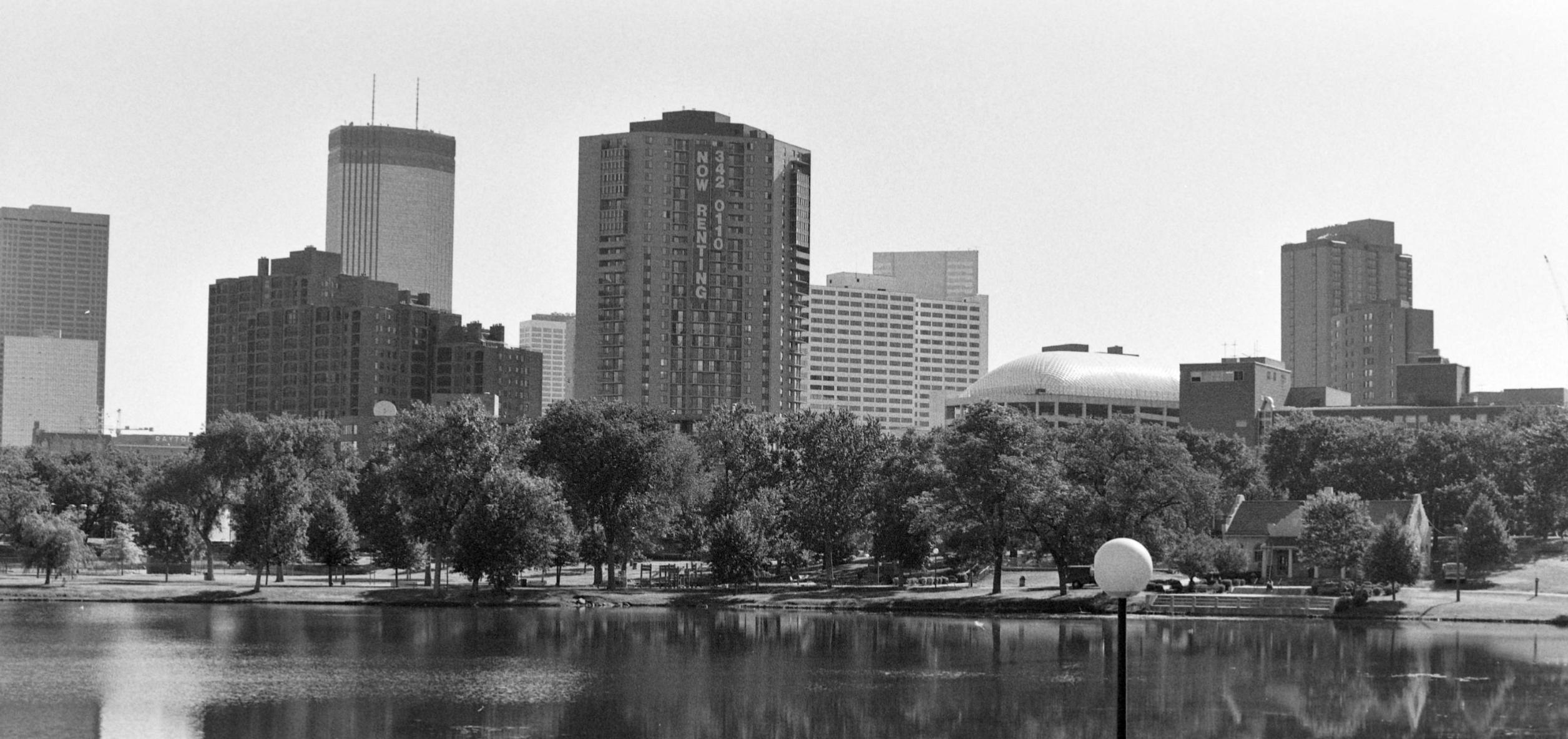
Many Minneapolitans are still wondering what the future holds for this iconic neighborhood. The vibrancy and community that once inhabited Uptown are harder to find, and so is the feeling of aliveness many of us can remember. Foot traffic is missing because there simply isn’t as much to wander to, and wandering doesn’t always feel safe. Redevelopment efforts are underway following several starts, stops and potential missteps.
But is building new buildings enough? Or is more needed to cultivate the change we hope to see?
Three miles away, another stretch of Lake Street wrestled with many of these same questions. I sat down at Barbette recently with Anna Bloomstrand of Ingebretsen’s to talk about what it means to be a small business owner and resident who has been deeply involved in a community that has experienced periods of challenge, resilience and renewal over the years.
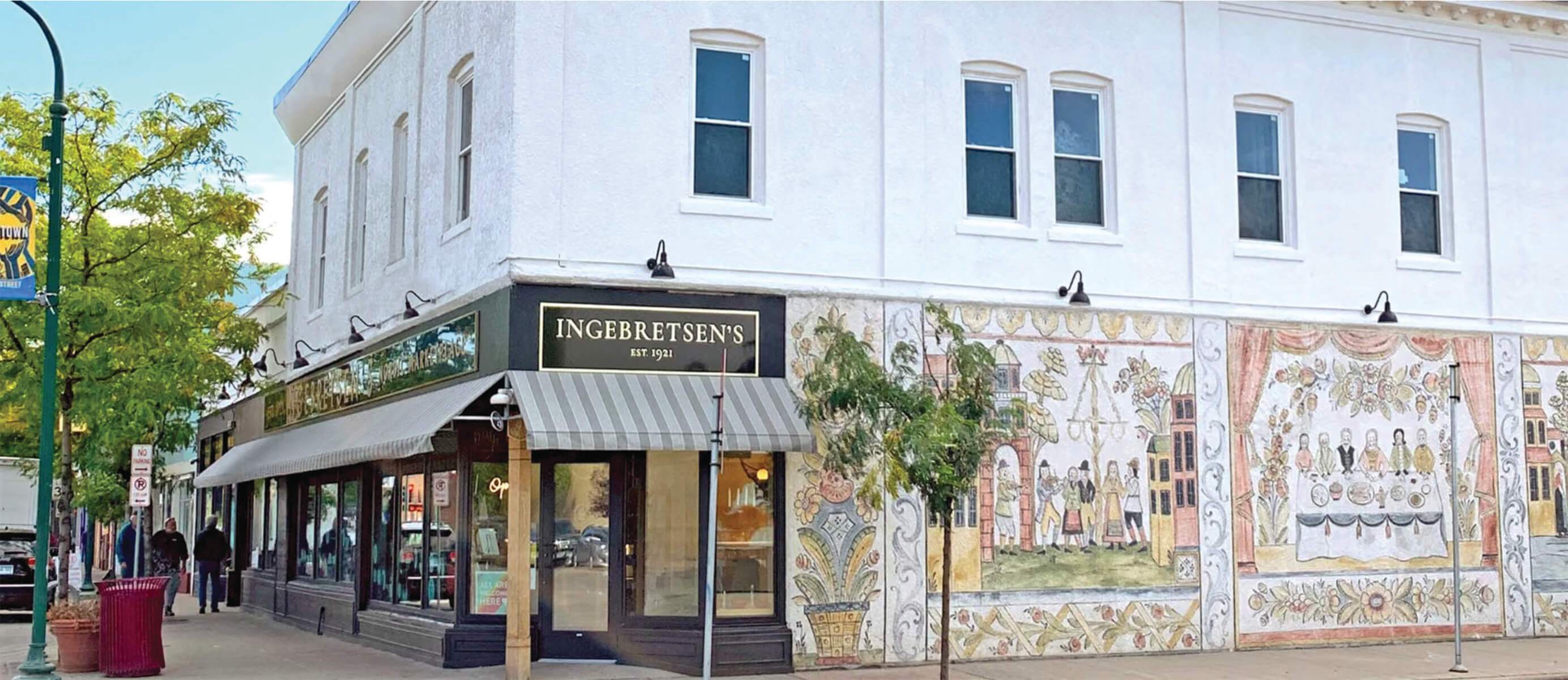
Ingebretsen’s has been at 1601 E. Lake St. since 1921. It’s 100 years even if you’re not counting! It’s where, just three miles east of Uptown, Ms. Bloomstrand has spent countless hours partnering with community organizations, other small businesses, the police and residents to address complex issues and support the health of her community.
She is a passionate advocate with a special place in her brain and heart for all things Midtown, and we covered more ground than I imagined possible in a 90-minute discussion, pausing only for drive-by opera blaring from the opera guy who drives the lake every summer. Apparently passing Barbette is part of his regular route.
I couldn’t help but feel ignited by her energy and perspective about why a connected community that comes together, including small businesses, residents and leaders, matters so much for the health of a corridor.
Ms. Bloomstrand took me back to 2017. Things in Midtown had been stable for a period of time, in large part due to the stability of the mostly immigrant business owners in the community.
The same business owners who were a backbone to the neighborhood were the first to notice when issues started to occur. Small business owners rarely operate from afar. They are working in storefronts, very connected to what’s happening outside their door.
As trash started to pile up and open opioid use increased, the people of the Midtown business corridor moved quickly from simply coping, to trying to navigate change on their own, to looking for a way to work toward solutions.
In Ms. Bloomstrand’s view, what followed was one of the richest and most productive periods of community engagement for Midtown. There was a greater sense of connectivity and care for one another and a willingness to work together to explore new solutions for the people who needed them.
That effort helped spark meaningful change along the corridor.
Our conversation and the stories she shared had me wondering: What lessons from that East Lake Street chapter might be relevant for West Lake Street today?
The recipe from that time included the following ingredients:
Coordination
A coordinating central hub, a space to gather and purposeful discussion made gathering both easier and more meaningful. People knew where to go, and when a topic was brought forward, there were experts in the room who could make the discussion more informative and productive.
“There was a coordinating cell. The Lake Street Council and business owners were helping to host these monthly gatherings where there would be a particular subject. They would bring in people who were actually working on the subjects.”
“With each change in leadership, the stories have to be told again, the trust has to be built again.”
A lot of people showed up for meetings. Not only did the police show up more often and differently than they had in the past, there was representation across the board: nonprofit organizations, small business owners, residents, neighborhood organizations and people who worked for the city and county
Leadership That Felt Different
At that time there was a police inspector who was really involved and understood the realities of the community she was serving. In particular, she prioritized making connections to immigrant business owners, and worked to understand the experiences and needs of those individuals.
One of her priorities was to make sure that her staff understood the community constituents as well, so there was more participation than in the past.
“She encouraged and expected officers to show up in these meetings because she wanted them to learn what everybody was saying, and actually be able to have relationships with people in the community. That was a really big deal because we were coming out of a period of time where, you know, cops would show up at a meeting with their arms crossed and an old school perspective that was not exactly open to other points of view.”
Curiosity
Ms. Bloomstrand shared that the vibe leading up to this moment was full of stress and tension. It felt like there were lots of problems, including open drug use, aggressive behavior by johns and trash left on the streets, and no solutions.
Business owners and residents were burned out. Everyone was feeling the strain and not knowing where to go or what to do.
But somehow, in this new forum, the energy was different.
“The vibe was good, and everybody kind of liked each other. We all got to know each other, and there was a familiarity that was really helpful, because there was a lot to learn from each other. The thing that worked was that there was an environment that happened somewhat naturally, people who were curious, and also people who were interested in being honest with each other and folks really cared about a good outcome for everyone involved. There was a feeling of good faith in the room.”
Transparency
One of the things that made the biggest difference was the open communication and transparency that occurred during the meetings.
Back to the inspector who set the tone.
“When folks would ask why isn’t the Police Department doing xyz, she would give a straight answer that gave us insight to reframe how we thought about the system’s roles and limitations. She was being open and transparent and also setting expectations. For example, there was agreement that we can’t police our way through a mental health crisis. Which at that time, was definitely not being said by folks in traditional public safety roles, especially in mixed company.”
This created a forum where others could be real, asking questions openly and creating space for deeper understanding of one another and the barriers at play.
There was real dialogue about where capacity was limited and a recognition that new ways of addressing challenges needed to be explored. The shift was that she was really clear about what their strengths and limitations were. It helped keep change moving and reduced the frustration people typically feel if their requests go unanswered.
“The difference at that time was that the community said, ‘What’s happening isn’t working and we need to come up with another thing.’”
Admitting that things weren’t working and being honest about limitations was a stepping stone for coming up with new solutions. One of the changes that came out of that time were more supportive options for people navigating mental health and addiction challenges, such as the city’s Behavioral Crisis Response team, Law Enforcement Assisted Diversion and Touch Outreach. Each puts people in place who know how to do intervention work and are trained and paid to do just that.
The Power of Relationships
The relationships that were created required storytelling and sharing between people who aren’t often in the same room for that purpose. Over time, a trust was built, and because of that trust, there was an opening that made it possible for new ideas to emerge.
Unfortunately, with change came losses: leadership changes, upheaval due to the pandemic, the murder of George Floyd, and a few election cycles. Those important relationships changed, and many of them were set down altogether.
When the leadership in any department or organization changes seats or changes focus, the input that community offered is often lost.
“With each change in leadership, the stories have to be told again, the trust has to be built again, and whether or not those things gain traction is no longer in the hands of the community. It’s at the whim or capacity of the listener. And the retelling can be its own form of trauma, so we have to be careful about that and take the history seriously.”
When we talked at Barbette, we agreed that it would be ideal if there were a sage or representative who lives on in any neighborhood as a steward, of what’s being done, what’s in progress, the relationships, the operational realities of the work.
Today, there is so much lost in transition, and with each transition, stories need to be retold and relationships need to be rebuilt. Making meaningful progress requires the accumulation of dialogue, experimentation, learning and progress over time.
“If I were going to change anything about the city there would be two evergreen staff members in every board office no matter who is the elected official so that there’s some memory of what the people are working on, because every time there’s a change, you lose all that and you have to develop a whole new relationship.”
Knowing that change will persist, can we be more proactive to ensure that work in progress isn’t lost with leadership changes and election cycles?
If a more vibrant Uptown is the vision, it might mean new buildings, new infrastructure and new surfaces.
But if we also want to experience more health and aliveness, it’s more than just construction projects. It’s the slower, harder work of relationships cultivated over time.
Jackie Colburn writes for the Hill & Lake Press. She lives in the Fern Hill neighborhood of St. Louis Park.