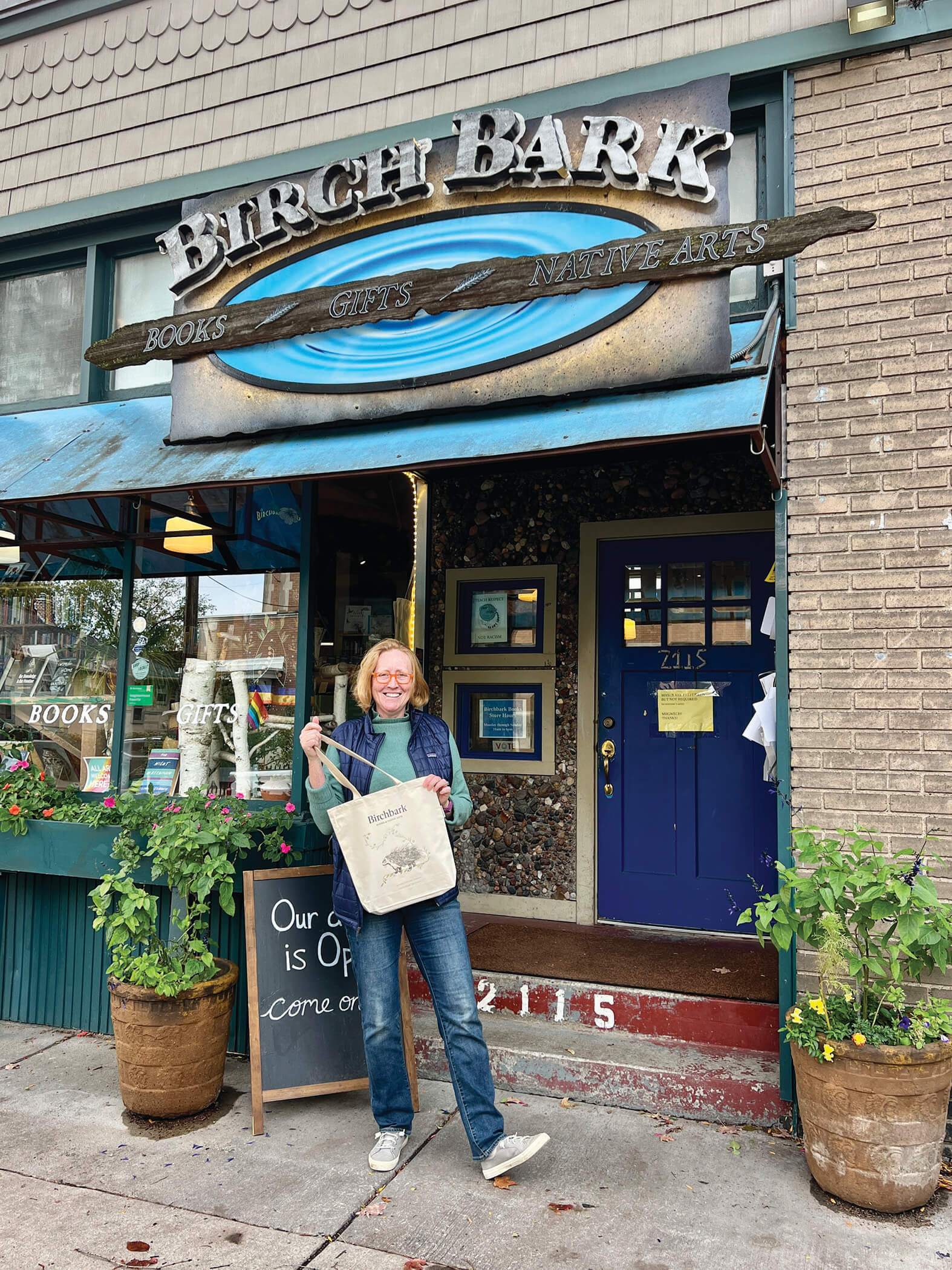
Pictured left to right - Birchbark Books, Wild Rumpus, Magers & Quinn and Big Hill Books. (Images: Courtney Cushing Kiernat and Jackie Colburn)
Most of us learned to search as an antidote to our questions. Type the right words, get the right answer. For more than 20 years, we have gotten proficient at using tools that reward searching, calling forth information and answers with a keystroke.
We are chronically hunting for the answer we suspect is already out there. That is a comfortable place to be. Our brains prefer consistency, and information that contradicts what we believe creates friction, so we gravitate toward evidence that reassures us we were right all along.
A narrow search yields predictable results.
But every time we narrow before we need to, we take in a little less. Less new information. Fewer perspectives that don’t already match our own. Fewer ideas that don’t yet have a home in our heads. We get comfortable working from a smaller pool of inputs, and we rarely notice what is missing.
Think about ordering a book online versus wandering a bookstore. Online, you leave with exactly what you came for. In the store, you leave with the book you came for and possibly something off a display you would never have thought to look for. That second book is the one you didn’t know you needed. It’s also the one you end up telling people about.
“Wander. Browse. Become someone you’ve not yet met.”
This happened to me recently when I stumbled onto “You Didn’t Hear This From Me: (Mostly) True Notes on Gossip” by Kelsey McKinney at Magers & Quinn on Hennepin. The book completely changed my mind about gossip, and I have since recommended it to many.
In “Anatomy of a Breakthrough,” another book I recently finished, Adam Alter draws the distinction between searching and browsing. Searching is goal-directed: you have a question, and you go get the answer. Browsing is open-ended. You wander. You stumble upon.
Browsing is a posture.
Browsing is a way of moving through the world that allows you to discover. Most of us have gotten so focused on goal-directed searching that we have stopped leaving room to browse. And I get it: with “so little time” and “so much to do,” taking the time to browse can feel frivolous, like a luxury.
The thing is, the way we show up affects where we end up. When we search for something and call forth the answer we expect, we stay in a limited range of potential. Taking time to browse with curiosity primes you to find things you didn’t know you needed to discover, and a bit of browsing just might lead you somewhere better than you could have imagined.
Browsing takes intention, and intentional time set aside. It means holding a question open longer than is comfortable and looking down paths you haven’t been down before.
Jackie Colburn writes for the Hill & Lake Press. She lives in the Fern Hill neighborhood of St. Louis Park.