
“When you think about all the assets — the parks, the neighborhoods, the people — it has everything it needs to thrive. After nearly six years of pandemic, social unrest and street closures, our hope is that Uptown can be reborn into the district it really deserves to be.”
— John Breitinger
Craig Wilson is the editor of the Hill & Lake Press. He lives in Lowry Hill.
If Uptown is a mirror of Minneapolis, it reflects a city balancing big dreams with hard economic realities. That tension was on full display at the Urban Land Institute’s Technical Assistance Panel (TAP) for Uptown — a 2½ day exercise in visioning that ended Oct. 30 with a presentation equal parts hopeful and head scratching.
On one side were designers and placemakers, sketching out playful reimaginings of Uptown’s streets and parks. On the other were business owners and residents, worn down by red tape, economic headwinds and public safety concerns, asking a simpler question: Who’s actually listening?
The TAP program, an initiative of the Urban Land Institute, brings together multidisciplinary volunteer teams to analyze community challenges and propose actionable solutions. The Uptown TAP was funded through Ward 7 Council Member Katie Cashman’s efforts to include it in the city budget at a cost of $50,000, covering travel, lodging and ULI staff time. All other participants volunteered their time.
Cashman attended the presentation, while Ward 10 Council Member Aisha Chughtai, whose ward includes much of Uptown, was not present.
“I was impressed with the ideas that came out of the Warehouse District TAP process and wanted to bring that same spirit of innovation to Uptown,” said Council Member Katie Cashman.
“I’m so glad I did, because this process really did what it was meant to do — it sparked conversation and creativity. You could feel the energy in the room, and it seems to have genuinely excited people, especially as Hennepin reopens and we start to imagine what’s next for the area. It is my hope that this process galvanizes us, helps put us on a strong path forward together with community, government and private sector investors all pulling in the same direction.”
Each TAP is an intensive workshop during which experts in urban planning, design, real estate and economic development assess local conditions, interview stakeholders and present recommendations. While not a formal city planning process, these exercises often inform future discussions and policy directions. They are designed to provide practical, outside perspectives — and sometimes, as Uptown’s experience shows, they raise as many questions as they answer.
The Emcees
Panel co-chair Max Musicant of The Musicant Group described the process as a “collaborative sprint” involving more than 50 interviews with residents, business owners and city staff. His co-chair, John Breitinger of Cushman & Wakefield, framed Uptown as “a district with everything every other city wants — housing, parks, retail potential and transit.” The challenge, he suggested, was not infrastructure but imagination.
Breitinger, who oversees Cushman & Wakefield’s Minneapolis real estate development advisory practice and is a past chair of ULI Minnesota, said he’s spent nearly two years pulling the Uptown Technical Assistance Panel together. “This is an act of love,” he said. “Many of us live in or near Uptown, and we care deeply about helping it realize its potential. Our goal was to assemble a group of experienced land use professionals who could volunteer their time to think about how to regenerate a district that’s been struggling, without stepping on anyone’s toes.”
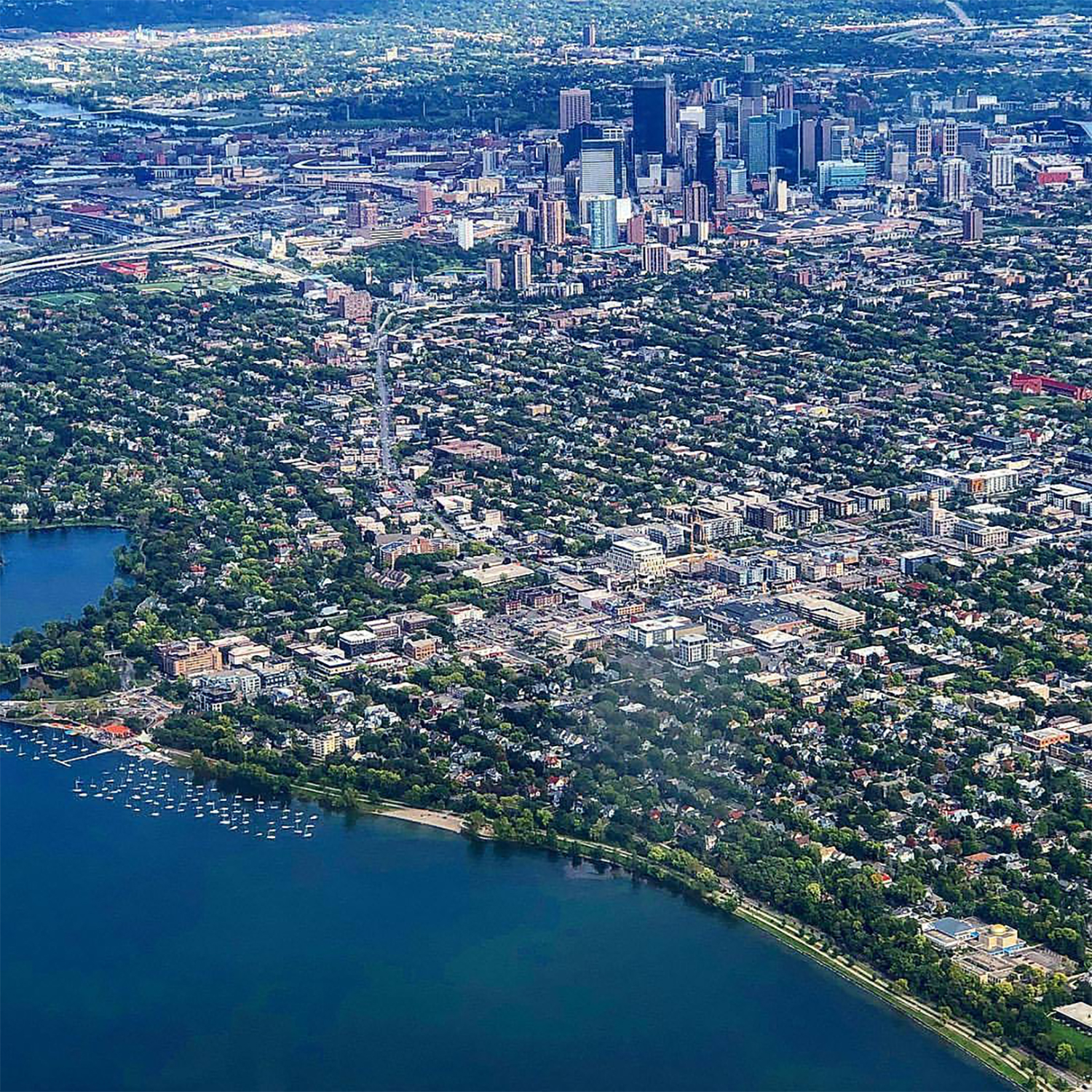
He said he sees tremendous promise in Uptown because of its mix of vibrant neighborhoods, diverse housing types, remarkable green space anchored by the Chain of Lakes, and its intact urban grid. “I’ve lived in and around this area my whole adult life, and it’s probably the single most underperforming district in the city relative to its potential,” he said. “When you think about all the assets — the parks, the neighborhoods, the people — it has everything it needs to thrive. After nearly six years of pandemic, social unrest and street closures, our hope is that Uptown can be reborn into the district it really deserves to be.”
The Dreamers
“Imagine transforming The Mall into the world’s longest playground — a joyful spine connecting Uptown to the lakes.”
— Tom Fisher
Marcello Cabezas, a placemaker from Toronto, Canada, described Uptown as “a vibrant destination waiting to be rediscovered,” emphasizing creativity, hospitality and optimism. Marcus Westbury, an urban renewal expert from Melbourne, Australia, praised Uptown’s “walkability and bones” and dismissed its reputation as a “combat zone,” calling it “a neighborhood in difficult transition, but not decline.” Both framed Uptown’s core challenges as issues of wayfinding and marketing, suggesting that improved signage, branding and online presence are what’s needed most.
They also envisioned a new kind of “maker economy” rooted in micro-local retail and smallscale manufacturing — storefronts where products are both created and sold, blurring the line between studio and shop. Westbury cited examples from Australia, where designers and craftspeople run hybrid spaces that generate most of their sales online but still maintain a visible neighborhood presence.
Similarly, University of Minnesota architecture professor Tom Fisher noted the growing trend of “make-and-sell” retail, where customers participate in customization and design. The idea, they said, would build on Uptown’s legacy as a creative hub — a place where things start — by turning vacant storefronts into incubators for small producers, artisans and entrepreneurs who could once again make Uptown distinct from every other shopping district.
Designers Blake Slette of Damon Farber and Tom Fisher presented a series of imaginative public-realm ideas, including transforming The Mall into “the world’s longest playground” and creating an “Uptown Loop” that would connect the lakes to Hennepin Avenue via The Mall and 31st Street, enhanced with art and interactive play spaces. Fisher even proposed a “Museum of Touchable Art” featuring sculptures and seasonal ice installations along 31st Street. “We need to get Uptown’s funk back,” he said with a smile, suggesting residents contribute old playground equipment to help bring the vision to life.
Rooted in this scheme are the notions that Lake Street and Lagoon Avenue are places people avoid — and that attracting visitors from the lakes would require diverting them along an alternate, more “playful” route.
The Realists
“Safe, visible parking is life or death for my business. We can’t just keep tacking on taxes and regulations and expect people to survive.”
— Patty Wall
“You take out multiple loans and personally guarantee them. You need a safe environment and stable laws that let you pay those loans back and feed your employees.”
— Dayna Frank
Lisa Christensen, a commercial real estate broker with Colliers, described walking tours where she and other participants witnessed open drug use and repeated vandalism. “One property owner spent $75,000 last year just removing graffiti,” she said. “The perception of crime may be worse than reality — but perception is what keeps people away.”
She was followed by Patty Wall, owner of The Market at Malcolm Yards, who delivered a pragmatic perspective from a business owner. Wall recounted moving to Minneapolis from New York in 1992, when Uptown was “defined by its restaurants.” To bring that culinary scene back, she said, businesses need one thing above all else: customers who feel safe and can park nearby. “Safe, visible parking is life or death for my business,” she said.
Wall offered a frank assessment of the challenges facing small businesses in Minneapolis. She said rising costs and shifting policies are making it harder for restaurants to survive, pointing to a 400% jump in insurance premiums after the city was labeled “high crime” by insurers.
Wall also expressed concern about recent wage and labor proposals, including the now-vetoed Labor Standards Board, which she said would have added costs and administrative burdens that many independent operators couldn’t absorb. While emphasizing her support for fair wages and worker protections, Wall said the city must find a better balance.
“We want to bring people back to Uptown, not drive them to the suburbs,” she said. Stability and predictability in local policy, she added, are key to keeping creative employers and restaurants in the city. “We can’t just keep tacking on taxes and regulations and expect people to survive.”
Dayna Frank, owner and CEO of First Avenue and one of the city’s most prominent independent venue operators, built on that argument. She described the fragility of opening or expanding in Uptown. “You take out multiple loans and personally guarantee them,” she said.
“You need a safe environment and stable laws that let you pay those loans back and feed your employees.” Uptown’s competitors, she noted, aren’t out-of-state — they’re local. “It’s not going to Florida; it’s going to 50th and France, where business is easier and parking is free and plentiful.” Finally, Erin Lonoff, a real estate and economic development consultant with HR&A Advisors, addressed the “how to pay for it” question. She proposed creating a new Neighborhood Improvement District, expanding beyond the current Special Services District to include residents and property owners who would collectively fund clean and safe operations, marketing and programming. She also suggested targeted tax increment financing to modernize obsolete buildings and a “Motor City Match” style program, modeled on Detroit, to connect entrepreneurs with vacant spaces.
Her warning was blunt: “The alternative is a do-nothing approach — and your property values will decline.”
Public Reaction
“The first half of the presentation was completely tone-deaf. They missed the point that this is a commercial district.”
— Michael Pickert
The Q&A session that followed the ULI presentation was brief but revealing. Audience members pressed the panel on who would actually lead and fund the ambitious ideas they had outlined, and several questioned whether the plans reflected the realities of Uptown’s business climate. One resident emphasized the need to include areas north along Hennepin and farther down Lake Street, noting that nearby districts are also struggling.
Others asked who would form the new improvement district and whether residents would face higher taxes. The panel responded that early funding could come from a narrower special services district, expanded later as results emerged.
A young woman said she found the art and design ideas inspiring, but most questions centered on safety, leadership and accountability — recurring themes that grounded the discussion in pragmatism after two days of visionary talk.
“The ULI team came in with genuine enthusiasm and a desire to help Uptown,” said Andrea Corbin, president of the Uptown Association. “Their ideas came from a good place, but the process felt a bit siloed — each group worked independently, so the presentation didn’t always connect as a cohesive vision. Still, it sparked important conversations about what Uptown really needs, and that dialogue is valuable.”
Michael Pickert, owner of Combine, an upscale retailer at Lake Street and Irving, said he found the first half of the ULI TAP presentation “completely tonedeaf.” He criticized the design consultants for describing Lake Street as dangerous and difficult to navigate, calling that notion “ridiculous for anyone who’s ever walked it.”
Pickert said the stretch between Irving and James is among the healthiest retail corridors in Uptown and took issue with proposals to steer visitors away from businesses like his toward ideas such as a “world’s largest playground” on The Mall or an “avenue of spontaneous art” on 31st Street in a circulator loop. “They completely missed the point that this is a commercial district,” he said. “I was in disbelief. Thank goodness the women on the panel had some common sense.”
For longtime resident Carla Pardue, who has lived off The Mall in East Isles for more than 40 years, the ULI proposal to turn The Mall into the “world’s largest playground” felt misguided.
“The Mall is already beautiful and purposeful — a green oasis in the middle of Uptown,” she said, noting that it’s one of the few serene spaces where neighbors walk dogs and enjoy shade under the tree canopy.
Pardue questioned why consultants would steer pedestrians away from Lake Street, where the businesses are, toward quieter residential blocks. “Lake Street isn’t dangerous,” she said. “It’s well lit and lively — that’s where people should be walking, shopping and eating.” To her, The Mall’s role has always been a calm counterpoint to Uptown’s energy — “a place to pause with reverence, not another spot for manufactured entertainment.”
She added that temporary public art installations, such as the ice sculptures during the Loppet, already bring plenty of vibrancy to the area — but also come with logistical headaches. Coordinating with residents, managing parking and cleaning up afterward can be complex, she said. “Those events are wonderful for a weekend,” Pardue noted, “but you can’t live with that kind of disruption every day.”
“I really appreciate the effort and goodwill that went into this — it’s a great concept to get people thinking about Uptown’s future,” said Judy Longbottom, owner of the UPS Package Store on Hennepin Avenue. “But the truth is, I only found out about it through word of mouth. A few people forwarded me emails, and I wasn’t even sure if it was meant for me to attend. There just wasn’t one clear, public invitation. So while the intentions were wonderful, it does make you question how inclusive the process really was when so many business owners like me didn’t even know it was happening.”
The Path Forward
While the Uptown TAP was city-funded, it was also driven by volunteers — professionals who donated their time and expertise in the hope of helping the district find its footing again. Their intentions were constructive: to spark ideas, share lessons from other cities and contribute practical insights without steering the outcome.
Still, because the process carried official city sponsorship, its findings will likely hold influence in future planning discussions and could even appear in comprehensive plans or redevelopment frameworks. Even a short, well-meant process can take on lasting authority once it’s entered into the public record. Earlier efforts — such as the community planning process for The Mall — show how concepts introduced with the best of intentions can later be cited as evidence of broad public engagement, even when few residents had the chance to weigh in.
That tension highlights the fine line between vision and representation. The Hill & Lake Press only learned of the TAP a day before it concluded; it’s fair to ask how many others were inadvertently left out of a discussion that could shape Uptown’s future.
True inclusion isn’t achieved through a brief invitation or a single meeting — it requires time, transparency and a genuine commitment to hearing a range of perspectives. Without that, even the most well-intentioned efforts risk being seen as validation exercises rather than community collaboration.
For all the contrasts between design idealism and business pragmatism, one theme emerged clearly: Uptown’s revival will depend on partnership — among city leaders, business owners, professionals, creatives and residents alike. As one attendee put it, “Uptown doesn’t need saving — it needs seeing.”
The wonderful things are already happening: the line that wraps around the block for the world’s best cinnamon roll at Isles Bun & Coffee; the rebirth of In the Heart of the Beast Puppet and Mask Theatre on Hennepin; the world-class entertainment at the Uptown and Granada theaters; the fine retail at Combine; and the steady buzz at Mooma Moono Tea Shop — all reminders that Uptown’s spirit has never left. It’s simply waiting to be seen and rediscovered.