
Craig Wilson is the editor of the Hill & Lake Press. He lives in Lowry Hill.
In 2024, after years of debate, Minnesota adopted a state flag worthy of its people.
The new North Star banner has taken center stage at rallies, community gatherings and yes, even protests. It has been reimagined in murals, stitched onto jackets and waved proudly at moments of collective resolve.
I wrote about this in the January 2024 issue of the Hill & Lake Press.
It turns out a good flag matters.
In recent weeks, as Minneapolis residents have shown extraordinary unity in response to the surge of federal ICE activity in our city, creativity has been everywhere.
Handmade signs. Poetry. Murals. Chants. Ice sculptures. The people of Minneapolis have demonstrated remarkable artistic firepower in defense of their neighbors.
Which raises an obvious question: if we can produce that much creativity on short notice, why is our city flag so uninspired?
Some readers may reasonably ask whether this is really a priority right now given the very real crises Minneapolis is facing. I get that. Many of us could not pick the city flag out of a lineup.
I did not even remember what it looked like until I went back and checked. But that forgettability is part of the problem.
Our Current Flag Does Not Reflect Us
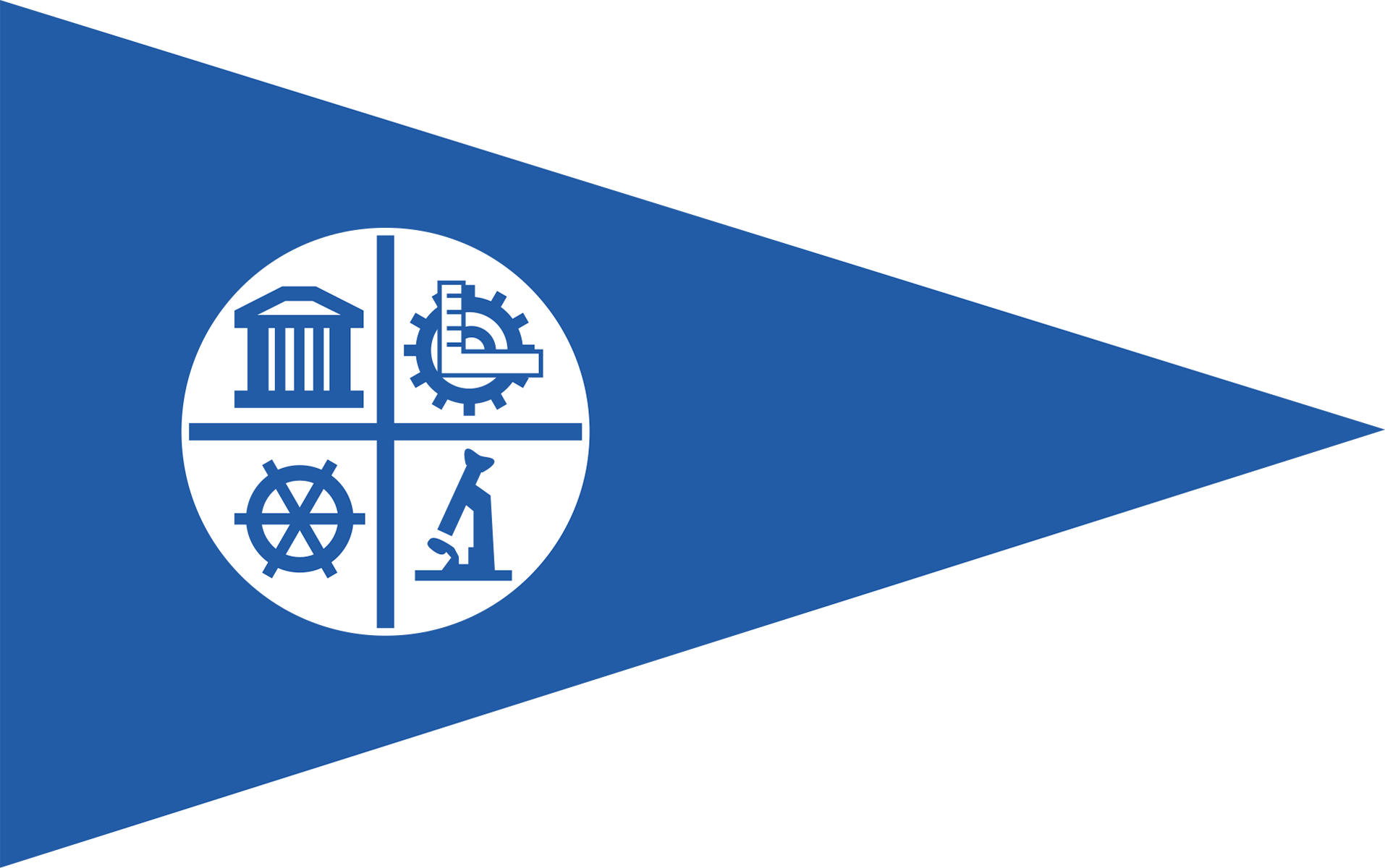
Let’s be honest. The current Minneapolis flag looks less like the banner of a major American city and more like something that might hang in the lobby of a community and technical college circa 1955. It is earnest. It is tidy. It is also boring.
And boring is not who we are.
Minneapolis is bold, complicated, generous and artistic. We are a city of lakes and poets, of neighborhood organizers and entrepreneurs, of Indigenous, immigrant and multigenerational communities that continue to shape its identity.
We deserve a symbol that reflects that vitality.
Look at Chicago. Its four red stars and blue stripes are instantly recognizable. The flag appears on buildings, tattoos, coffee mugs and winter hats. It is civic shorthand for pride.
The same is true in Amsterdam, where the triple X flag is both historic and ubiquitous.
Doesn’t Minneapolis deserve an icon that unifies and inspires us?
Minneapolis has no shortage of urgent challenges that deserve our full attention, from public safety to housing affordability to the everyday work of keeping a city running.
"Minneapolis has never lacked imagination. What we lack is a symbol worth of it."
A flag redesign will not fix those problems.
But this is one small, achievable act that can do more than symbolize unity. It can create a shared emblem that steadies us, inspires us and helps guide us into our collective future.
A Process That Can Work
I recently spoke with Luis Fitch, who chaired the State Emblems Redesign Commission that developed Minnesota’s new flag.
He was supportive of the idea of a Minneapolis redesign and emphasized what made the state process successful: an open public design competition, broad cultural representation, transparency and guidance from professional vexillologists, the scholars of flag design.
The lesson from the state effort is clear. Design by committee can work if it is structured, inclusive and grounded in principles of good design.
Keep it simple. Use meaningful symbolism. Limit the color palette. Make it distinctive.
I have also spoken with moderate and progressive members of the Minneapolis City Council, as well as the mayor. Across ideological lines there is openness to reimagining our city’s flag. That alone feels like progress.
A Stake in the Ground
At a time when Minneapolis has been tested and has responded with courage and unity, we should have a banner that captures that spirit.
The Minnesota flag has shown us what is possible when a community decides it deserves better symbolism.
So here it is, a stake in the ground.
Let’s do this.
Let’s launch a thoughtful, inclusive public process to create a Minneapolis flag that represents all of us.
A flag that children can draw from memory. A flag that artists want to reinterpret. A flag that shows up on storefronts and at festivals and at moments when we stand together.
It’s time for a flag as strong and creative as the city it represents.