
Andy Schwarm is an avid bicyclist and the treasurer of the Hill & Lake Press. He lives in Lowry Hill.
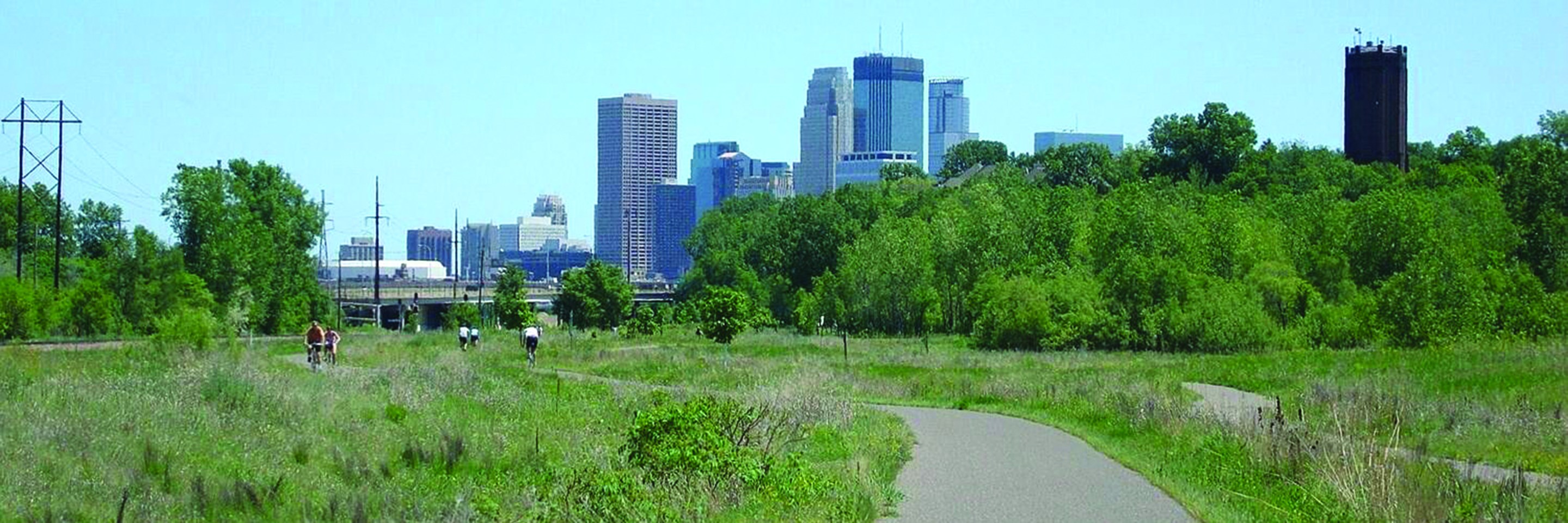
Earlier this winter, the remaining sections of the Kenilworth and Cedar Lake trails reopened after nearly seven years of closure for construction of the Southwest Light Rail project. The full return of what Minneapolis officials call the most intensely used trail in the city’s park system was met with excitement and relief. Cyclists and pedestrians now have restored access from Target Field and downtown to Cedar Lake Parkway and the Midtown Greenway.
"After nearly seven years of construction, Minneapolis’ Bike Freeway reconnects the city."
Large portions of the trails closed in 2019 when the Metropolitan Council began heavy construction for the Metro Green Line Extension. The pedestrian and bike corridor runs parallel to the BNSF Railway line out of downtown Minneapolis, where track installation and construction of three new light rail stations required shutting down key segments of the high-volume commuter route.
When work began in 2019, officials expected the Kenilworth corridor to be closed for three years. The project grew more complicated, and trail changes drew early resistance after more than one thousand trees were removed along the formerly shaded route to make room for the expanded rail corridor.
As part of the rail project, the trails have been rebuilt with new fencing and signage. Work is ongoing near Target Field, where fencing narrows the Cedar Lake Trail. A zigzag detour also remains at the Midtown Greenway and Kenilworth connection south of Cedar Lake. The Metropolitan Council plans a public celebration of the full reopening once remaining work wraps up this spring.
The long closure significantly disrupted both commuter and recreational access from downtown to the Chain of Lakes. Plowed in winter, the corridor connects three of the most heavily used dedicated trail systems in Minneapolis: the Kenilworth Trail, the Cedar Lake Trail and the Midtown Greenway.
The Cedar Lake Trail opened in 1995 as the first federally funded rail-to-trail conversion in the United States. The Rails to Trails Conservancy has called it “America’s first bike freeway” because it was designed for high-volume commuting, with two bike lanes and a separate pedestrian path.
The Metropolitan Council estimated that the trail saw about one million visits prior to its 2019 closure, with the Kenilworth corridor alone supporting an average of 2,100 cyclist trips and 400 pedestrian trips daily.
Construction forced many of those users onto less safe roadways and slower, less direct routes. The winter reopening brings the network back online before the higher-use months of spring and summer.