
Will Stancil is a lawyer and housing policy researcher. He lives in Lowry Hill.
The federal government’s siege of Minneapolis appears to be in its ending phases, but the aftermath is only beginning. U.S. Immigration and Customs Enforcement and U.S. Border Patrol flooded the city starting in December under Operation Metro Surge, with as many as 3,000 officers patrolling neighborhoods and conducting raids.
In hindsight, the operation’s turning point was the murder of Alex Pretti on Nicollet Avenue. The killing, filmed from multiple angles by observers, collapsed the Trump administration’s narrative that Pretti was a threat.
What remained was one of the most shocking law-enforcement killings ever caught on camera: a disarmed man on all fours, shot ten times in the back at point-blank range by masked paramilitary agents in broad daylight.
Following the footage, political support for the operation faltered. Border Patrol commander Greg Bovino was removed and reassigned. He was replaced with Tom Homan, the administration’s “border czar.”
A Leadership Shake-Up and New Tactics
Bovino relied on shock-and-awe policing — convoys of armored vehicles, tear gas in crowded streets and highly visible intimidation. Homan adopted a different strategy: unmarked cars, masked men and covert operations.
Observers report that large-scale tear-gassing declined. But the number of unmarked vehicles and aggressive encounters increased. Neighbors who had grown accustomed to tracking black SUVs suddenly found themselves tailing more discreet, unpredictable vehicles.
Observers Keep Watch as ICE Adapts
Thousands of local observers continued patrolling neighborhoods daily. Their numbers have decreased since January’s peak, but remain substantial. Observers report that federal officers are thinner on the ground but far from gone.
ICE activity quietly shifted into the suburbs and Greater Minnesota, where resistance was less organized. Agents increasingly opted for smaller vehicles. In multiple cases, observers were boxed in, threatened at gunpoint or followed.
Despite Homan’s Feb. 13 announcement that the operation had ended, federal activity still appears in pockets of the metro. Suburbs continue to report encounters, and observers still spot ICE vehicles daily.
No reliable public count of remaining agents exists, and no timetable for their departure has been released.
A Drawdown Announced, but Doubt Remains
Trust is scarce. Too many earlier statements were false, misleading or contradicted by on-the-ground evidence. Observer networks remain wary and continue patrols until the withdrawal is indisputable.
“January was brutal for businesses.”
Few are willing to predict when that will be.
Whenever it finally happens, Minneapolis will have to confront the damage.
Schools Face a Crisis of Trust
Public schools across Minneapolis experienced steep drops in in-person attendance. Declines in some buildings resembled the early COVID years, as many families — especially families of color — sheltered at home for safety.
Whether all students will return remains an open question.
An Uneven Path to Economic Recovery
January was devastating for businesses. Customers stayed home. Some were in hiding; others avoided areas where federal agents deployed violence. Many employers struggled to reassure immigrant and nonwhite staff that coming to work was safe.
February brought signs of recovery, but unevenly.
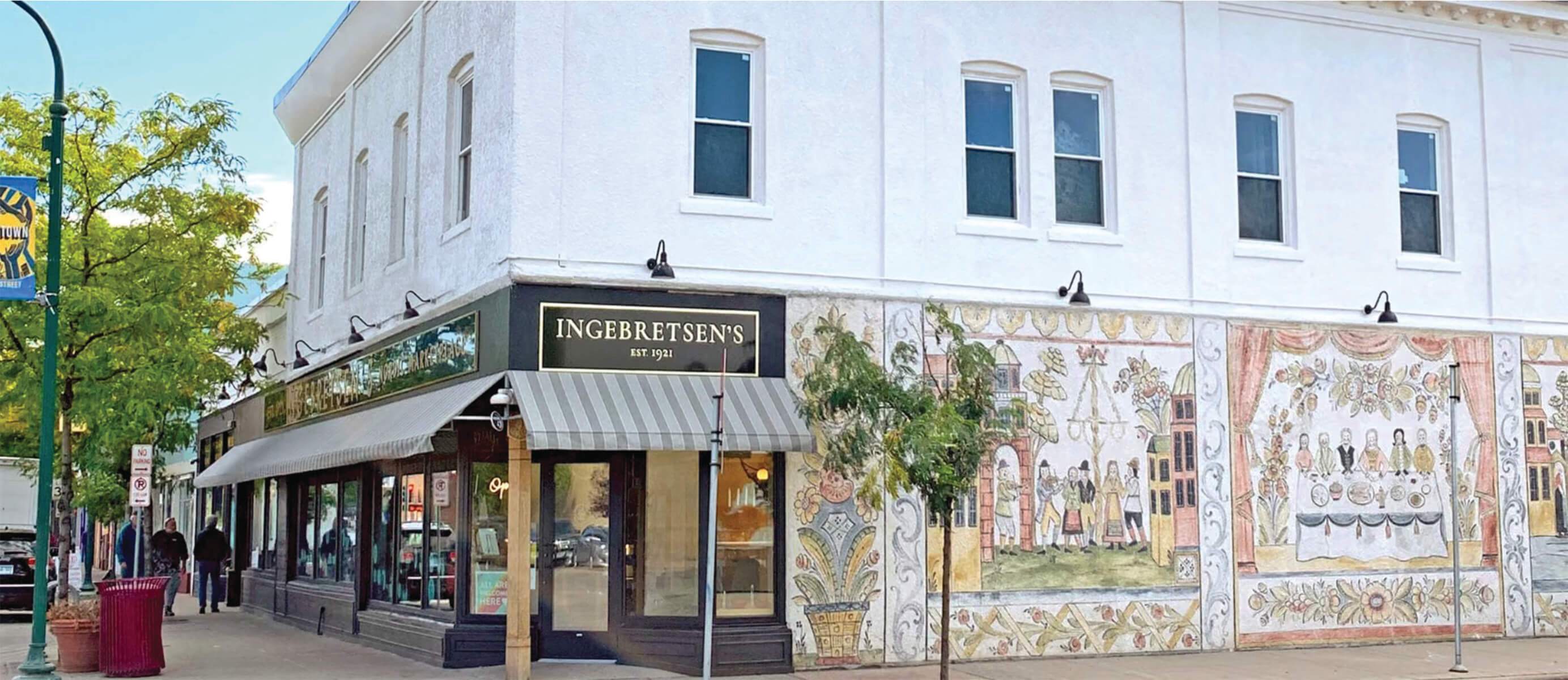
Restaurants along Nicollet Avenue report booming business — helped by visitors to the growing Alex Pretti memorial and by neighbors determined to support affected communities. One owner said they were having “the best business they’d ever seen.”
But across Uptown Minneapolis — on Lyndale, Lake and Hennepin — the rebound has been slower. Some businesses may not survive the occupation, the latest in a string of blows to the district.
Hill & Lake residents looking to help the city recover can make a difference simply by visiting local stores and restaurants more often.
“What remained was one of the most shocking law-enforcement killings ever caught on camera.”
The Future of the Observer Networks
It’s unclear what the observer networks will become. Many volunteers say they will not trust federal assurances until they see empty streets for weeks.
These networks also built deep bonds — often under pseudonyms — that could resurface in future civic engagement or organizing.
Their legal status remains murky. Police in Richfield and Bloomington have recently ticketed or arrested observers, sparking political tension. Yet federal attempts to prosecute observers have mostly collapsed. Felony indictments were downgraded or dismissed, a tacit acknowledgment that observers did not commit crimes. The U.S. Department of Justice has struggled to staff cases after resignations within the Minnesota U.S. Attorney’s office.
Will Families Feel Safe Again?
No one can predict when the social contract will be restored.
Thousands of families have spent months indoors. Will they trust that ICE has truly left? How long before they return to work, school and community life? Will they feel safe again in a city that could not guarantee their safety?
Many may remain in hiding long after the last agent leaves — not out of paranoia, but lived experience.
Minneapolis Won — But the Cost Is Enormous
Despite the trauma, Minneapolis proved something vital. The federal government justified its invasion by claiming that removing immigrants strengthens society. Minneapolis exposed that as a lie.
“Observers report that federal officers are thinner on the ground but far from gone.”
Neighbors defended neighbors across lines of language, ethnicity and immigration status: Latino, Hmong, Somali and more.
Even as the long march to normality begins, one truth remains: the full force of the federal government could not break the bonds between us.
For all the damage already felt — and the hardship still to come — Minneapolis won.