Terry White is a regular contributor. He is also the author of the Better Minneapolis newsletter and podcast. He lives in Field.
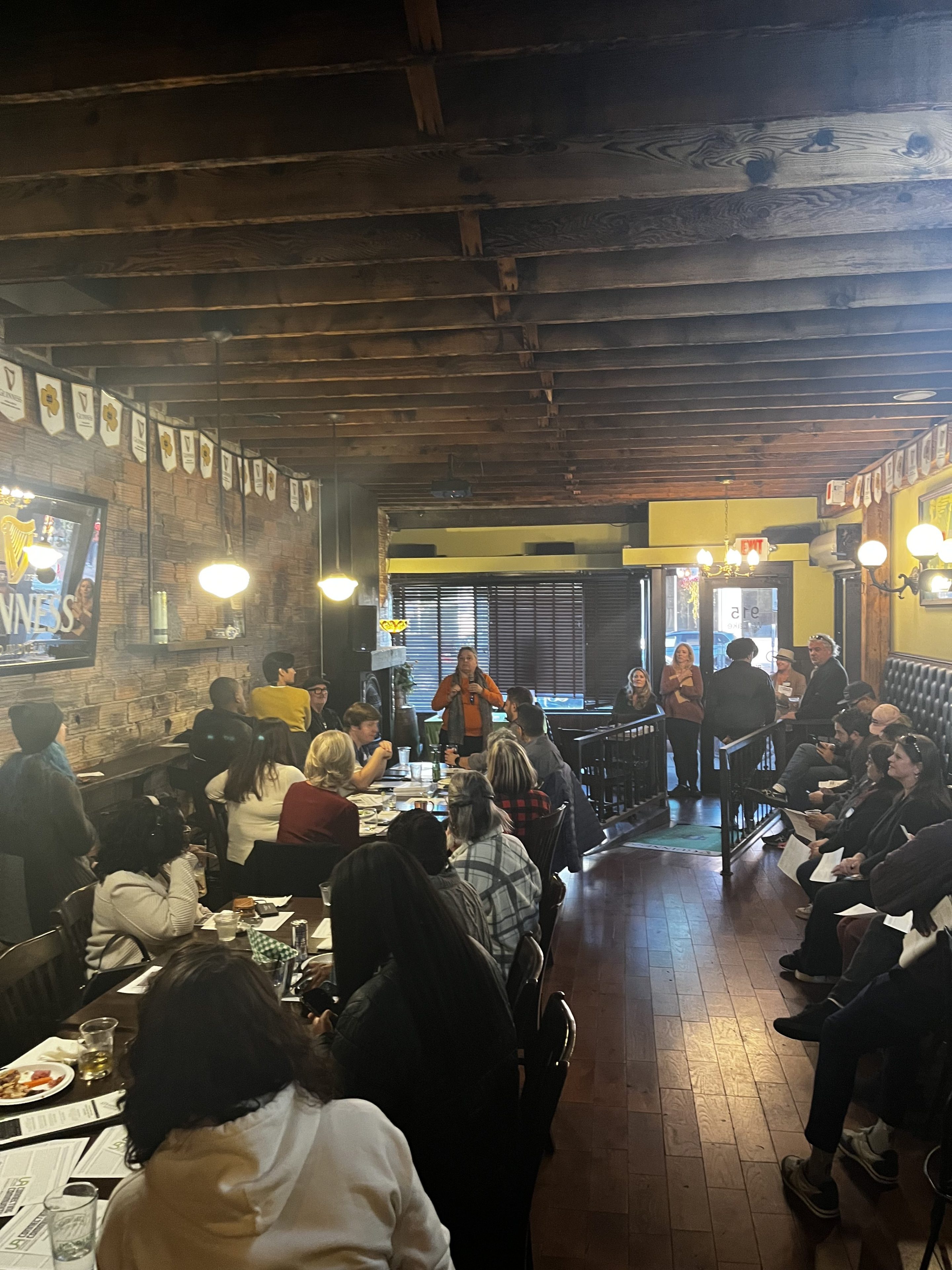
On Oct. 23, the Uptown Association hosted a meeting at Merlins Irish Pub and Restaurant on Lake Street to discuss creating a Business Improvement District, or BID, in Uptown. The event was part of the group’s quarterly happy-hour series, which updates residents and businesses on initiatives aimed at improving the area.
Association President Andrea Corbin moderated the discussion, which featured remarks from Sen. Scott Dibble, DFL–Minneapolis; BID consultant and writer Carol Becker; longtime business owner Eric Enge; and Vital Print Press owner Michael Tadros. A follow-up meeting is planned for January. For information on how to participate, contact the Uptown Association at info@uptownminneapolis.com.
What Is a Business Improvement District?
The city currently operates a Special Service District, or SSD, in Uptown that provides services such as snow removal, graffiti cleanup, boulevard maintenance and garbage collection for area businesses. These services are funded through city-assessed fees on property owners and overseen by a board of property owners, with day-to-day management handled by the Public Works Department.
A BID functions similarly but with key differences. The city would still levy fees on property owners, but the revenue would go to a nonprofit organization instead of Public Works. That nonprofit — governed by property owners, business owners and other Uptown stakeholders — would have greater flexibility to provide services the SSD cannot, including crime prevention, “eyes on the street,” marketing, business recruitment, event hosting and social media outreach.
Supporters say a BID could deliver these services more effectively than Public Works and could also pursue city and state grants to supplement revenue. Attendees also discussed shifting oversight from Public Works to Community Planning and Economic Development, or CPED, since a BID focuses on economic revitalization rather than basic maintenance.
The Intention: Continue Uptown’s Revitalization
Corbin said the goal is to strengthen Uptown’s business community, which in turn supports workers and helps stabilize the tax base. “If you don’t have customers coming in, how are workers going to make tips? How will businesses be able to give raises?” she said.
Dibble acknowledged the difficult years Uptown has faced — the pandemic, the 2020 uprising, property damage and economic shifts — but said he remains optimistic. “I am very, very hopeful,” he said. “I think we’re seeing green shoots of renewal all around us.”
Becker outlined how BIDs work and why she believes Uptown should adopt one. She said many local property owners already contribute to SSDs, which fund services like sidewalk clearing and graffiti removal. BIDs follow a similar model but are run by a nonprofit rather than the city.
She noted that BIDs date back to 1967 and more than 1,000 now operate nationwide, with low failure rates and strong records of improving cleanliness, safety and business activity. She added that BIDs can also handle marketing, events, business recruitment and public-safety efforts — tasks the city is not structured to manage.
Under the proposal, businesses in Uptown, Lowry Hill, Lyn-Lake and Lyndale — and large apartment buildings — would fund the district, hire a professional manager and set service priorities. Single-family homes and small rental properties would not be taxed. Becker said BIDs can leverage grants and private contributions over time, expanding their impact. She called the model “a proven tool” for revitalizing commercial districts and giving businesses a stronger voice in shaping their environment.
Local business owners Enge and Tadros urged stronger participation in the Uptown Association, noting that it provides marketing support, event promotion, grant connections and a platform for businesses to voice needs. Enge highlighted the association’s growing role in promoting Uptown, from e-blasts reaching 10,000 residents to holiday markets, ribbon cuttings and plans for new festivals. Tadros described how joining the board connected him to city resources he hadn’t known about in 25 years of business, including consulting hours, financing support and grants. Both emphasized that Uptown businesses succeed together and encouraged owners to get involved at any level.
Ward 7 Council Member–elect Elizabeth Shaffer attended the meeting to learn more about the proposal. Attendees said they want Uptown to move beyond recent challenges and are committed to helping drive improvements. Supporters believe a BID could play an important role in that work.