
Near the end of Titus Kaphar’s movie “Exhibiting Forgiveness,” an artist takes a portrait of his father off a gallery wall and hands it to him. The portrait is based on a mugshot. Half the face is masked in tar.
Nine of the 15 cathartic paintings seen in the film are on view at the Minneapolis Institute of Art (Mia) in the Bell Family Decorative Arts Court.
Kaphar wrote and directed the semi-autobiographical film in 2024. It explores the troubled and often abusive relationship he had with his father. Tarrell (the Titus character) seems to have moved past his tough childhood: He is a successful artist in a happy marriage with a son of his own. Then his estranged father, La’Ron, now a recovering addict, pays him a visit, forcing Tarrell to revisit painful memories.
What the Paintings Erase
Kaphar’s signature techniques are excising and erasing figures to convey loss, hurt and suppression. In one scene, Tarrell paints “So vulnerable” (2023), three young boys balancing on a fence rail, then erases them with bold white paint. Why? Two of the figures are his cousins, one who died and one who is in prison. They are absent from his adult life, yet still present in his fading childhood memory.
“One does not have to forget the past hurt, but one can choose to change the narrative.”
The portrait of his father, “For your prayer closet 2” (2023), is intensely complicated. Kaphar based it on his father’s mugshot as part of “The Jerome Project,” a series of paintings of convicted men. He painted it in oil and gold leaf so that it resembled a religious icon, then immersed it in tar so that half the face is masked: the amount of his father’s life spent in prison and hidden from society.
The Cost of Holding on
“Forgiveness means different things to different people,” the Mayo Clinic website says. “But in general, it involves a combination of acceptance and an intentional decision to let go of resentment and anger.” The article lists five risks of failing to forgive. Throughout the movie, Kaphar wrestles with every one.
Tarrell brings his anger into new relationships: At an art opening, he angrily chastises a collector, a loss of control that follows seeing his father. He is so wrapped up in past wrongs that he can’t enjoy the present. When he helps his mother pack and move, she sees joy in pictures and keepsakes, and he is only angry. He lashes out and has to leave.
He sleeps fitfully and often wakes violently. At times, he cuts his childhood self out of a painting as an act of self-preservation.
He is at odds with faith. His mother handles the past through prayer and ready forgiveness; she quotes the Bible and says she forgives because she wants others to forgive her. La’Ron, whose own abusive father was a minister, has returned to church.
And he loses connections he can’t get back. When his mother asks him to forgive La’Ron, Tarrell answers with the story of Abraham sacrificing Isaac and confronts her failure to protect him as a child. Soon after, he learns she is in the hospital with a serious health condition she has not shared. He never gets to speak to her again.
One Word
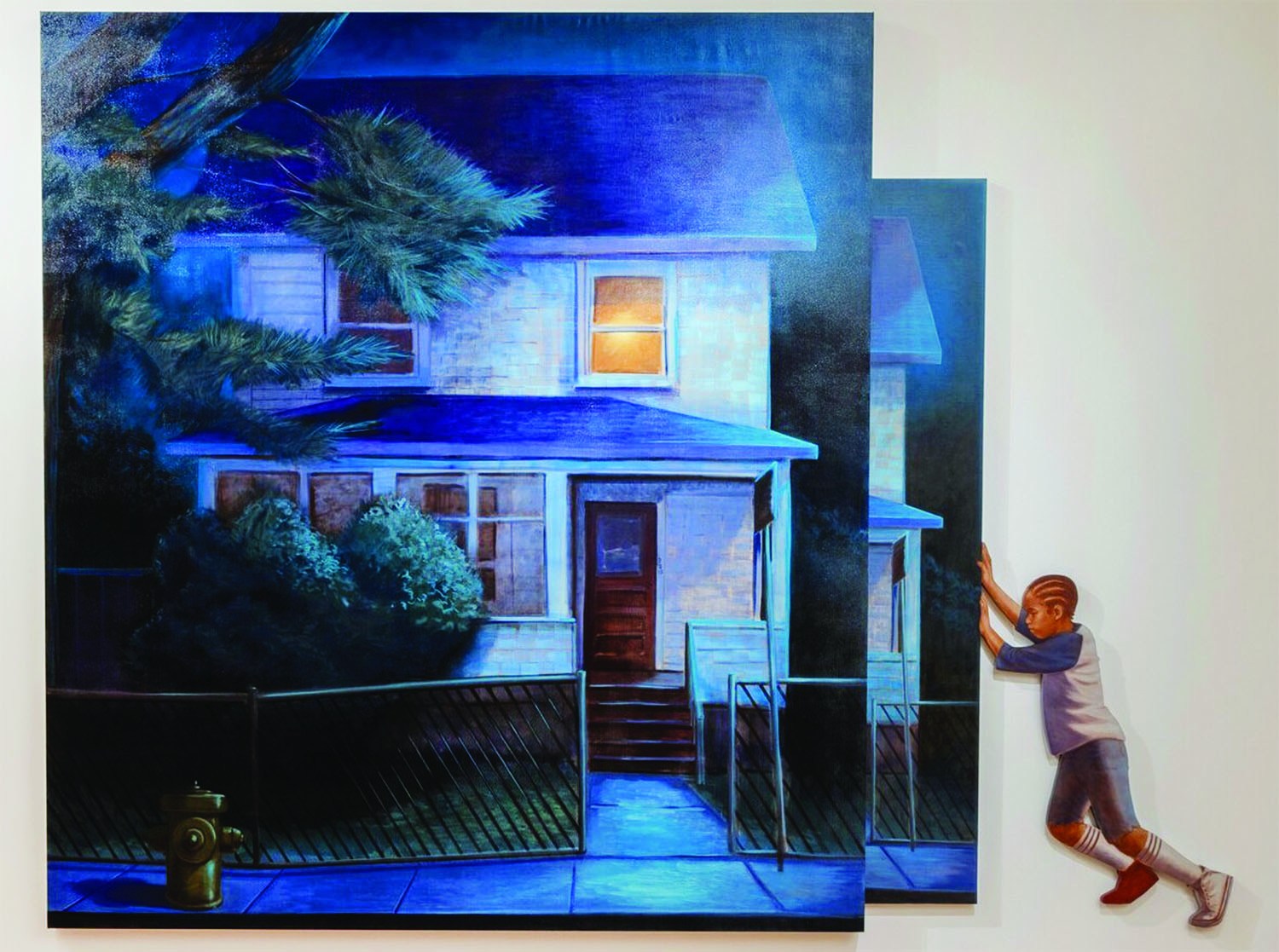
“Do You Remember Douglas Street” (2023–24), a recent Mia acquisition, features prominently in the movie. Adult Tarrell faces young Tarrell, who is pushing the large painting. Young Tarrell answers his counterpart’s questioning eyes with one word: “Don’t.”
Sometimes one just needs to let go of the pain. By choosing to recognize the pain and remove it, Tarrell can move forward to the bright life he now has. When he hands his father the portrait, he finally chooses to release the power his father holds, and forgive.
“Exhibiting Forgiveness” is a master class in the complexities and benefits of forgiveness. One does not have to forget the past hurt, but one can choose to change the narrative. Or, as the Mayo Clinic puts it, forgiveness “can bring a kind of peace that allows you to focus on yourself and helps you go on with life.”
Mia will screen “Exhibiting Forgiveness” on Thursday, Nov. 12, at 6 p.m. The exhibition is free and runs through Jan. 3, 2027.
Josie Owens writes for the Hill & Lake Press. She lives in Lowry Hill.