
A deaf Minneapolis writer reflects on a life shaped by language, identity and art — and how visual storytelling continues to inspire his work.
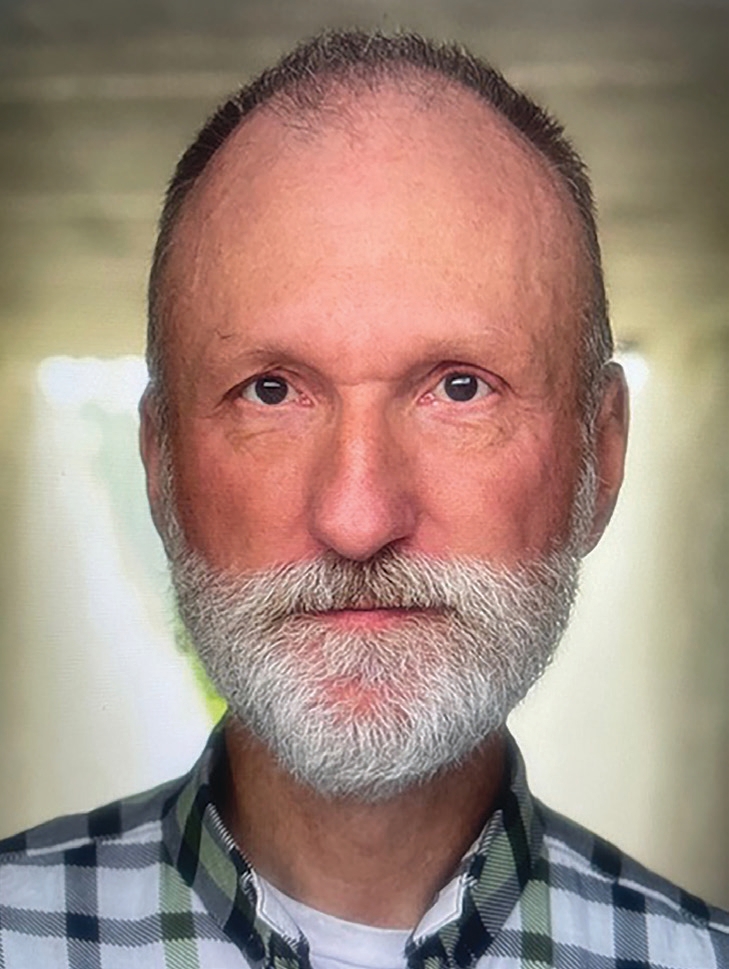
Raymond Luczak is a deaf, gay local author and poet. Raised in Ironwood, Michigan, he comes from a hearing family of nine children.
After graduating from Houghton High School, he earned a B.A. in English from Gallaudet University, the world’s only university specifically designed for deaf students, where he learned American Sign Language.
After Gallaudet, he relocated to New York City, where he lived for the next 17 years. He moved to Minneapolis in 2005, where he has lived ever since.
Since 1993, Luczak has had more than 40 books published, offering a mix of fiction, poetry and nonfiction.
His most recent book is “Named,” a chapbook of 14 stories inspired by his favorite paintings at the Minneapolis Institute of Arts.
Were you mainstreamed as a deaf child, and how did that impact your childhood?
I became deaf at the age of nine months due to a bout of double pneumonia and fever, but my hearing loss wasn’t detected until I was 2½ years old. Because there wasn’t a program for deaf children in Ironwood, I lived with three different foster families over a total of nine years in Houghton, a two-hour ride away, where there was a program for deaf kids. While there, I was taught to speak; I wasn’t allowed to learn sign language. I spent many lonely years completely mainstreamed; my hearing classmates never included me in their activities.
How was coming out for you, and how has it impacted your work?
I knew I was gay all my life, but I didn’t know it had a name. All I knew — somehow — was that it wasn’t acceptable for two men to kiss each other.
My coming out happened gradually. I first came out to my youngest sister when I was 17.
She took it well, considering how much misinformation had surrounded the LGBTQ community at the time. Then, four weeks after I arrived for college in Washington, D.C., I came out to everyone on campus one momentous night.
I had just visited Lambda Rising, my first gay bookstore, and bought seven books. The importance of those books cannot be overstated; they made me feel a lot less alone and gave me the confidence I badly needed to be true to myself.
Then I came out to my parents after my first semester away. They weren’t happy. But I felt I had no choice. I knew that I was going to be a writer — although I had no idea how that would happen — and that I wasn’t going to hide.
All my siblings eventually learned one way or another about me. Because I had never felt included in my own family gatherings, I wasn’t too upset by their reactions. I’ve never regretted coming out.
What piqued your interest in visual art?
Even though the Upper Peninsula didn’t have an art museum, I was very much enamored with visual arts.
I sought it whenever I could, which meant checking out the covers of the latest record album releases every week.
Later, at Gallaudet, I took a oneyear course in art history. I couldn’t understand why we were supposed to learn this or that term related to art evolving through the centuries.
It wasn’t until I moved to New York that it gradually dawned on me that I had to look at art, not just the visual stimuli splattered across CD covers, books and graffiti spray-painted everywhere.
One could say that I was a late bloomer with my art history appreciation. When I moved to Minneapolis, I learned about the Minneapolis Institute of Arts.
As luck would have it, I showed up on the day they opened the new Target Wing to the public for the first time. I instantly fell in love with the place; the fact that it offers free admission sweetened the deal.
I visit Mia at least three times a year. When I’m there, I often turn off my hearing aids. My favorite paintings always demand my full attention.
What drew you to ekphrasis, the process of responding to visual art with your own art?
When I create something out of thin air, I try not to worry about its outcome. I may have some ideas at the outset, but I’ve learned not to lock myself into such expectations.
In terms of ekphrasis, I find it important not to overthink; I simply react.
Often, a painting inspires a strong opening sentence that forces me to explain it.
Take the opener for “Harry,” inspired by Modigliani’s “Little Servant Girl”: “She strides a streak of black into the reading room where I’m trying to compose a letter to my nineteenth fiancée.”
Whoa — this guy has had 19 fiancées? Just who is he? And who’s she in black? And why are they together in the reading room?
All those questions are front-loaded in that one sentence alone. Answering them made it easy to write its first draft. I rewrote, tightening it to fit on a single page.
I enjoy the challenge of condensing a story. Much like when I compose poems, the process forces me to evaluate the weight and force of each word.
The stories in “Named” are not autobiographical, which made them fun to write. It meant imagining more fully the lives of my characters not always revealed in the paintings.
I love discovering things I didn’t know about my characters, and I hope my readers do, too.
You can learn more about Raymond at raymondluczak.com.
David Piper is a retired judge and regular contributor. He lives in Kenwood.