
Brandon Colpitts lives in Lowry Hill. He’s mostly known as Elyse’s husband.
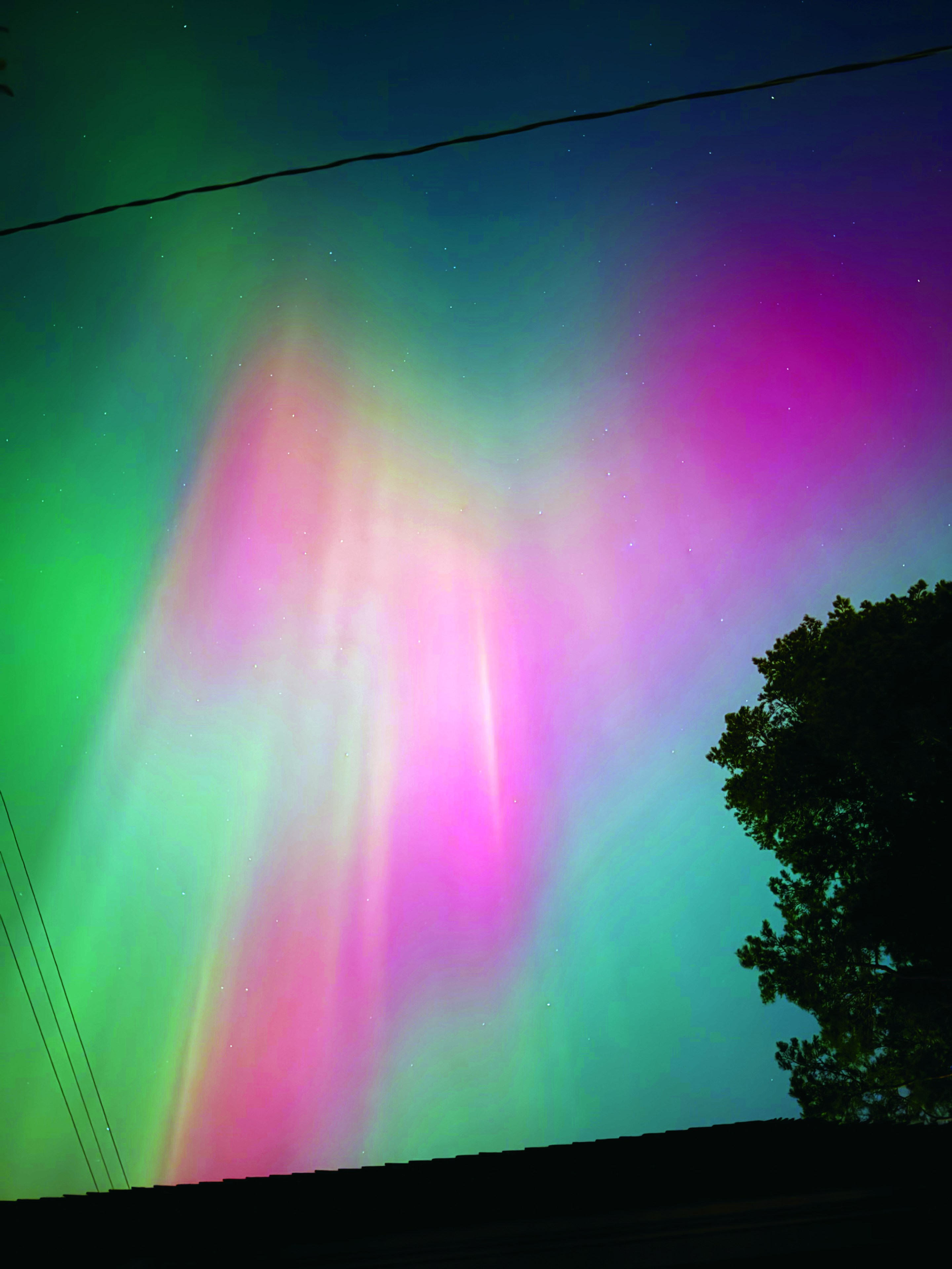
The “fall colors” exploded into nighttime on Nov. 11, when a severe G4 geomagnetic storm — on a scale where 1 is minor and 5 is extreme — aligned with clear skies to put on a fantastic performance. Never have I stood under a hospital-white streetlamp (where’s the off switch on these things?) and witnessed aurora like that.
Powerful CMEs, or coronal mass ejections, are huge bursts of charged particles from the sun that collide with Earth’s magnetosphere, exciting electrons that strike the gases in our atmosphere and create a dazzling light show.
What made this storm rare was how much of the atmosphere was energized. Most people know the “common” green — though calling anything aurora-related common feels wrong — which comes from oxygen atoms in the lower, denser part of the atmosphere. But all that red? That’s oxygen too, just much higher up, roughly 150 to 300 miles, where the air is thin enough to produce that deep, stunning red that only appears during the strongest storms.
The pinks, purples and magentas come mostly from nitrogen mixing with oxygen emissions, giving us the full rainbow-sherbet sky.
If you missed it, the good news is we’re still near the peak of a solar cycle, meaning you might get another chance. Several apps — I use My Aurora Forecast — can alert you when the Kp index is high. It runs from 0 to 9, and on Nov. 11 it hit 8.33.
My favorite part was watching everyone stop and look up: neighbors gathering in their backyards, jockeying for the darkest patch; text chains lighting up with the best kind of breaking news; people drifting toward the parks and lakes, phones slipping into pockets as the real show began.