
Terry White is a regular contributor. He is also the author of the Better Minneapolis newsletter and podcast. He lives in Field.
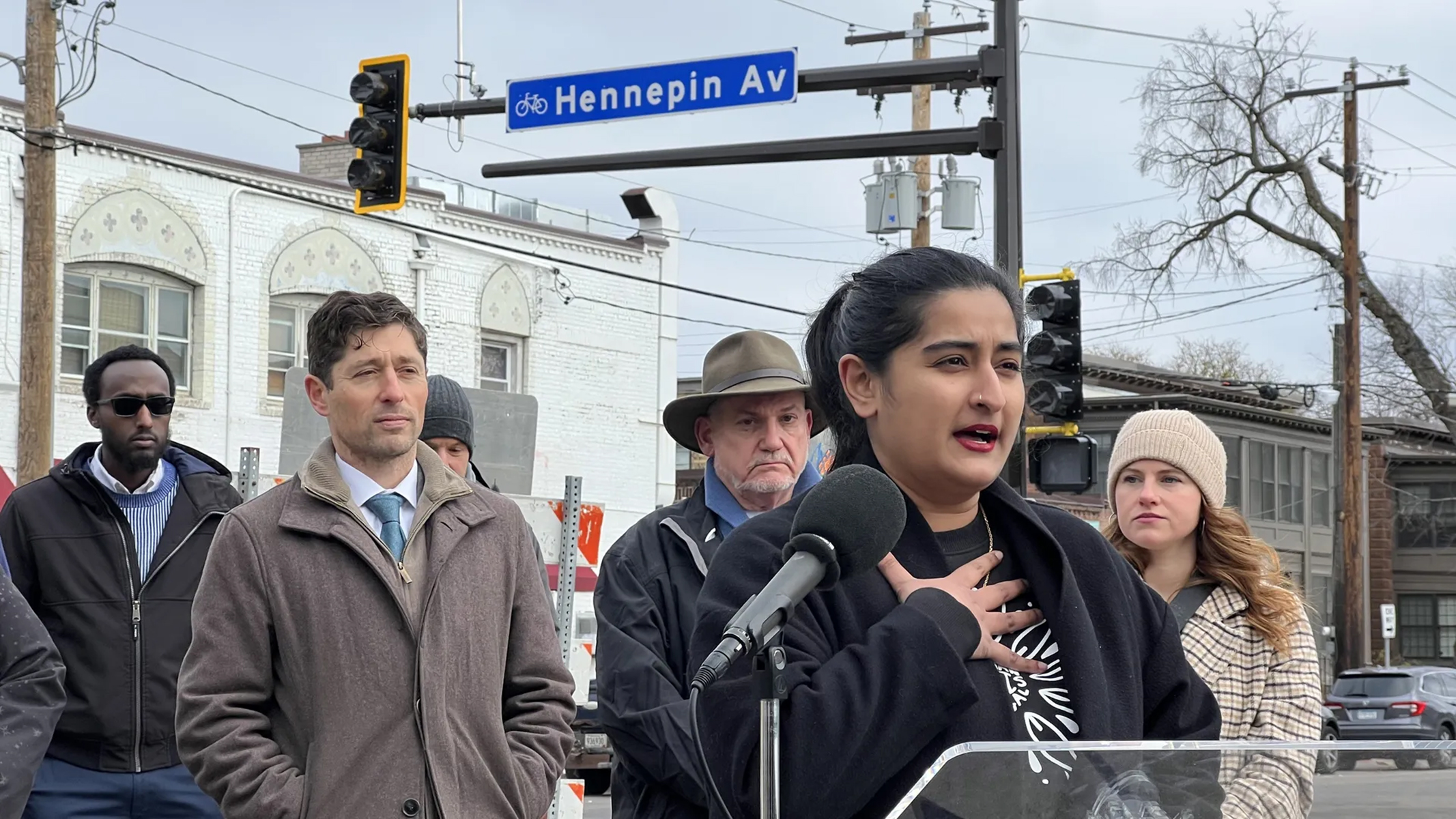
Metro Transit officials marked the opening of the new E Line bus rapid transit route with a ribbon-cutting and media event on Dec. 6, 2025.
Local elected officials attended, including Minneapolis Mayor Jacob Frey and Hennepin County Commissioner Marion Greene, who represents District 3.
“Buses on the E Line arrive every 10 to 15 minutes, with all-door boarding and fewer stops.”
The E Line runs from the University of Minnesota campus through downtown Minneapolis and Uptown, continues southwest to France Avenue and West 44th Street, and terminates at the Southdale Transit Center. The route replaces Local Route 6 and is designed to reduce travel times by making fewer stops and requiring riders to pay fares before boarding.
“The E Line project cost $64 million to construct, not including ongoing operating expenses.”
Adult rush-hour fare is $3.25. Riders can pay using a refillable Go-To Card or the Go-To app. Stations along the route feature heated shelters, enhanced lighting and additional security cameras.
The E Line is part of Metro Transit’s bus rapid transit expansion and joins the A, B, C, D, Orange and Gold lines. Metro Transit reports that ridership on those lines has increased since last January.
The E Line project cost $64 million to construct, not including ongoing operating expenses. The route will use 18 articulated, 60-foot buses with all-door boarding. Service runs daily, excluding the hours between 1 a.m. and 4:30 a.m., with buses arriving every 10 to 15 minutes — a 30% increase in service compared with the former Route 6.
“The E Line will increase service by about 30% compared with the former Route 6.”
If weekday ridership matches Route 6 levels, Metro Transit projects about 3,800 rides per weekday. At full rush-hour fare, fare revenue would take more than 14 years to equal the project’s capital cost. A 20% increase in ridership would reduce that estimate to about 12 years. According to the Metropolitan Council, the operating subsidy for a route of this type averages about $6.15 per ride.
Additional bus rapid transit lines are in development and scheduled to open in 2027. The Green Line Extension, also known as Southwest light rail, is under construction and is projected to have a capital cost of more than $3 billion. Officials continue to evaluate the costs and performance benchmarks for major transit projects, including ridership and operating subsidies.
Incorporating bus trips into daily routines can support public transportation use and help reduce vehicle miles traveled.