
Craig Wilson is the editor of the Hill & Lake Press. He lives in Lowry Hill.
On the morning of Saturday, Jan. 3, federal immigration agents conducted a traffic stop along the south side of Kenwood Park, drawing the attention and concern of nearby residents and passersby.
According to multiple eyewitnesses, agents believed to be with U.S. Immigration and Customs Enforcement pulled over a vehicle and questioned its occupants on the side of the road. Witnesses said one individual was escorted from the car into an SUV clearly marked “ICE” and taken into custody.
Several people who observed the stop described the scene as unsettling. One eyewitness said she felt shocked and unsure how to respond or what, if anything, she should do. She called out to agents to inquire whether they had a warrant but was ignored.
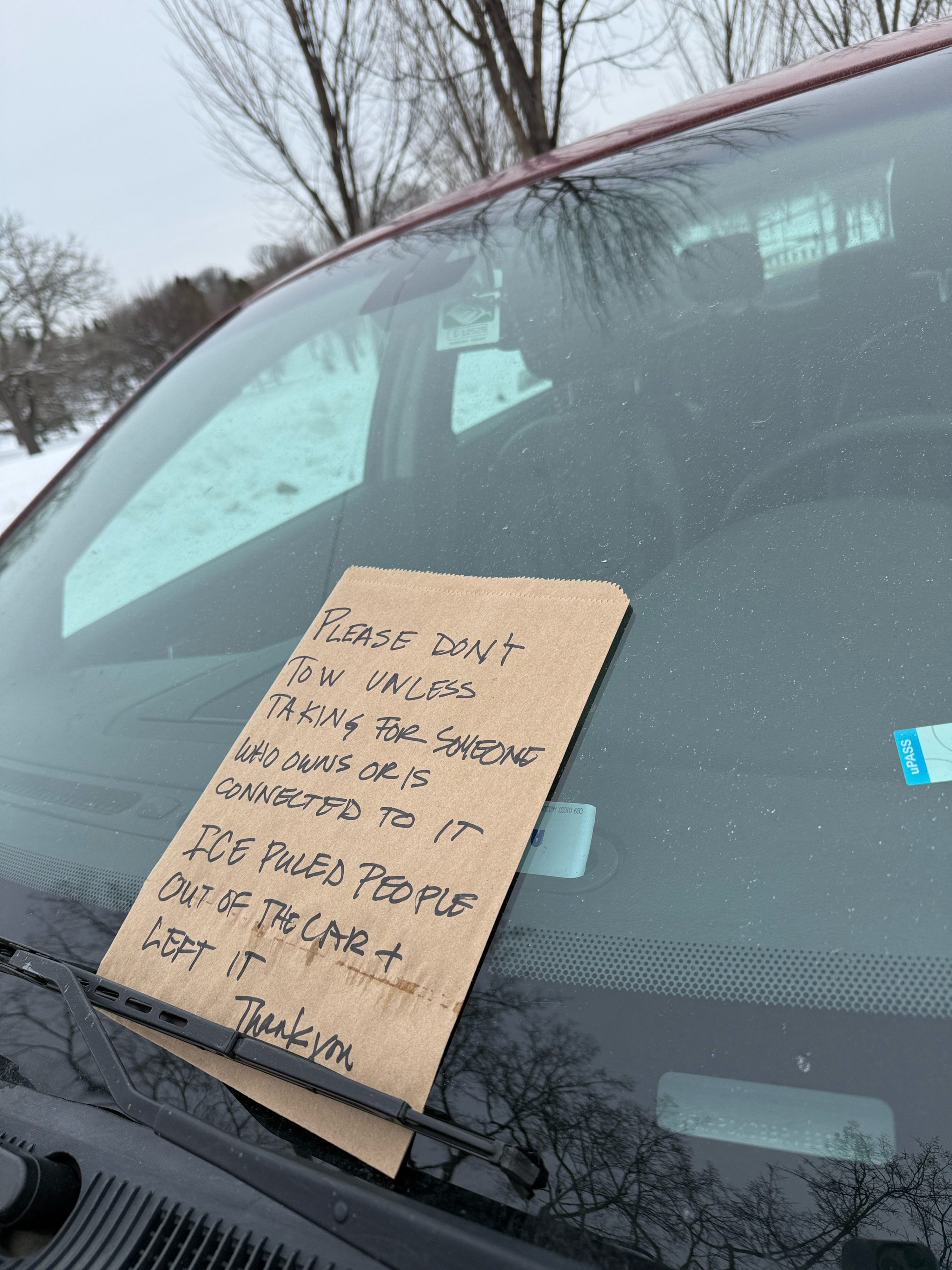
Shortly afterward, the ICE SUV left the area. The original vehicle was left behind on Franklin Avenue, unattended.
Concerned that the abandoned car might be towed, one witness wrote a handwritten sign and placed it in the vehicle’s window, asking that it not be removed and explaining that ICE agents had taken its occupant.
The incident circulated quickly among neighbors through text messages and social media, prompting questions not only about immigration enforcement activity in residential areas but also about how community members should respond if they witness a similar situation.
What neighbors can do if they witness an ICE stop
Community advocates note that bystanders often feel frozen or unsure in moments like these. While individuals should never interfere physically with law enforcement, the following steps are generally considered appropriate:
Observe and document: If safe to do so, witnesses may record video, take notes or document badge numbers, vehicle markings, time and location. Standing at a distance is advised.
Ask, not obstruct: Calmly asking whether agents have a warrant is permitted, though agents are not required to respond to bystanders.
Do not interfere physically: Intervening or obstructing officers can escalate the situation and may lead to arrest.
Check on what is left behind: If a vehicle or personal property is abandoned, neighbors can help by notifying trusted community members, legal aid organizations or family contacts if known.
Share verified information: Accurate details shared responsibly can help advocacy groups and legal observers respond appropriately.
MPR recently published a story that is worth reading about the dos and don'ts of approaching ICE.
The eyewitness who contacted Hill & Lake Press said she hoped the community could use the experience to better understand what is recommended in such situations, noting that “it all happened very fast, and I didn’t know what the right thing was in the moment.”
As of publication, no official information had been released regarding the reason for the stop or whether a warrant was issued. Hill & Lake Press will continue to seek clarification and report updates as they become available.