
Picture this: You’ve met someone special. Charming, funny, and OMG their values align with yours. They even live in your neighborhood! But a few months in, you realize this person is bad with money– always complaining about being broke while making tons of careless financial choices. Their past is full of burned bridges. And they start telling you about the handful of times they’ve blown up their life, chasing some half-baked, hairbrained scheme (I’m opening a non-alcoholic tap room! No, scratch that, one of those sip and paint craft studios but for dogs!).
The only place with more red flags is the factory that manufactures red flags.
This is what it feels like to be a Minneapolis Public Schools parent. We’ve entered a long-term partnership with a problematic school system. May I present Exhibit A: On August 28, 2026, the Star Tribune reported the district never asked the state in $4.1M in special ed reimbursements, also noting the $5.3M in IRS fines for failing to properly file federal tax forms. And of course, 2020’s wildly unpopular Comprehensive District Design (CDD), aimed at fixing equity and budget issues by shaking up which kids went to which schools like a district-wide Boggle game. Guess what? MPS is as segregated as ever, and lost over 2,200 students in the immediate aftermath. The district continues to hemorrhage families and with them, funding.
MPS reported about 29,000 students attended district schools in 2025-26, significantly less than its 43,000 student capacity. Those stats aren’t great. But don’t worry! The district spent the last three years creating a plan that will address its nearly $40 million budget deficit and sharp enrollment declines, which they shared with educators and families on September 15th.
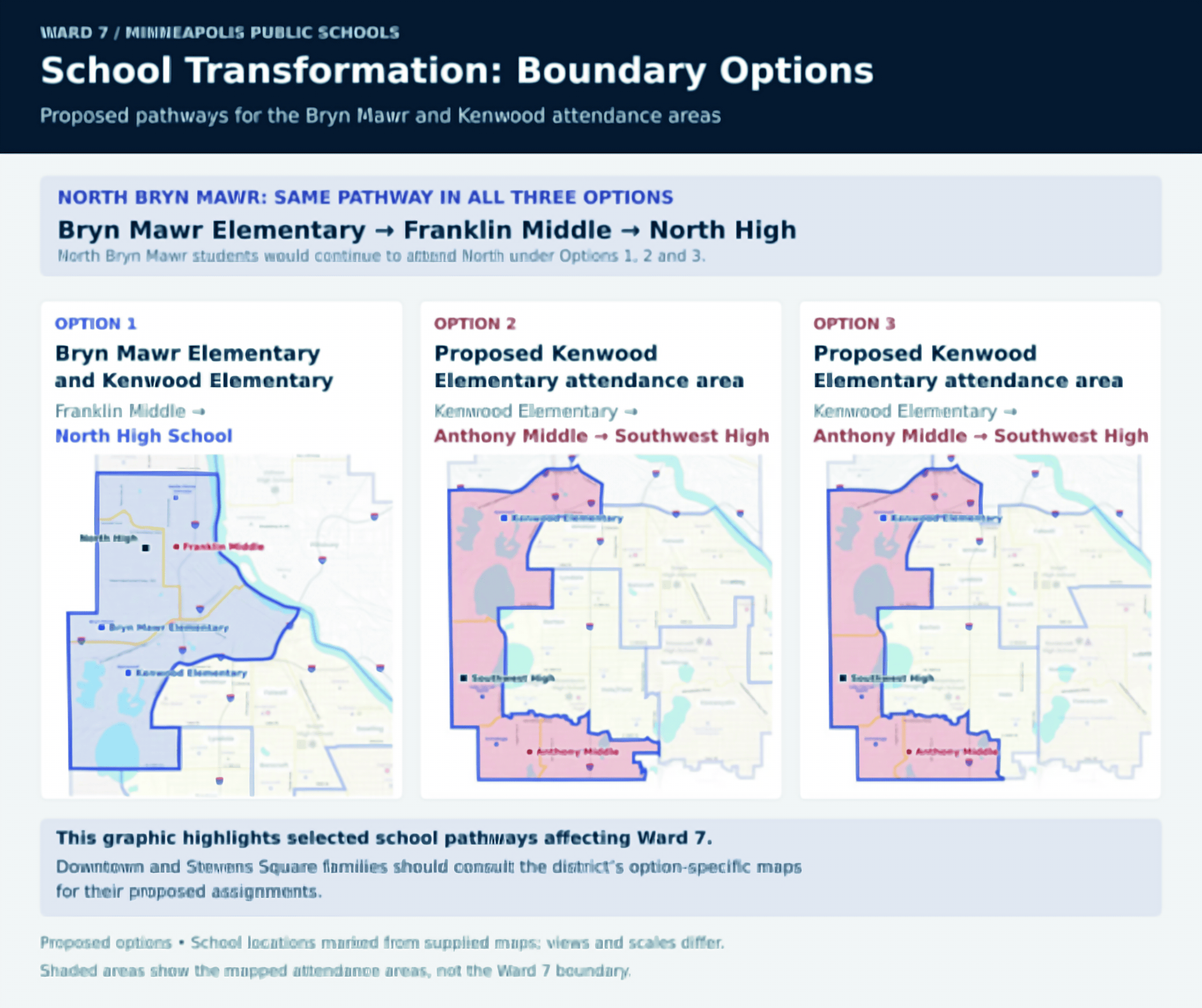
MPS’s Transformation Plan offers three options aimed at creating a “guaranteed MPS experience” for all students. All three plans include shutting down a significant number of schools– 14-16, depending on the option. On slide 112 of the district’s 118 page presentation, they finally get around to the numbers. At most, shuttering facilities will save the district $705,000. When pressed at the September 15th meeting, Deputy Superintendent Ty Thompson stated closures are “not something that’s a huge cost savings.” Instead, the district assured parents that this plan will create a more equitable experience for all MPS students. How? Just trust us, bro.
“The only place with more red flags is the factory that manufactures red flags.”
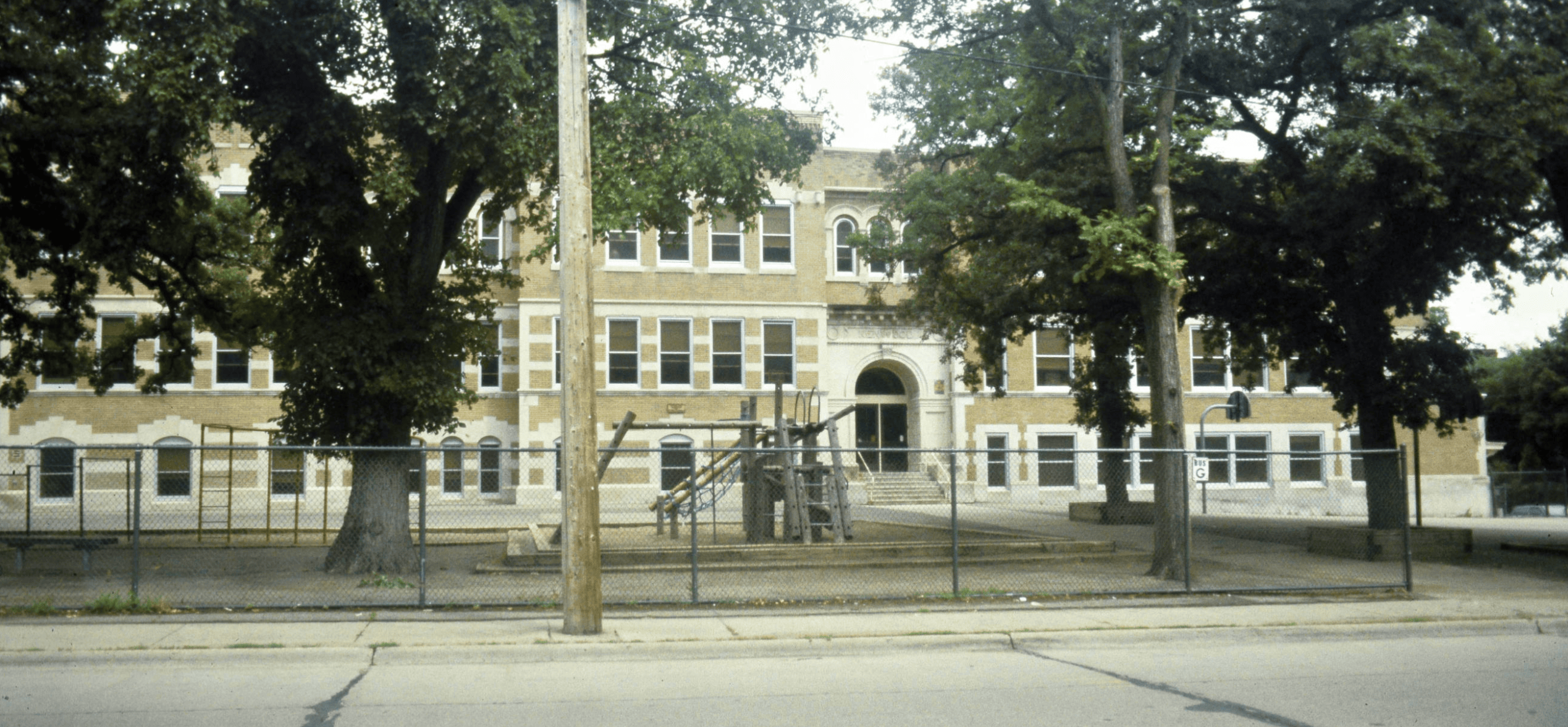
Look, I am not a person who believes any school closure is a travesty. Sometimes we must, for the greater good, make decisions that hurt our heart. But in the case of the transformation plan, the district has made no effective sales pitch. If closing schools isn’t about saving money, what are you optimizing for? Don’t throw around words like equity when you haven’t explained what that means, and how this new plan will make things so much better that we’re willing to dismantle the schools we purposely chose to live by. The same schools that acted as lifelines for families during Metro Surge. The places where a huge portion of community building happens in our city. You know, public schools aren’t businesses, right?
But, maybe we could borrow some transformation strategies from the business world. I recently spoke to my friend Jordan Husney, the CEO of a small software company, whose daughter attends Pratt Elementary in Prospect Park, one of the community schools slated to close. Husney previously worked in strategy and transformation for Undercurrent, a firm that helped Fortune 500 Companies with reorganizing to match new goals. “I’m not against transformation,” Husney says. “I spent nearly a decade transforming large corporations. As a former consultant, I can tell you this current plan and process are shoddy work.”
One of Husney’s biggest complaints? That the district’s multiyear process was executed so opaquely. “Transformation isn’t about the conclusion,” he says. “Transformation is about effective communications and bringing everyone along on the ride, so as many people as possible will support the plan rather than fight against it.” Husney was a member of Pratt Elementary’s Site Council, a mandated board of caregivers and community members to help govern and advise the school. “Not once did MPS offer us information on the goals of their transformation or engage with caregivers or faculty. To my knowledge, the most we ever saw were results of a survey on building conditions…Jumping from there to closing up to 16 schools is too great a leap.”
For Husney, a solid transformation plan requires dialog. “Good leaders start with why change is necessary, share facts, goals, and provide plenty of time for listening long before any plans are proposed,” he says. “This gives everybody the sense they’ve been heard, and greatly improves the quality of the transformation by incorporating ground truth.” Successful transformations start with everyone understanding the stakes, coming up with a list of demands, followed by a compromise. In the best outcomes, Husney says, everyone leaves everyone a little disappointed, but heard.
“As a former consultant, I can tell you this current plan and process are shoddy work.”
Technically, the school board is soliciting feedback through mid-October. District leaders plan to report initial feedback Oct. 20, and develop a final recommendation before the planned school board vote on Nov. 10 (which just so happens to be one week after we vote for a new school board; another red flag!). Whatever option this current board chooses is set to go into grade teacher, I can’t give you a passing grade if you don’t show your work.
Even if we delay the vote, the damage is done. Closing schools is hard on families. But not closing them yet is also hard. So we wait another six months or a year to see if maybe we can reimagine a plan where more schools stay open? I can handle uncertainty in some areas of my life. My children’s academic future is not one of them.
I asked Husney if he could envision a scenario where his daughter’s school still closes, but he could live with the decision. “Of course,” he says. “But right now, I’m left with a void of information. And so it’s far too easy for me to project into that void, not even maliciousness, just incompetence.”
Maybe the transformation plan is great. Maybe it’ll stop the bleeding. Maybe we parents are a bunch of whiny babies who should sit down and shut up and trust MPS, bro. (We really do want to support you, MPS!) But bro: We’re trusting you with our most precious thing in the world, our children. The only “guaranteed MPS experience” I see is the anxiety of parents wondering how much longer they can continue a partnership with a system that can’t seem to get it together.
Many families and educators are asking the school board to delay the vote until the new school board takes office in January.
Here’s how you can help:
Take the MPS Transformation Plan survey: https://my.thoughtexchange.com/participate/226363058
Email your school board members and Superintendent Lisa Sayles-Adams, telling them to delay the vote. Make it short and sweet– one or two sentences. Tell them your personal connection to the district, that you feel the vote is being rushed, threatening the stability of all children in the district.
Molly Mogren Katt writes for the Hill & Lake Press. She lives in the Wedge.