
Terry White is a regular contributor. He is also the author of the Better Minneapolis newsletter and podcast. He lives in Field.
The City Council approved Amendment No. 29 to the mayor’s 2026 budget in a 10-1-2 vote, allocating $700,000 to fund up to eight public restrooms along Nicollet Avenue downtown.
The initiative was spearheaded by outgoing Council Member Katie Cashman, with Council Members Rainville, Chavez and Chowdhury listed as co-authors. Council Members Ellison and Jenkins were absent. Council Member Palmisano cast the sole vote against the amendment.
Under the proposal, the city would contract with an outside vendor to provide restroom units as a service rather than owning or maintaining the facilities. The request for proposals would be managed by the Public Works Department.
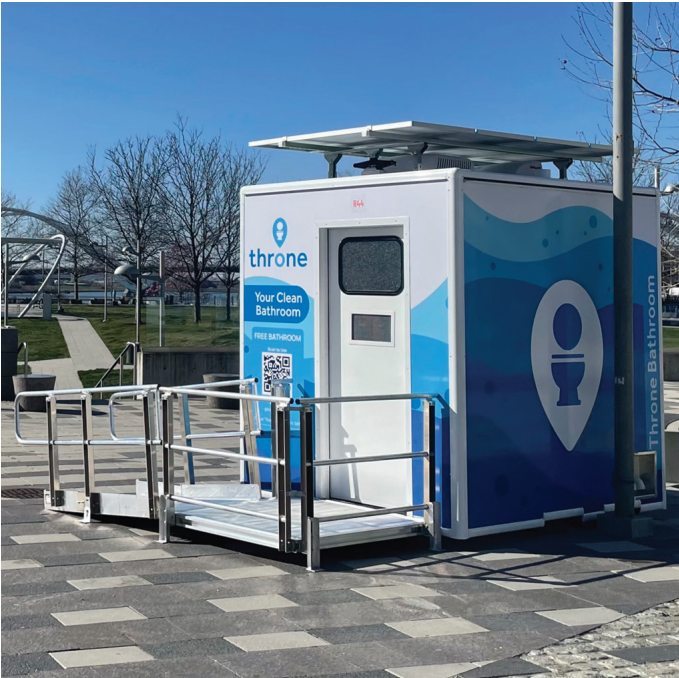
One potential vendor cited during discussions is Throne, a company that provides self-contained, technology-enabled restroom units. The units are equipped with sensors that monitor usage around the clock from a remote location. Users access the restrooms through a mobile app, text message or tap card and are allotted a 10-minute time limit. Users who exceed the limit may be restricted from future use.
The units feature touchless flushing and faucets, enhanced ventilation and climate control, and are designed to be tamperresistant and durable. They do not connect directly to water or sewer lines. Wastewater is stored in a holding tank, and gray water from hand washing is reused for flushing. Sensors notify the vendor when tanks require servicing.
Use of the restrooms would be free. Because the units are portable, they could be relocated based on pedestrian traffic and demand. The restrooms typically operate on solar power, with the option to connect to an external power source if needed.
If implemented as planned, the restrooms are intended to provide a clean and accessible option in high-traffic downtown areas. City data show that between July 1, 2024, and June 30, 2025, Minneapolis 311 received 27 complaints related to human feces in public spaces. Cleanup of those incidents is currently
handled by Downtown Improvement District ambassadors. City officials cited the data as one indicator of the need for additional public restroom facilities.
Funding for the restroom program would come from the state’s 2013 Streetcar Value Capture Fund. Although no streetcar project is currently planned, the fund remains active. John Micevych, a staff member in Cashman’s office, said the fund is authorized to exist for another 25 years, providing a stable source of revenue.
In 2021, the Minnesota Legislature expanded allowable uses of the fund to include broader transit-related purposes, making the restroom initiative an eligible expense.
Some concerns were raised about potential misuse of public restrooms, but supporters said the design and monitoring features of the proposed units are intended to address those issues.