
(Images: Jackie Colburn and Courtney Kiernat)
Cedar Meadows Wetland may not seem like a big deal. After all, it’s only 4.6 acres. But this little plot of land packs a big punch and matters not only to the people and waterfowl who visit it, but also to the health of our lakes at large.
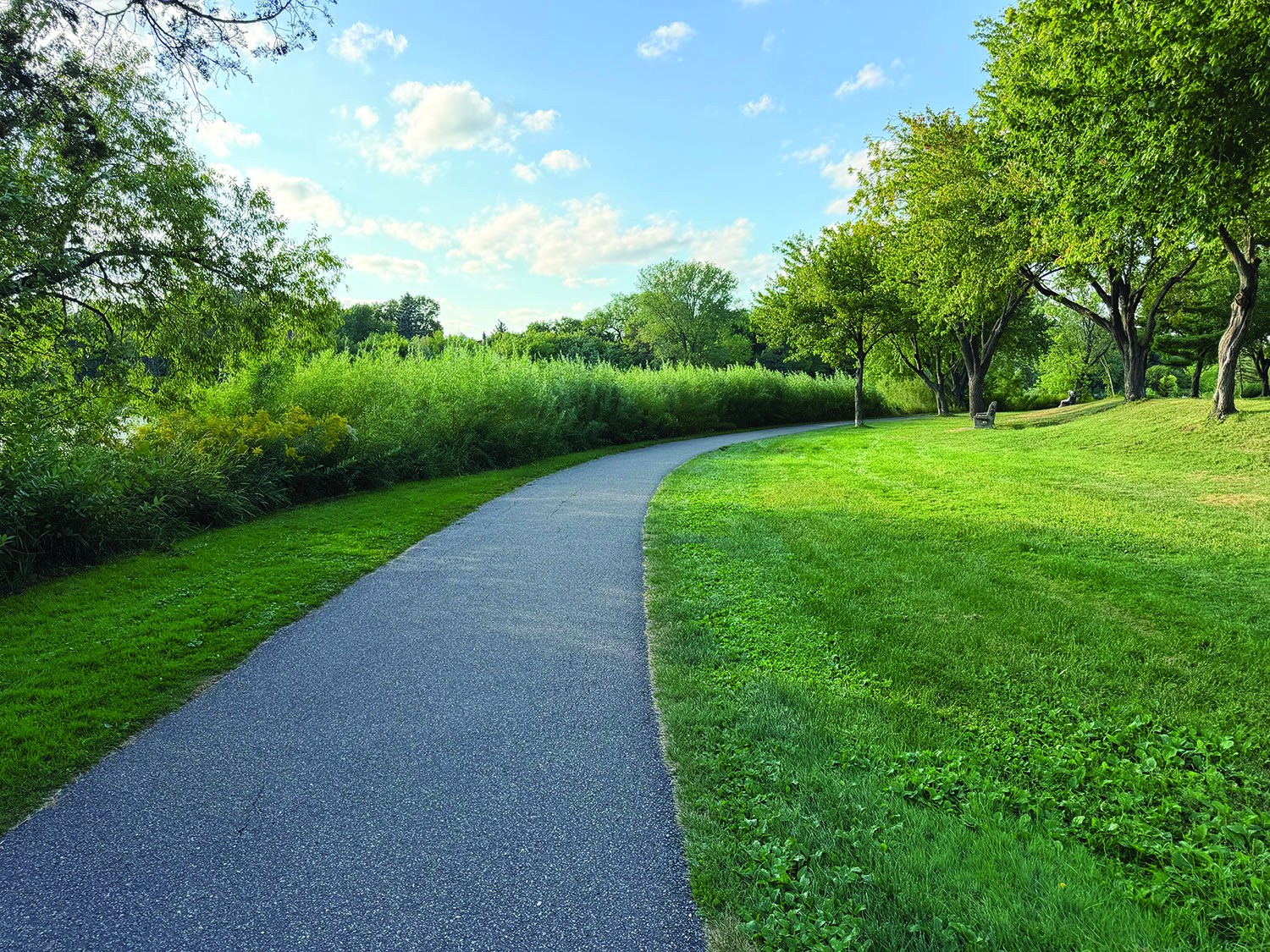
The wetland sits just west of Cedar Lake. The small body of water, surrounded by walking paths, is nestled between France Avenue, Cedar Shore Drive, Cedar Lake Parkway and Jones-Harrison Senior Living.
I walk past Cedar Meadows Wetland at least three times a week and have for years with my family and our black goldendoodle, Dante. Over the past few years, the paths have become increasingly ruptured and rutted, and the wetland more and more overgrown and stinky.
A few of my neighbors have complained to the Minneapolis Park and Recreation Board about how unusable the paths are, and one resident even fell into a giant pothole. With the property right next to a senior residence, it seems a further shame that it isn’t more enjoyable and navigable for the people who live there.
My wonderings about the wetland led me to ask about ownership, stewardship and the current status of the property. What’s at play? Why is it so lackluster and smelly? And what can we expect, or do, about it?
A Bit of History
Longtime residents have told me that for a period of time the land was used as a sports field where the baseball diamonds were perpetually muddy. But in the 1990s it became what it is today: a wetland meant to act as a stormwater filtration site. It’s been nearly 30 years since that project was completed.
Anna Eleria, administrator of the Capitol Region Watershed District (and a Bryn Mawr resident), told me that systems like this generally last 25 to 30 years before they need major rehabilitation. At nearly 30, Cedar Meadows is right on schedule.
“Cedar Meadows is an upstream helper for the lakes we love, but it can’t do it alone.”
Who’s the Boss?
A friend and local conservationist, who chaired the Citizens Advisory Committee for the Environment and Natural Resources Trust Fund for 14 years, told me that the property falls under several jurisdictions. The land itself is split between Minneapolis and St. Louis Park. The Park Board handles the grounds, and the Minnehaha Creek Watershed District is responsible for the health of the water and the wetland itself.
A Tiny Powerhouse
Cedar Meadows Wetland has a much bigger job than looking pretty for waterfowl and walkers. It filters stormwater from about 1,932 acres of nearby streets and yards, roughly three square miles. A single inch of rain falling on that area adds up to about 52 million gallons, enough to fill 80 Olympic pools.
That runoff, much of it from St. Louis Park, flows into the wetland. There it slows down, so dirt and grit settle out before the water moves on to Cedar Lake.
Along with that sediment, the wetland captures “nutrients,” mainly phosphorus and nitrogen. It sounds like a strange word for pollution, but these things are nutritious, just for algae. Phosphorus from leaves, grass clippings, dog waste and fertilizer feeds the algae blooms that turn lakes green and murky.
The smell? I learned that it’s to be expected. As plants and other organic material decompose, bacteria release gases that can cause earthy or sulfur-like odors. These processes are a normal part of a wetland ecosystem, recycling nutrients and supporting plant and wildlife communities. When we live near these systems, the smell is more noticeable, but it’s quite natural.
The water Cedar Meadows collects is about 90% of what drains into Cedar Lake. That matters well beyond Cedar. Cedar and Brownie are the headwaters of the Chain of Lakes, so what flows into Cedar eventually reaches Lake of the Isles, Bde Maka Ska, Lake Harriet and Minnehaha Creek.
A Coffee Filter, Not a Cure-All
Think of the wetland as a coffee filter. It’s great at catching the grounds: sediment and the phosphorus that clings to it. But anything dissolved passes right through, just like the coffee.
Road salt is the clearest example. Once it dissolves, it rides with the water all the way downstream. The wetland also can’t be counted on to reliably remove bacteria from pet waste, or oil and other petroleum products from cars and pavement.
For those pollutants, the best fix happens before the rain: salting sparingly, scooping dog poop, skipping lawn chemicals and keeping more rain in our own yards with rain gardens, rain barrels and fewer paved surfaces. (More on that below.)
Working Overtime
Cedar Meadows has even more to handle these days. Heavier, more frequent storms and fast snowmelt send surges of water the ground can’t soak up, so it all rushes in at once. And like a coffee filter that fills with grounds, the wetland slowly fills with sediment and needs regular maintenance to keep doing its job.
What goes in our yards and streets flows downhill, and what can’t be captured by Cedar Meadows ends up in our water. Cedar Meadows is an upstream helper for the lakes we love, but it can’t do it alone.
Coordinated Efforts
With so many players involved, strong partnership is required to make sure the wetland is well cared for and maintained.
A project to rehabilitate the wetland is underway. The Minnehaha Creek Watershed District is at the helm, and an evaluation phase is happening now. The project isn’t being done in isolation. In 2024, the Minneapolis Thriving Waters Partnership brings together the players who need to be aligned to prioritize and carry out meaningful water resource improvements.
“Dante and I will keep walking the rutted paths, knowing that this muddy little wetland is doing essential work for every lake downstream.”
I spoke with Michael Hayman, director of project planning at the Minnehaha Creek Watershed District, about Cedar Meadows. He said that while the district is still in the monitoring phase, which concludes this fall, the wetland is a big deal, and the district recognizes the importance of rehabilitating it because of its effect on all of our lakes.
A coordinating team of leaders from the city, the Park Board and the watershed district guides the work, with technical staff from each doing the planning and analysis.
“It’s very collaborative and very integrated, because there’s multiple entities with different ownership and different responsibilities, and so we’ve tried to create this clear structure, so everyone understands their roles and responsibilities as we move these projects forward,” Hayman said.
What’s Next?
The rehabilitation will not be speedy. According to the Minnehaha Creek Watershed District website, design will take place in 2027 and 2028, with construction in 2029 and 2030. The project won’t be finished until at least 2030.
When I asked about opportunities for residents to take part in the design process, Hayman said there would likely be community engagement events hosted by the Park Board.
“As we move from our early diagnostic and planning efforts towards feasibility, we’ll work directly with the Minneapolis Park and Recreation Board to develop a community engagement process,” he said. “They have a very strong community engagement presence and policy, and so we’ll follow their lead on how they’d like to establish citizen advisory committees, or technical committees, and bring residents into the process.”
The goal is a comprehensive retrofit and restoration, including updates to how people can enjoy the site. The vision is a project that considers not only water quality protection but also the park amenities that make park land such an asset to the community.
Until then, Dante and I will keep walking the rutted paths, knowing that this muddy little wetland is doing essential work for every lake downstream.
Jackie Colburn writes for the Hill & Lake Press. She lives in Fern Hill.