
David Piper is a retired judge and regular contributor. He lives in Kenwood.
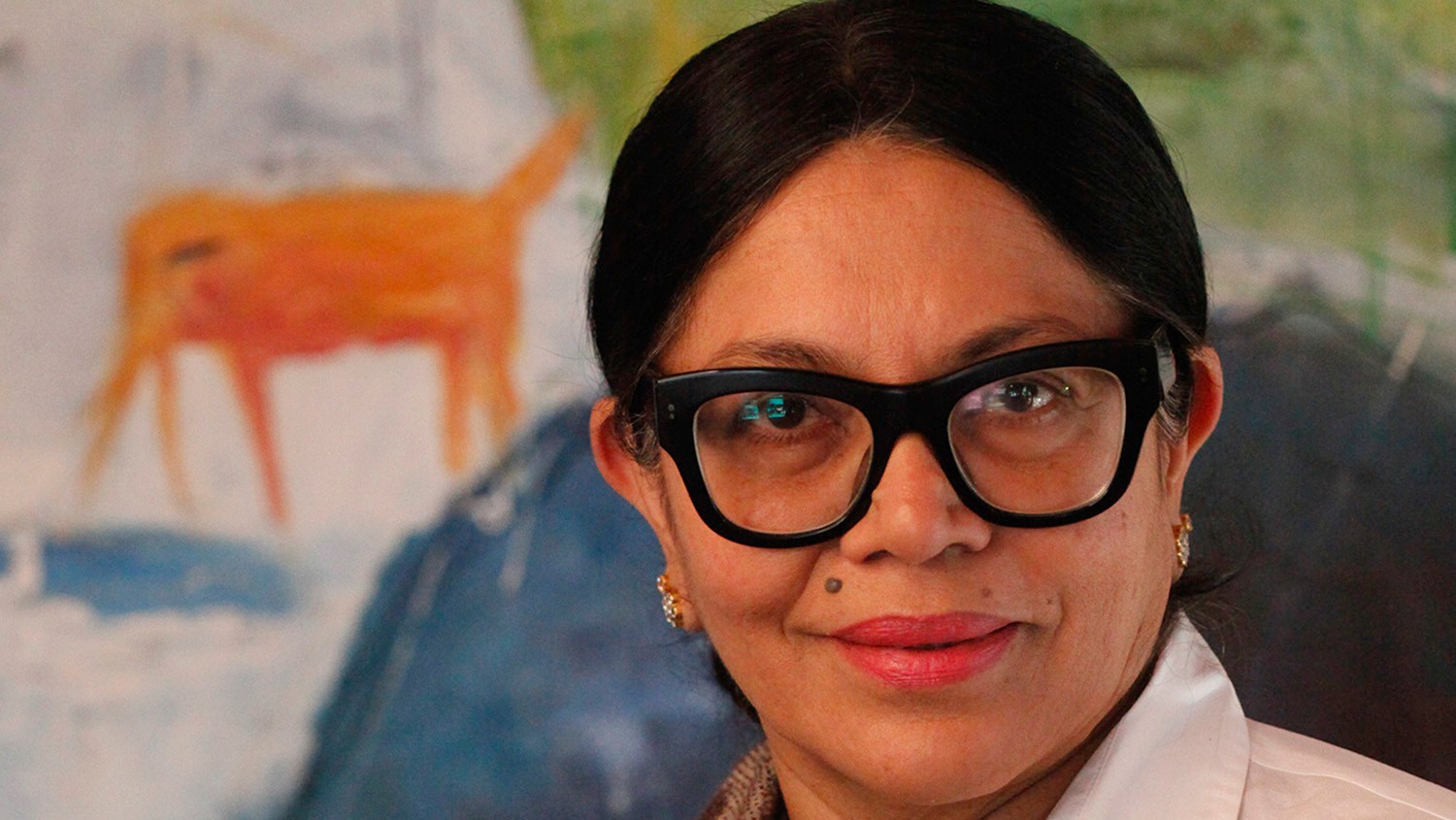
Born and raised in India, East Isles neighbor Anita Gopalaswamy emigrated to the United States in 1996 and became a naturalized citizen in 2008.
She and her husband Hari and their two children have lived in Lowry Hill since 2020.
Anita and I discussed whether it was wise for her to sit for this interview. She readily agreed because she wanted to speak about the contributions immigrants have made to our community.
This interview has been edited for clarity and brevity.
How did you transition from India to the United States?
I had a privileged upbringing in India as a member of the Brahmin caste, including attending excellent schools and graduating from a then all-girls Catholic university. The Brahmin caste is the highest social class in the Hindu caste system.
But at a young age I became aware of the horrific caste system. For example, a gardener working at our family home was not allowed to use the same utensils we used.
After college I worked with a documentary filmmaker in Mumbai. I had always been interested in psychology and later earned a master’s degree in psychology from Duquesne University in Pittsburgh.
I met my husband in Pittsburgh where he was completing his Ph.D. We moved to Minneapolis because he was offered a job at Seagate Technology. I said, “Where is Minneapolis?” because I thought only the two coasts existed.
Seagate rolled out the red carpet, and we could not pass up that opportunity. We were poor graduate students starting our careers.
How was the naturalization process for you and your husband?
It was seamless for us because my husband was identified as a person of national interest, meaning someone the United States wanted to fast-track because of his distinguished academic career. As his spouse I was along for the ride.
What do you mean by person of national interest?
The United States government, when screening green card applicants, identifies people it wants to fast-track. He had a distinguished academic record. If you have ten publications, they look at you more closely, and he was able to get his green card in one year.
What about your career in the United States?
After I had lived in the United States for a few years, I remember telling my mother that I felt isolated.
She said I had choices and to quit grumbling and give back to the community that you receive from. My mother is many wonderful things, but sweet she is not. She said it clearly and I took notice.
I started volunteering at Chrysalis, where I took calls on the crisis phone line.
Now I work with a collective of 650 families, mainly in West Bengal, India, who create extraordinary cloth. We spin, weave, dye, quilt and do a small amount of tailoring. It is an ancient craft.
I am an unpaid member of this collective. I represent them internationally, influence function and quality and tell their story every chance I get.
Our family provided the seed money for the initiative, and everything goes back to the community in West Bengal. We sell the finished products in the United States.
Have you found our community to be welcoming?
Yes, absolutely. My best friend lives here. I have known her for 30 years. We birthed our babies together. I feel deeply supported by our neighbors, friends and the community in general.
Do you still feel that way today, given the recent crackdown on immigrants?
I stay in my bubble. I feel less safe today.
Are you going to continue to live in Minneapolis?
My husband Hari and I want to return to India to die. Not in a maudlin or morbid way, but to be cared for in a way that is more comfortable and meaningful to us.
I want to be contributing, viable and relevant until the end. There is a lot of work to be done in India, and we have already started that process because I spend three months of the year there.
What do immigrants have to offer?
We are the fabric of this nation. We provide richness. My dearest hope is that this nation recognizes there is not just one way to live.
How do you navigate your native culture in India with your culture in the United States?
I have deep, solid bonds here, and I have deep, solid bonds in India. With the work I do I want to bridge my community in India with my community in the United States.
Are you optimistic or pessimistic about the future of immigration in this country?
In this moment I am looking for ways we can resolve and survive this crisis.
I recently met a neighbor from East Isles who enveloped me in a hug and whispered, “We will overcome this.”
I will carry that with me when I leave for India for three months for work.