

Paul Hinderlie spent his childhood in the Hill & Lake community in the 1950s and 60s. He and his wife Carol later founded the renowned Harbor View restaurant in Pepin, Wisconsin, and enjoyed successful careers in the food and hospitality world. They now make their home in Stockholm, Wisconsin.
“Immigrants have always been an important part of this city.”
Long before debates over ICE tactics, federal immigration enforcement and the protests playing out on Minneapolis streets today, I learned something at 13 with a canvas bag over my
shoulder.
Immigrants have always been an important part of this city. In the 1960s they were my customers, the families who held front doors open for me and filled the hallways of Lowry Hill with the smell of cabbage and a dozen languages.
That small newspaper route taught me more about who lived in Minneapolis than any classroom ever did, long before federal immigration agents were in our neighborhoods and long before recent confrontations involving Immigration and Customs Enforcement in Minneapolis sparked protests and intense local attention.
The learning opportunity presented itself when the 111-day strike against the Minneapolis Star and Minneapolis Tribune ended in August 1962. Before that, I had been an eighth
grader hauling around the Minneapolis Herald, a strike-born, barely legible little sheet, to scattered homes near Lake of the Isles. By late September, I graduated to the big leagues and became one of the thousands of paper boys for the Minneapolis Star.
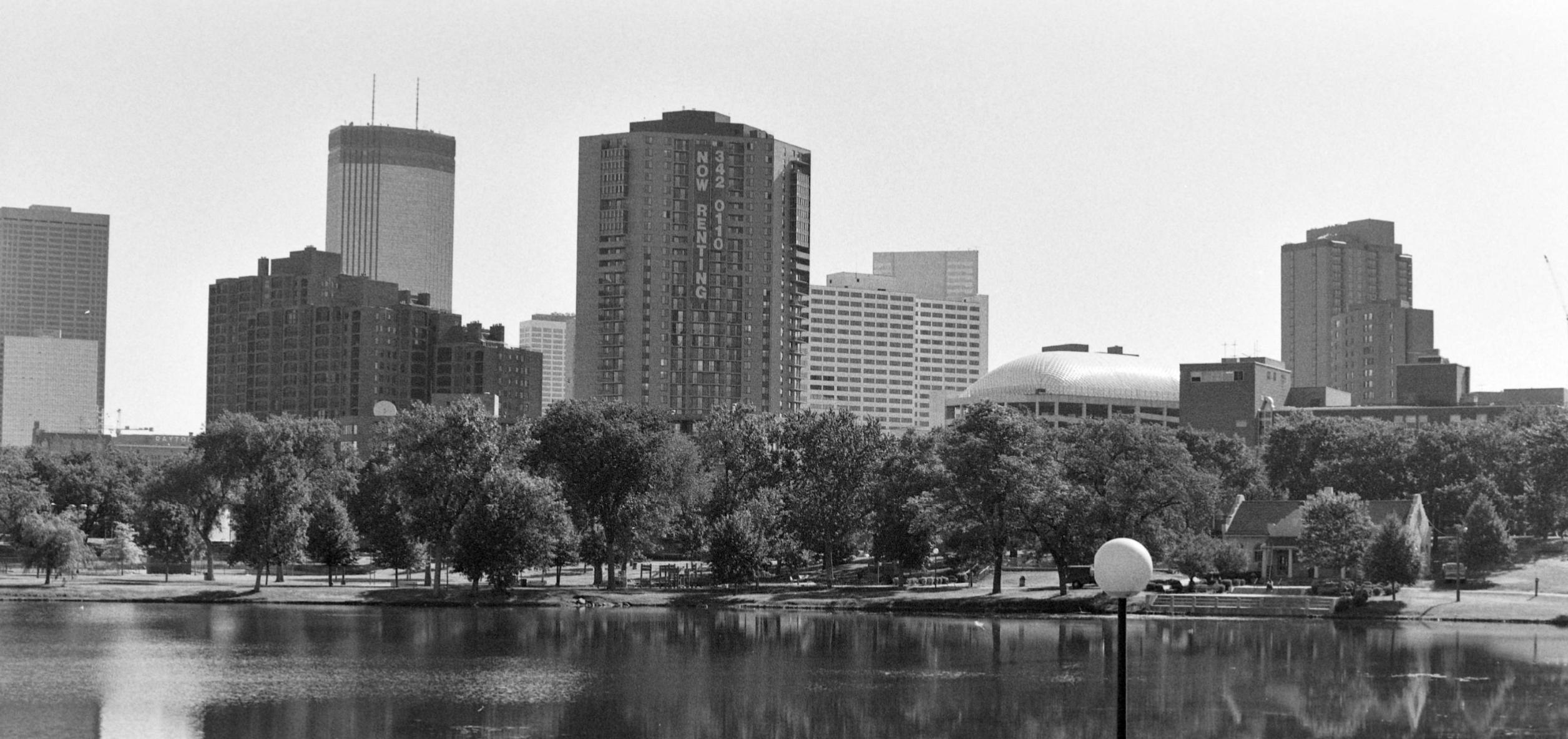
My “territory,” as I grandly thought of it, was a crooked threeblock triangle bordered by Hennepin and Franklin. Eighty daily subscribers. One hundred twenty on Sunday for the hefty Tribune. Behind Thomas Lowry’s statue, where Lyndale and Hennepin pinch together, the Star’s paper shack guarded Aldrich Avenue’s dead end. It was a boy’s kingdom if a kingdom can smell faintly of newsprint and radiator heat.
Those walk-up apartments were packed with new Americans from Poland, Hungary, Latvia and places I had to look up on a map. My predecessor, Don, who later died in Viet Nam, gave me the best orientation I ever received. “You’ll know who lives where, by the cabbage,” he said. He was right. Every building had its own aroma, its own rhythms, its own hopes. These families loved the daily newspaper. They soaked up the Star like they were memorizing their new city one column at a time.
Collecting payment was its own education. Some folks had just a little extra to spare. Once, an entire twoweek subscription — all $1.20 — was handed to me in pennies. I counted every one.
The apartments varied wildly. One was a four-story walk-up exposed to the weather. Another had a freight elevator in the middle of its atrium big enough to park a truck in. Sixty-five years later, the Aldrich and Franklin apartments mostly stand where they were. Some duplexes and fourplexes were home to widows who always pressed a nickel into my hand. Others, like the buildings at Bryant and Hennepin, disappeared under freeway construction.
Along the edge of my route stood Little Andy’s Uptowner, a narrow 24-hour diner where I treated my younger sister Mary Alette for helping on those punishing Sunday mornings. She remembers smoky hallways and one yellow-toothed woman who slipped me an early tip before church.
A few seasons later, I earned a Tribune morning route across Hennepin. It came with mixed blessings. I could sleep in on Sundays but paid for it by dozing off in Algebra on weekday afternoons. That side of Hennepin had Burch’s drug store, Bjorkland’s funeral home and Becky’s cafeteria. Becky’s was a warm refuge on collection nights, mostly because they slid food across the counter without much fuss.
Those apartments felt a notch fancier than my old route, and I needed keys to get into the lobbies. The rooming houses on Colfax and Dupont north of Lincoln were their own labyrinths. I liked them, but I missed the energy of the immigrant buildings. I missed the languages I could not quite catch. Mostly, I missed the cabbage.
It has been more than six decades, and that scent still brings me back to those steps and doorways. Immigrants have always been here. They helped build this neighborhood as surely as any streetcar line or sidewalk. I did not know it then, walking those halls with ink on my hands, but they were teaching me something about Minneapolis that has stayed with me ever since.