
Far more than just being aesthetically beautiful, urban trees provide countless benefits to all of us who live in cities. In addition to sequestering significant quantities of carbon (approximately 15% of all carbon sequestered by trees in North America comes from our urban forests), urban trees reduce stormwater pollution and flooding, capture particulate air pollution, mitigate heat islands, and reduce energy consumption for heating and cooling of buildings.
In addition, urban trees provide critical habitat for wildlife, increase property values, improve pedestrian traffic for retail establishments, and have been proven to reduce street crime.
And with climate change making our cities hotter and causing extreme precipitation events, an urban tree canopy is critical to keeping our cities livable and vibrant in the coming decades.
According to the Arbor Day Foundation, a single mature tree absorbs approximately 48 pounds of carbon dioxide from the atmosphere each year. Extrapolating from the i-Tree Planting Calculator, it is estimated that a mature urban tree also captures 5.5 cubic meters of precipitation, reduces electricity used for cooling by 173 kilowatt hours (kWh), reduces natural gas used for heating by 2407 kilo British thermal units (kBtu), and captures .33 pounds of particulate air pollution every year.
Multiply this by the millions of trees that make up the Twin Cities urban forest, and it is clear that our urban tree canopy is essential green infrastructure that is literally worth its weight in gold.
Disease, development causing canopy decline
Unfortunately, the Minneapolis urban tree canopy is declining. The 2015 Urban Tree Canopy Assessment of the Twin Cities metro area (prepared by the University of Minnesota Department of Forest Resources) estimated a decrease in Minneapolis tree cover of 3.7% between 2009 and 2015, and since 2015 the loss of trees due to emerald ash borer and accelerating urban development has continued this trend.
Funding for tree planting by the Minneapolis Park and Recreation Board has declined due to the expiration of an emergency tree planting levy. Meanwhile, public works street construction projects are putting more mature street trees at risk.
Climate change has made it critical for our community to prioritize saving existing urban trees and increasing budgets for expanding our urban forest.
Growing our urban tree canopy is the most sustainable, proven, and cost-effective way for our community to mitigate the impacts of climate change on urban residents.
Effort would increase canopy by 30%
In 2021, Green Minneapolis launched the Twin Cities Climate Resiliency Initiative (TCCRI), a public/private partnership focused on significantly expanding the urban tree canopy across Minneapolis and the Twin Cities metro area. Designed to address the most harmful impacts of climate change on our region’s residents, it offers a 20-year vision to increase the metro area’s tree canopy by 30% through planting and maintaining millions of additional trees on public and private lands.
Focused on identifying new funding sources for tree planting and maintenance, to date the TCCRI has secured $1 million in American Rescue Plan Act (ARPA) funds for increased tree planting by the park board.
The TCCRI has also launched Minnesota’s first Urban Tree Carbon Offset Program in partnership with the park board, designed to increase the amount of carbon sequestered by urban trees by planting and protecting public trees for 25-year minimums.
Carbon offset programs allow companies to offset their carbon footprints by purchasing carbon credits from projects that reduce greenhouse gas emissions. Proceeds from the sale of these carbon credits will be used by the park board and other tree-planting partners to increase their budgets for planting and maintaining our urban forest.
Our urban trees are indeed more valuable than gold and silver—they play a critical role in keeping our city vibrant and livable. Climate change has made it crucial for our community to prioritize saving existing urban trees and to support public and private investment in planting millions more.
Michaela Neu and David Wilson are with Green Minneapolis, a non-profit organization with a vision to grow a green future for our city, with tree-lined streets and active public spaces that enrich quality of life, create a healthier environment and connect people through place. Visit www.greenminneapolis.org to learn more.
Inventory of All Trees on Hennepin Avenue to be Cut Down by the City
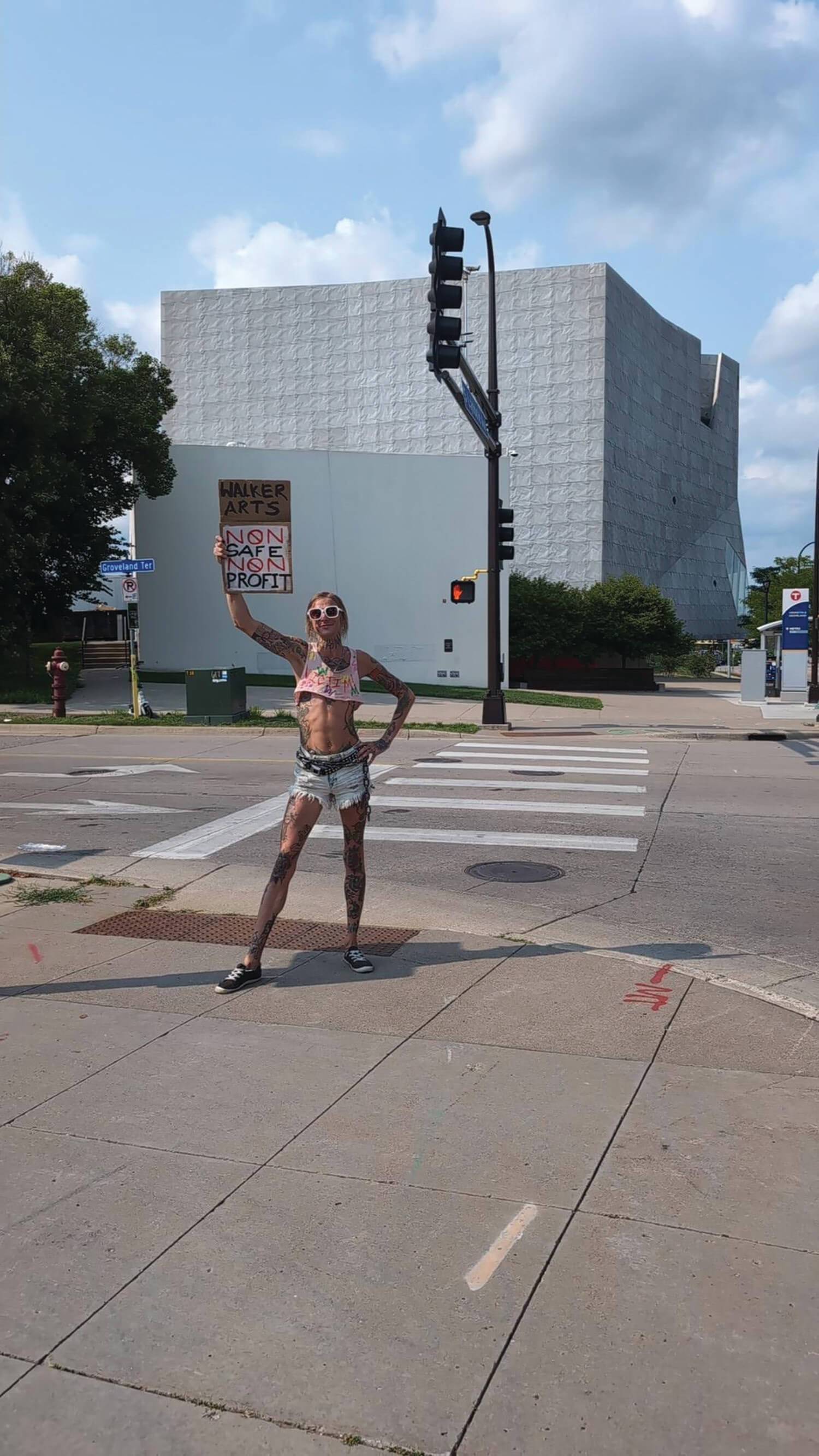
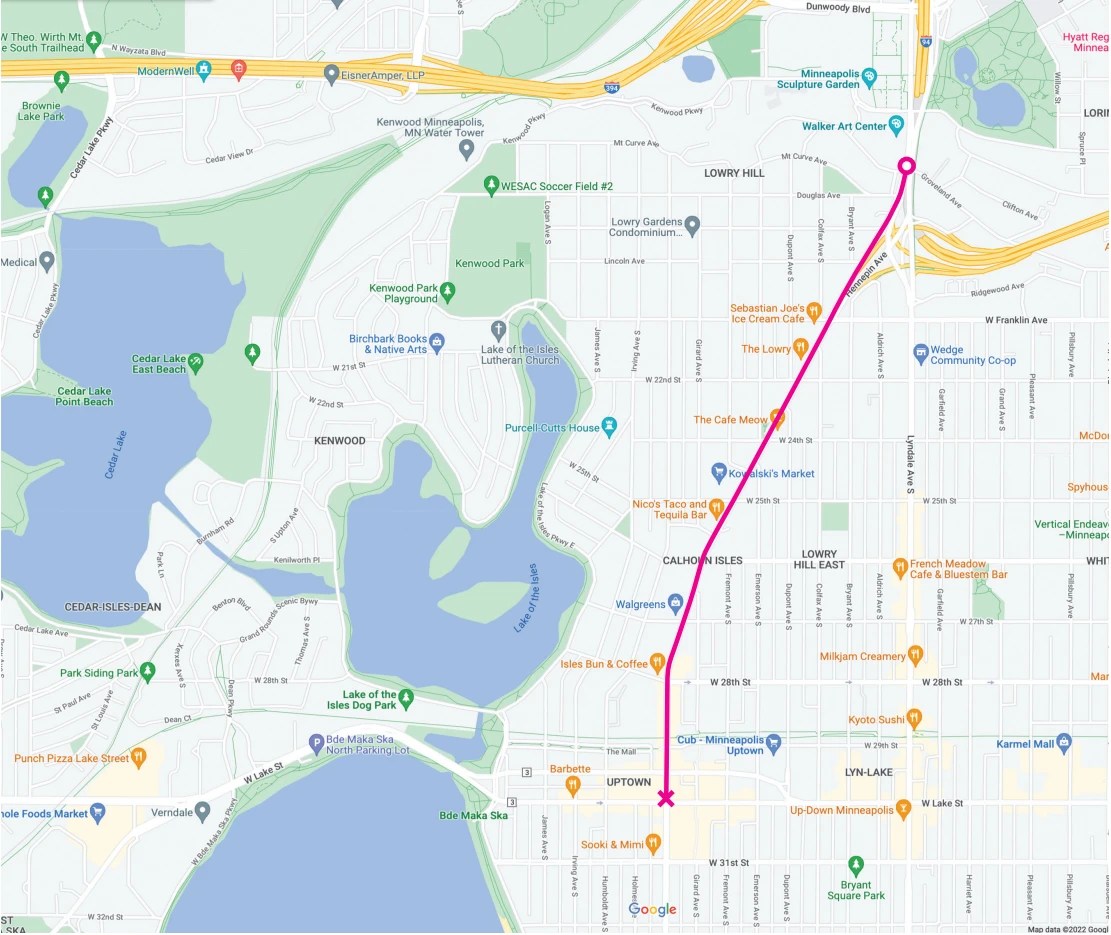
START: Hennepin Avenue starting near the Walker Art Center
The City of Minneapolis plans to reconstruct Hennepin Avenue between West Lake Street in East isles and Douglas Avenue in Lowry Hill. The city claims that all of the trees along Hennepin Avenue will need to be cut down and removed as a result of the new project design. Ward 7 Council Member Lisa Goodman, who represents all four Hill & Lake neighborhoods, voted against the project, which passed 11-2.