
Stu Ackerberg has been looking at Uptown his whole life. He grew up near Cedar Lake, attended the original Bryn Mawr and Minneapolis West schools — both now converted to housing — graduated in 1975 and has run The Ackerberg Group from offices in and around Uptown for roughly four decades.
His father renovated the Rainbow Building at Lake and Hennepin in the 1970s, one of the first significant conversions in the neighborhood. His family has developed, bought and sold real estate in the lakes district for two generations.
When he talks about Uptown’s economic cycles, he is describing a landscape he knows at the parcel level.
“This is my home, my stomping grounds,” Ackerberg said. “This is my community that I’m fortunate to be a part of.”
It is also, he believes, a community in its worst stretch in his lifetime.
“It’s been a rough six years,” Ackerberg said. “All those principles and the elasticity of how markets work, when they fail and then they eventually come back, just aren’t the way it’s happening today.
“Lisa Bender will go down in history as the mastermind that started the demise of Uptown.”
“Usually it’s like a rubber band. You get into a recession or some other challenging economic environment, things are stretched out, but they always historically had come back into alignment. This time it’s just not coming back. I’m not sure it’ll ever come back the way that it did.”
After the Unrest
To understand where Uptown is, Ackerberg said, it helps to understand where it came from.
Modern Uptown took shape in the wake of civil unrest in North Minneapolis, first on Plymouth Avenue in 1967 and again after the assassination of the Rev. Martin Luther King, Jr. the following year. The fires were across town, but the aftershock reshaped the whole city.
“People were so afraid of the city that they started to leave the city, especially the north side,” Ackerberg said. “They went to St. Louis Park and Golden Valley and the first- and second-ring suburbs.” Ridgedale, he noted, did not open until 1974. “That was the sticks.”
The outflow hollowed out density in Minneapolis, contributed to the eventual closure of several city high schools including Central and West, and pulled retail energy with it. In that vacuum, Uptown was not yet the place it would become. Before Ackerberg’s father bought it, the Rainbow Building had 26 sleeping rooms upstairs in what amounted to a “flophouse.” His father cut an atrium through the structure, added skylights and turned it into creative office space.
“That was really, I think, one of the first renovation projects in Uptown,” Ackerberg said. His father went on to build the Rainbow Shops on the same block, where FedEx and Huntington Bank now sit, as well as a retail building on a portion of the site that eventually housed Calhoun Square.
The Calhoun Square Era
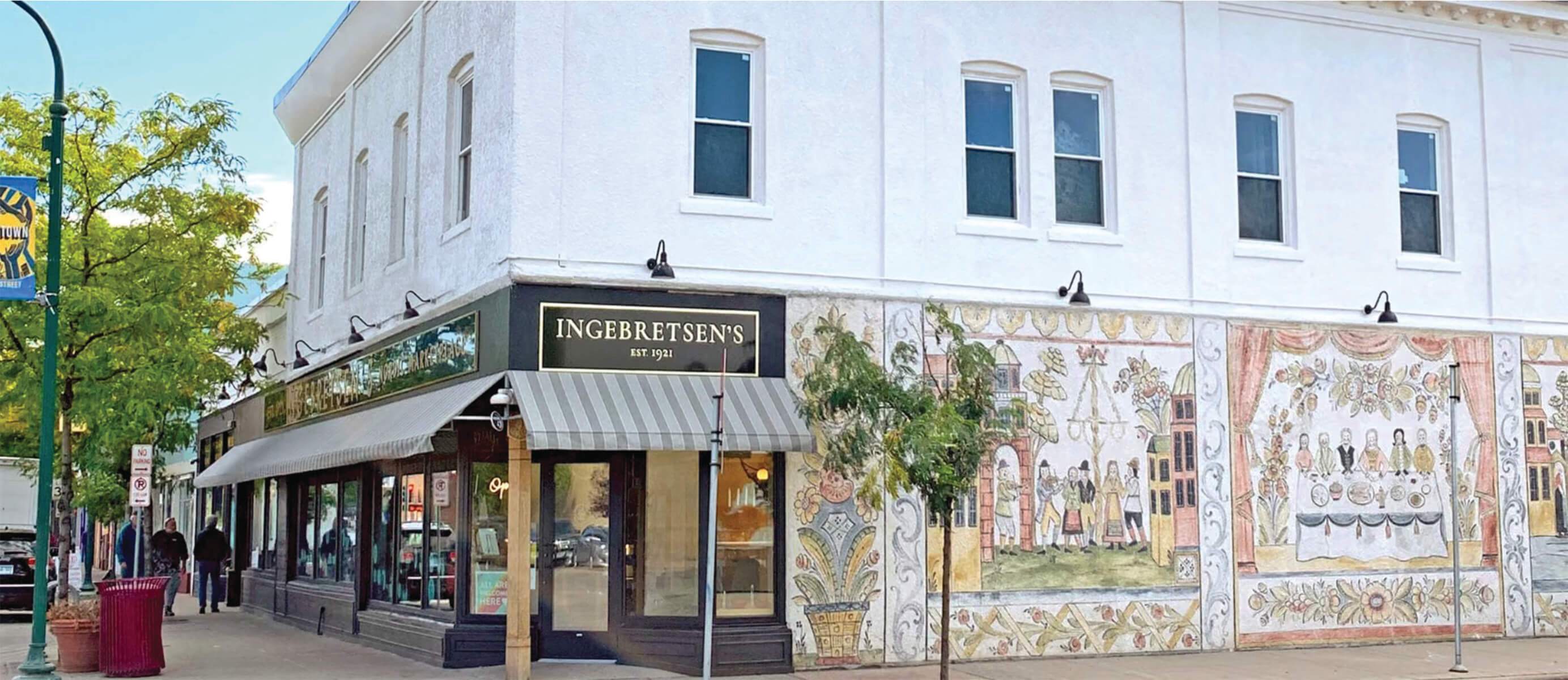
Calhoun Square opened in 1984, and with it came the first real surge of momentum. The new shopping district echoed what had long made the area distinctive, a place where, as Ackerberg put it, people could “only go to this sort of unique area of Uptown to see one-off kinds of things.”
That was the point. The district drew a creative class that was alternative in almost every sense of the word.
“If you were alternative in whatever fashion, maybe religion or sexual orientation, you were safe, and you could be in Uptown,” Ackerberg said. “That creativity, that openness and that liberalness created an opportunity to express yourself, whether that was individually, collectively, or even in how you operated your retail business.”
The economic engine was a mix: genuinely local shops, restaurants like the Uptown Bar, and national tenants such as Borders Books that, he said, “operated like a local tenant. If you didn’t know, you would think it was a local mom and pop kind of operation.”
That mix is what Ackerberg now describes as Uptown’s peak alignment. Local creative energy was underwritten by national rent payers, but the creative energy was still in charge.
From Local to International
Success attracted success, and with it pressure. The Gap moved in. MAC Cosmetics replaced Caribou Coffee, which replaced a local hot dog spot called Spudsters, on a Rainbow Building corner. One block could trace the entire progression.
“We went from a local, to Caribou that was at that time a local, becoming a regional, turned into a national, into an international,” Ackerberg said. “That was just an evolution that changed the course where the creatives couldn’t afford to be in Uptown.”
The rents rose with each step. National tenants were willing to pay two, three, even four times what local operators could, and the locals migrated to cheaper corridors. The market, Ackerberg said, “worked until it didn’t work.”
The Mall of America opened in 1992, and even before e-commerce, retail economics were shifting. Stores like the Gap wanted bigger footprints than Uptown could provide. Chain tenants consolidated into suburban big boxes. The nationals that had propped up the rent structure began to leave.
“I think we all lost our way, ourselves included,” Ackerberg said. “We lost our uniqueness. Uptown used to be the only art fair. Now there are art fairs everywhere.”
The Perfect Storm
By the late 2010s, Uptown was already adjusting to a harder retail environment. Then came what Ackerberg calls the perfect storm: COVID, the murder of George Floyd, the fatal shooting of Winston Smith by a federal task force in an Uptown parking ramp, the encampments on the vacant parcel near Seven Points — the shopping district formerly known as Calhoun Square — and the Hennepin Avenue reconstruction that removed street parking and restricted left turns through the heart of the commercial district.
Ackerberg points to business-unfriendly design as a central factor in the corridor’s commercial collapse.
“Lisa Bender will go down in history as the mastermind that started the demise of Uptown,” he said, referring to the former City Council president. “It all sounded good, but while it may work in Amsterdam and some other locations, it doesn’t work here today.”
“If Uptown continues to suffer, most of Minneapolis will suffer… If Uptown can be stronger, the rest of Minneapolis will be stronger. It’s the bellwether of our community.”
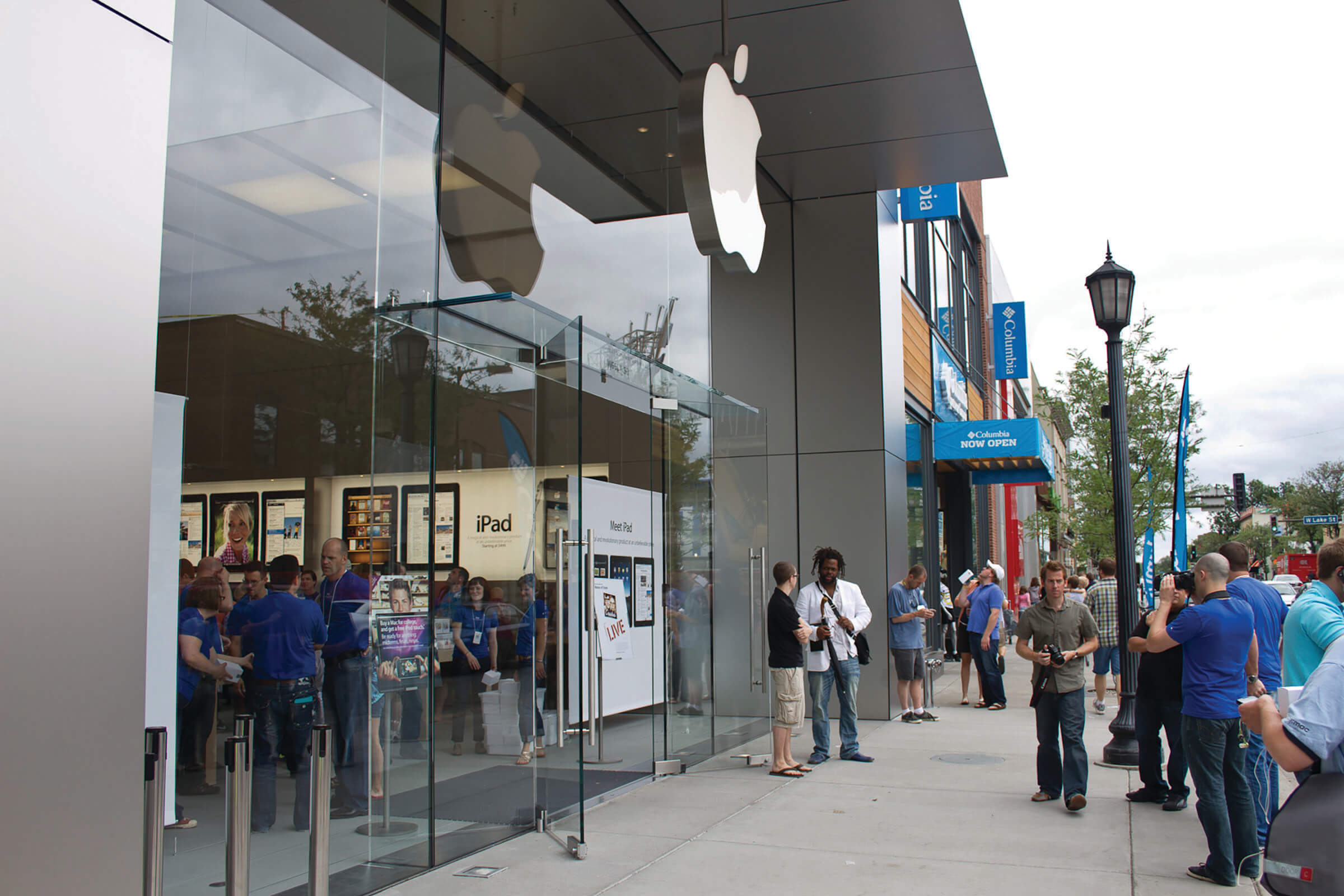
Losing on-street parking, he said, broke a basic customer pattern. A shopper who once parked in front of the Apple Store or ran into Magers & Quinn on the way home now has to use a ramp or park in the residential neighborhood and then walk several blocks or skip the trip entirely.
“We’re still a car-driven city,” Ackerberg said. “There aren’t lots of parking lots. If you want to go somewhere on South Hennepin, where do you park during certain times of the day? So, you don’t. You go somewhere else.”
He cited earlier Hill & Lake Press reporting that found the city of Minneapolis spent $1.24 million studying transit on Hennepin and zero studying the effects on the commercial corridor. “They put their money where their values are,” Ackerberg said.
What Uptown Needs
The structural problem on the retail side, Ackerberg argues, is that Uptown’s restaurant and entertainment footprints are simply too large for the current market demand. Big rooms like the former Libertine, Stella’s, Chino Latino and Bar Louie cannot be subdivided affordably. A young chef and a sous-chef with a concept, the kind of pairing that has made Nicollet Avenue and Lyndale Avenue thrive with small storefronts, cannot find comparably small Uptown retail to lease.
“The reason that people are not staying in Uptown is there aren’t a lot of places to go,” Ackerberg said.
The reconfiguration he proposes is less cosmetic than it may sound. He is calling for a suite of new public tools, including a tax increment financing district for small parcels, tax abatement, empowerment-zone low-interest loans and bagged parking meters until the area becomes more vibrant, as well as a regional-draw use. He noted that other states are willing to incentivize or subsidize these business-friendly strategies.
“As Seven Points goes, so Uptown goes,” Ackerberg said. “And the reality is, it has to be a completely different use than it is today.”
He argues that Hennepin County, as a primary funder of the City of Minneapolis and a major employer with many staff still working remotely, has more leverage than most residents realize — and should use it to help support Uptown businesses.
According to County Commissioner Marion Greene, “approximately 4,472 employees are assigned to downtown county facilities. Of those, about 2,241 work in a hybrid model, 1,411 are fully in person and roughly 810 are fully remote. The vacancy rate in the county’s downtown office buildings is about 14%.”
He said Mayor Jacob Frey has committed publicly to making Uptown a priority, but the resources have not followed.
“If Uptown continues to suffer, most of Minneapolis will suffer,” Ackerberg said. “If Uptown can be stronger, the rest of Minneapolis will be stronger. It’s the bellwether of our community.”
He has been through enough cycles to know that recoveries happen. “Fortunes will be lost and fortunes will be made,” he said. “But if the city is going to wait for the free market to help create those fortunes, it’s going to be a long time.”
He remains an optimist, he said, though the word is starting to feel strained.
“I still have hope, but it’s getting harder to see,” Ackerberg said. “I’m not as confident as I used to be that I knew the answers; in fact, I am learning that there’s very little I know anymore. But I’m happy to work hard and participate with my neighbors and whomever for change for the good for everybody. It’s the only way it’s going to work.”
Craig Wilson is the editor of the Hill & Lake Press. He lives in Lowry Hill.