
The motto of the Minneapolis Board of Park Commissioners adopted in 1883 was “Health and Beauty.” The motto was chosen by a committee of commissioners chaired by Samuel Chute.
“Health” referred to parks providing fresh air — they would be the city’s lungs — especially for the city’s children.
“Beauty” signified the board’s commitment to creating beautiful places in which citizens could escape from the city. The effect of nature’s beauty on personal mental health as well as social and economic health was considered an important benefit of parks back then and still today.
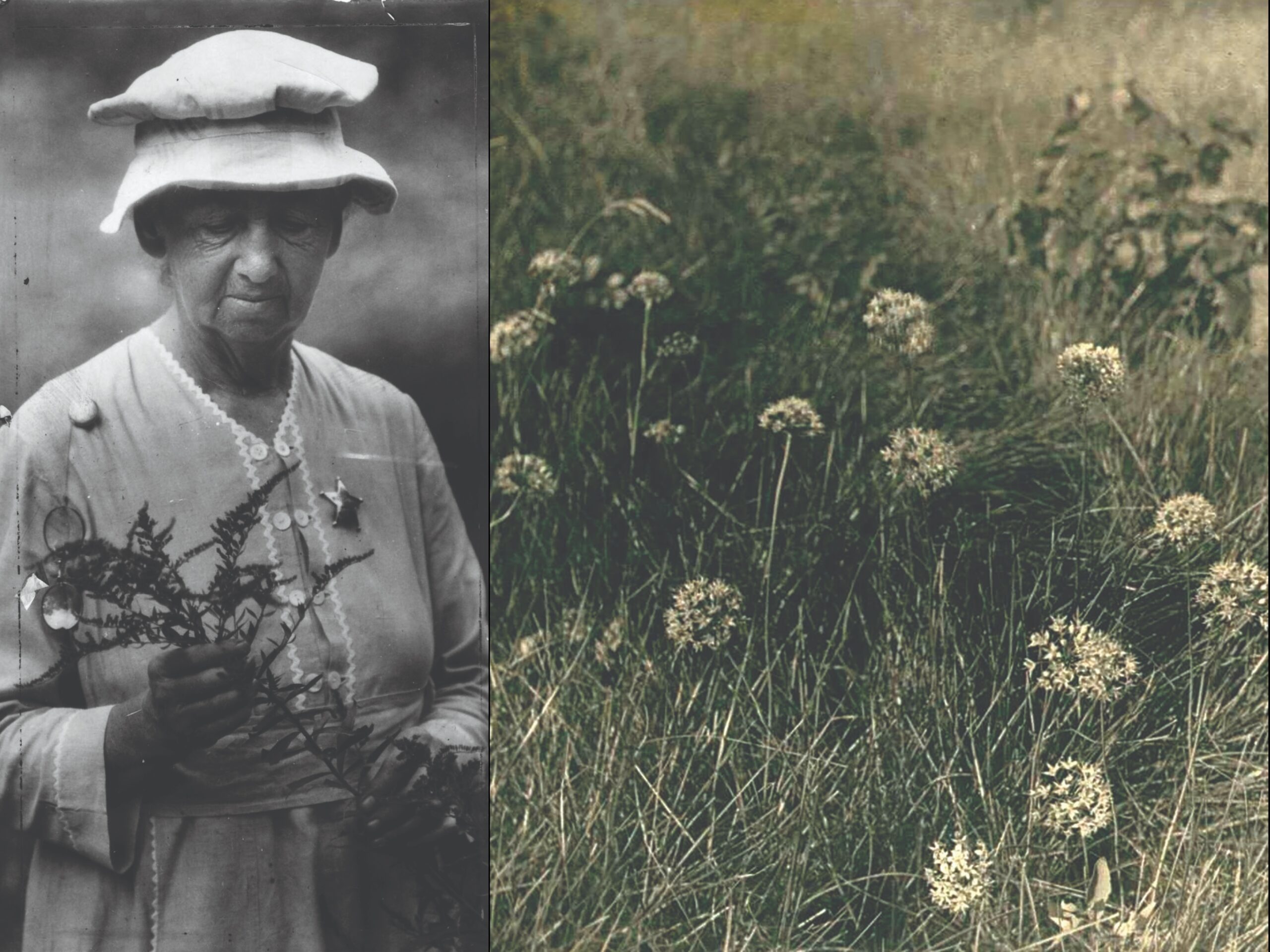
Top amongst our city’s restorative natural dwellings is the Eloise Butler Wildflower Garden and Bird Sanctuary. We know the garden well, but what do we know of the woman who thought herself a laissez faire gardener dedicated to the concept of perpetuating the garden in its primeval wildness?
New England Origins
Eloise Butler was born in Maine on August 3, 1851. Her interest in botany was piqued at an early age when she helped her family gather wildflowers and other flora to make herbal remedies for home use.
She moved to Minneapolis at the age of 23 to teach botany at South High School, where her students playfully teased that being in her class meant spending most of their time traipsing through bogs and swamps.
Eloise Butler was particularly fond of one-cell, microscopic algae called desmids. Her love of algae led her to discover a dozen new varieties including one that was named after her, Cosmarium eloiseanum.
In 1907, she established a botanical garden at Glenwood Park as a volunteer and continued in that role until 1911 when the Woman’s Club petitioned to have a fulltime curator appointed for this much-esteemed wildflower garden.
Support from the Woman's Club
The Woman’s Club recommended Eloise Butler for the role and volunteered to donate half her salary for one year. The park board approved but required a nod from its finance committee. When resistance was faced there, the Woman’s Club upped the ante and offered to pay for Ms. Butler’s full first year’s salary. The deal was sealed!
Eloise Butler was by no means a hands-off curator. Each spring she would plan new species and weed out any unwanted invaders. It was she who personally led visitors — whether singly or in groups — on tours of the garden. She is responsible for the installation of one of the only fences in the park system, which served as a deterrent to all of the deer hoping to make a satisfying meal of her wildflowers.
A Living Legacy
Today the Eloise Butler Wildflower Garden and Bird Sanctuary encompasses 16 acres filled with over 600 plant species and more than 130 species of resident and migratory birds. It is the oldest existing public wildflower garden in America. How proud she would be to reflect on the continued vitality of this true haven for the flora and fauna of our region and for all of the delight its many visitors have experienced during a walk through her garden!
Eloise Butler died on April 10, 1933. A memorial tablet for her was planned, created and presented by her friends and former pupils on Arbor Day, May 4th, 1934. Still today near the Martha Crone Shelter on a large granite boulder the memorial to Eloise Butler stands. On it are engraved the following words: