
In the November issue of the Hill & Lake Press, Democratic Socialist leader Samuel Doten asserts that public schools, water and sewer utilities, Social Security, the U.S. Postal system and rural electrification were all socialist initiatives.
If so, John Adams, Thomas Jefferson, Benjamin Franklin, Otto von Bismarck, Franklin Delano Roosevelt, Horace Mann, Minnesota’s Territorial Legislature, leaders of ancient Babylon and Rome, and other iconic historical figures must have been socialists.
Doten tacitly acknowledges that socialism has no precise meaning. To Eugene Debs, an early Socialist Party leader and four-time presidential candidate, it meant abolition of capitalism and state ownership of the means of production.
To the utopian Shaker and Oneida communities, as well as religious monasteries, it meant living a communal life of shared labor and proceeds.
To the former Soviet Union and China, it meant confiscating private property by fiat.
And to the Labour Party in Britain, it meant nationalizing certain industries after World War ll, industries that did not fare well in the arc of history since then.
Doten’s idealism is commendable, but his facts need checking.
Social Security
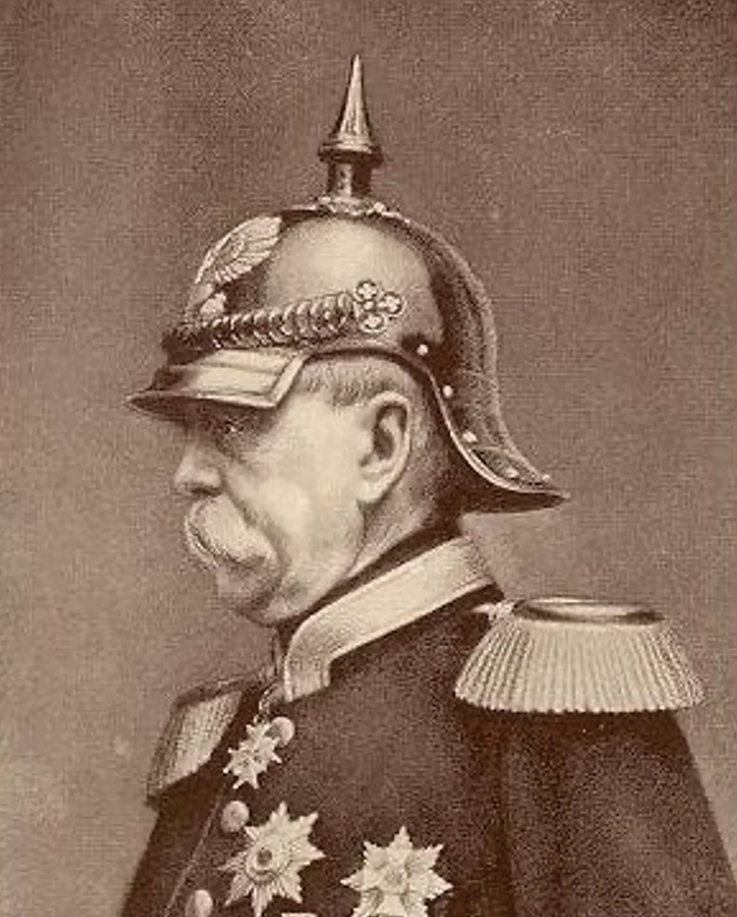
Our Social Security system had antecedents in the pensions paid to Civil War veterans and their surviving families, but its current form was based on Germany’s social insurance program which was designed by conservative Chancellor Otto Von Bismarck and adopted by the Reichstag in 1889. President Franklin Roosevelt signed the Social Security Act in 1935.
Public Schools
In 1763 Prussian Emperor Frederick the Great issued a decree promoting “common schools.” It expanded the existing schooling system significantly and required that all young citizens, both girls and boys, be educated by mainly municipality-funded schools from the age of five to 14.
Shortly after the American Revolution Thomas Jefferson, John Adams and other early leaders proposed the creation of a more formal and unified system of publicly funded schools, believing that preserving our new democracy depended on the competency of its citizens.
In the 1830s, Horace Mann, a Massachusetts legislator and secretary of that state’s board of education, advocated for the creation of public schools that would be universally available to all children, free of charge, and funded by the state.
In 1849 the Minnesota Territorial Legislature enacted the first law pertaining to education. Each township was to have a school open to all persons between the ages of four and 21 years.
The U.S. Postal Service
Postal systems have existed for centuries. Benjamin Franklin oversaw the British mail services in the 13 colonies from 1753-1774. In 1775, before the Declaration of Independence was even signed, the Continental Congress turned the Constitutional Post into the Post Office of the United States, whose operations became the first — and for many citizens, the most consequential — function of the new government itself. James Madison and others saw how the postal service could support this fledgling democracy by informing the electorate, and in 1792 devised a funding plan. By 1831 the United States had twice as many post offices as Britain and five times as many as France.
Water and Sewers
The earliest known sewers were used in the ancient city of Babylon around 800 B.C.E., and the first sewers and water systems in Europe were built in Rome around 500 B.C.E. Sewer systems have been in use for millennia. Archaeological evidence has revealed that the first major sewage system was constructed in the Indus Valley Civilization of India in the 2500s B.C.E. As populations and cities grew, lack of sanitation resulted in typhoid epidemics. Water and sewer systems became a necessity and were built in New York, Boston, Chicago and other cities in the 1800s.
Rural Electrification
FDR created the Rural Electrification Administration Executive Order 7037 in 1935, followed by passage of the Rural Electrification Act in 1936. The REA was implemented through creation of local co-ops that bought electricity wholesale and distributed it to farms through the co-op’s own transmission lines.
The REA is personal to me as it brought electricity to our farm in 1948. The first appliance my parents bought was a refrigerator, replacing an icebox, and I no longer had to study by kerosene lamp.
Facts Matter
Doten is entitled to choose any definition of socialism he likes, but he should get his history straight.
As Chancellor Bismarck said in a Reichstag debate on the Old Age Assistance initiative in 1881, "Call it socialism or whatever you like. It is the same to me.