
One of the reasons we were drawn to our home on James Avenue South was its perennial garden history. The original owners, Mendon and Clarissa Schutt, built the house and created a spectacular set of gardens. The time was 1896, and Eloise Butler was their dear friend. In fact, the Schutts donated many of the original native perennials to Eloise’s Wildflower Garden — the first wildflower garden in the United States! — when it opened in 1907.
By the time we bought the property in 2009, the gardens had dwindled to a few annuals and some remaining perennials. Invasive buckthorn had replaced the once verdant garden and over 40 dead trees needed to be removed. So, we started from scratch and decided to pursue a “perennials only” garden with zero grass (both of us had grown up mowing lawns and wanted no more of that).
We did the usual garden preparation things first. After removing dead trees, plants and shrubs, we sectioned the property into distinct areas or “rooms,” assessing each area for sun and shade, and testing the soil, which anyone can still do through the University of Minnesota (https://soiltest.cfans.umn.edu/). We then added nutrientrich compost from the U’s Agriculture School (which was free at the time!) and followed the instructions from the U on preparing each garden.
Next came inspiration.
We scanned garden books and design magazines to identify other gardens for ideas. This was — and still is — a favorite pastime as gardens should and will change with time, climate and the amount of sun or shade.
We selected swaths of color for each room, with a specific color palette for each while noting blooming times, plant sizes and textures. We planned to always have something in bloom, identifying roughly six to eight blooming periods so that each garden would unfold and evolve over our short five-month growing season.
For each room, we selected plants and trees to define the space, using arborvitae, Canadian hemlocks, joe pye weed, Japanese maple trees and miniature crabapple and weeping cherry trees for borders, points of interest and continuity. A bluestone path with lighting was installed to connect and reveal gardens along the way. We also installed five water gardens to manage draining and soil erosion. Ground covers like ajuga and vinca varieties block weeds and add their own distinctive blooms to the broader mix.
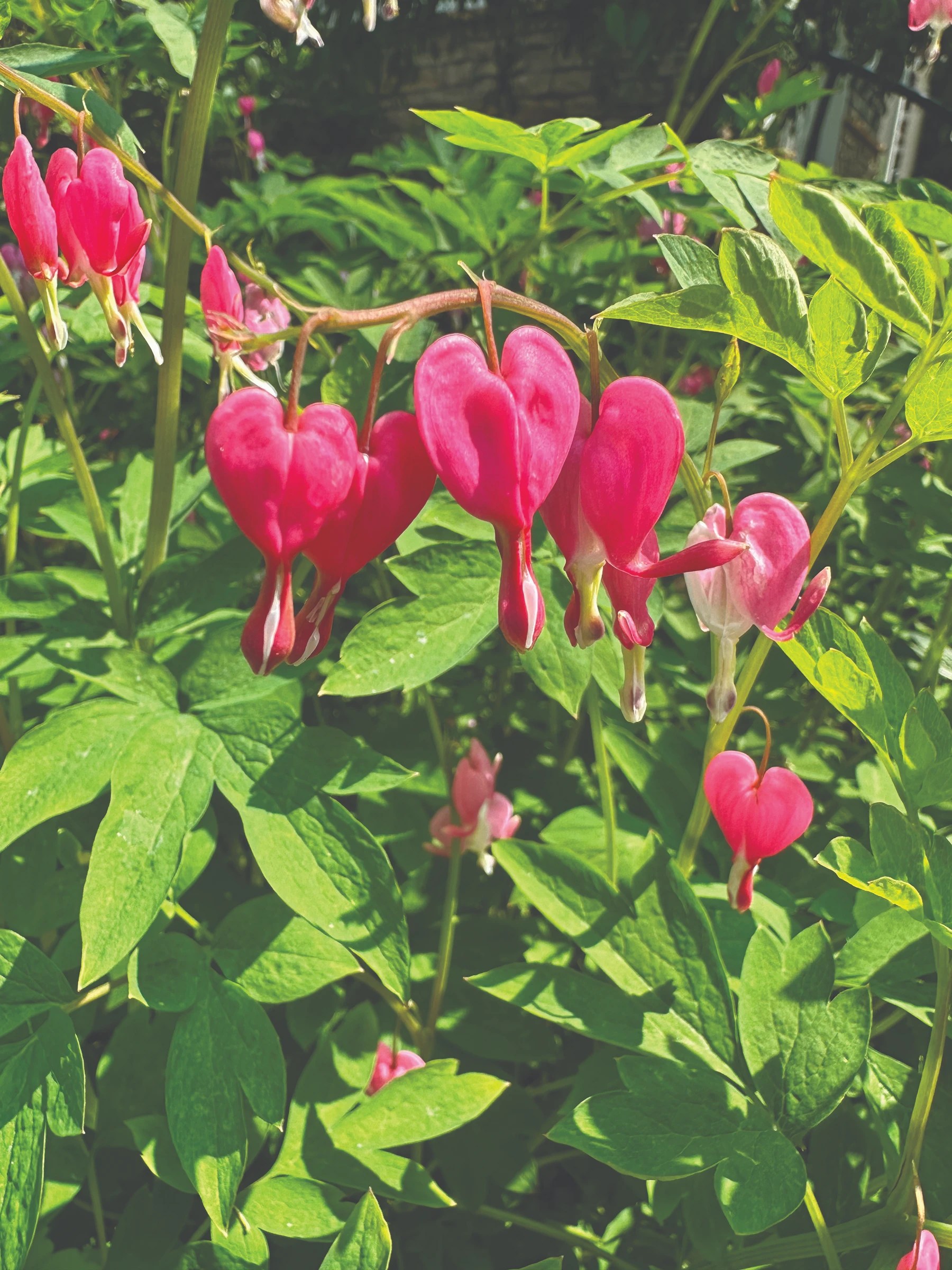
Early spring is now marked by tulips, allium, peony and bleeding hearts. Salvia, azaleas, rhododendrons and gas plants follow. Catmint was used to shoulder the paths and wall elevations. May and June feature vibrant performers like foxglove, delphiniums and hollyhocks.
By mid-July, long-blooming beauties like coneflower varieties, bee balm, Russian sage, liatris and day lilies add new color and a home for bees and butterflies. In August, favorites like turtlehead, asters, black-eye Susans, anemone and native hibiscus emerge to lead us to the September equinox. Mixed throughout these blooming periods are smaller varieties like lamb’s ear, treasured for its pale green/gray velvety texture, as well as coreopsis, lady slippers and many others
Our shaded areas thrive with hosta varieties and ferns joined by martagon lilies, cimicifuga, goats beard and yellow wax bell plants with their own unique textures, structure and blooms.
We did, and still do, the work ourselves just for the freedom to create without anyone looking over our shoulders. Michael Saphir of Sticks & Stones partnered on the initial design drawings and construction of the path, lighting and two fountain pools.
Any advice?
Weeding can be a chore, but we think it’s best done with your favorite music lilting, booming or jazzing through your preferred earbuds with a favorite glass of wine nearby. We think it’s best to create a habit of short weeding periods in early morning or early evenings while you take in your garden with the changing light. We also regularly mulch to ensure that open soil areas are covered so as to reduce opportunities for weeds. We never, ever use pesticides or weed inhibitors.
My favorite piece of advice came from a perennial plant vendor at the Minneapolis Farmer’s Market years ago. She noticed me week after week as a novice looking through all her plants. Apprised of my situation — little gardening knowledge or experience — she told me to clear a space, take note of soil, sun or shade, choose my color palette and position each perennial with size and texture/structure in mind. That way every plant gets its time and attention. Visit the Market every week and buy one or more plants in bloom. Then you will create a garden that is always in bloom.