
Dear Neighbor,
It’s May, when we celebrate moms. I’ve come to the conclusion that “Mom” should be reclassified from noun to verb. We all know that a noun is a person, place or thing. However, a verb is an action, and that’s where mothering — “momming” — comes into being.
Long before I had children, I’d hear people talking about parenting as if money were the sole criterion for being a fit parent. I found the sentiment hollow, lacking; it consigns parenting to the material realm, reducing it to a commercial transaction.
Let’s consider Maslow’s hierarchy of needs, from physiological needs to self-actualization. Food, shelter, air, water, clothing and sleep are at the bottom because they simply keep the child alive. After all, these same needs apply to a goldfish aside from clothing. At the top are morality, creativity, self-actualization and fulfillment. Raising a good, honorable, kind human takes much more than money. You can’t buy honor any more than you can buy happiness or confidence.
When I was pregnant, I wanted, first, that the baby be healthy. When scientific procedures foretold that was covered, I switched to hoping the baby be smart.
I knew so little: I see now that my impending motherhood was in utero so much as the unborn baby. As time went on and milestones were met — some right on time, some early, some late — my daughters’ personalities developed and I came to hope that they be happy and good.
Jacqueline Kennedy Onassis famously said, “If you bungle raising your children, I don’t think whatever else you do matters very much.” She believed that parenting is the most important undertaking, outweighing all professional achievements. This guided me and freed me: The best way to make your mark on the world was to raise a good kid. And I discovered, as a mother, that rather than just money, this takes time. And patience. And unconditional love. And, perhaps more than anything, being there.
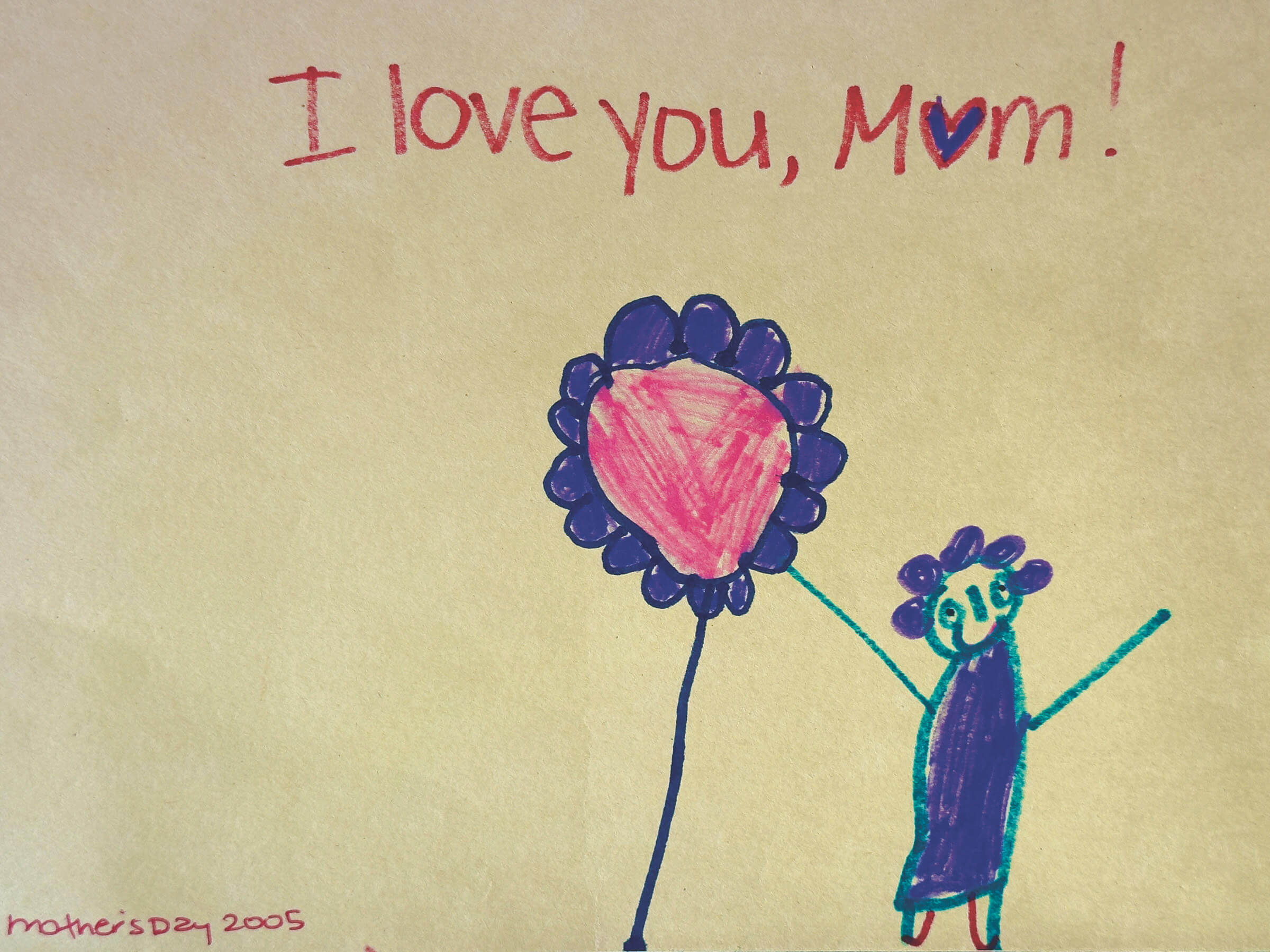
Daisy’s birthday is July 14 — Bastille Day. Over the past decades I’ve been invited to several Bastille Day parties. The number I’ve attended is zero. There was one I especially wanted to go to, but attending was out of the question: It was Daisy’s eighth birthday. The next year on Mother’s Day, Daisy wrote to me, “Remember on my birthday last year when you got invited to a party but you came to my birthday instead? That made me feel good.” Her framed card hangs in my kitchen.
My girls are now in their twenties. Over the years, was I told that I was rotten? That I was embarrassing? That I wasn’t like other mothers? That I didn’t know anything? That I was weird? That I had no fashion sense? Yes, to all of these and much more, and if you’ve raised teenagers, you’ve heard it all, too. While these invectives never felt good, I knew they were hurled from a safe place, and that my daughters knew they could say anything and still be loved. They were right! I loved them pre- and post-bile. We plod on. And we learn in the process.
When Lily was four, we got the girls a kitten. We named her Little Kitty, and she quickly became a much-loved member of the family. One night I was making dinner and Lily was hanging with Little Kitty, the paragon of sweetness and docility, in the living room. All was calm and right with the world until OUCH! I HATE YOU! Lily came storming into the kitchen, “Little Kitty just bit me. Get rid of her. Take her back!”
Confused, I asked Lily, “What was going on right before she bit you?” “Well,” Lily recounted, hand on hip, exploding with indignation, “I was reading [reciting from memory a favorite book] to Little Kitty, and she wasn’t paying attention so I put her in a box and shut the lid and she jumped out and bit me.” I so wanted to laugh, but instead asked, “Would you want somebody to put you in a box?” She softened, “No.” “Well, let’s not put Little Kitty in a box anymore.” “OK.”
That night, Lily learned to not put a cat in a box, and I, to ask people in high dudgeon who start a story right at the point of attack (“He called me a . . .” or “She gave me the finger”), to widen the lens and consider what led up to the affront.
Little Kitty stayed on for 13 years. We wept when she died. We all mourn her still.
The most important teachers children will ever have are their parents. The rewards for all the love and hard work are love in return, respect, laughter, advice-seeking, friendship, and endless stories. None of which has anything to do with money.
Now, go forth and celebrate all the moms you have and know. And, always remember: Regale your children on their birthdays and don’t put a cat in a box.
Happy Mother’s Day to all!
— Dorothy
Dorothy Richmond writes for the Hill & Lake Press.
She lives in Cedar-Isles-Dean.