
Kelly Hayes was 18 when he moved to Minneapolis in January 1974, two weeks after graduating high school in rural Cloquet. He turned 19 that March.
“It was great,” he says of the city he found. “Hennepin Avenue looked like New York City for about 10 blocks.”
“This was a Minneapolis where, by Hayes’s account, the cops were the most dangerous people a gay man could encounter.”
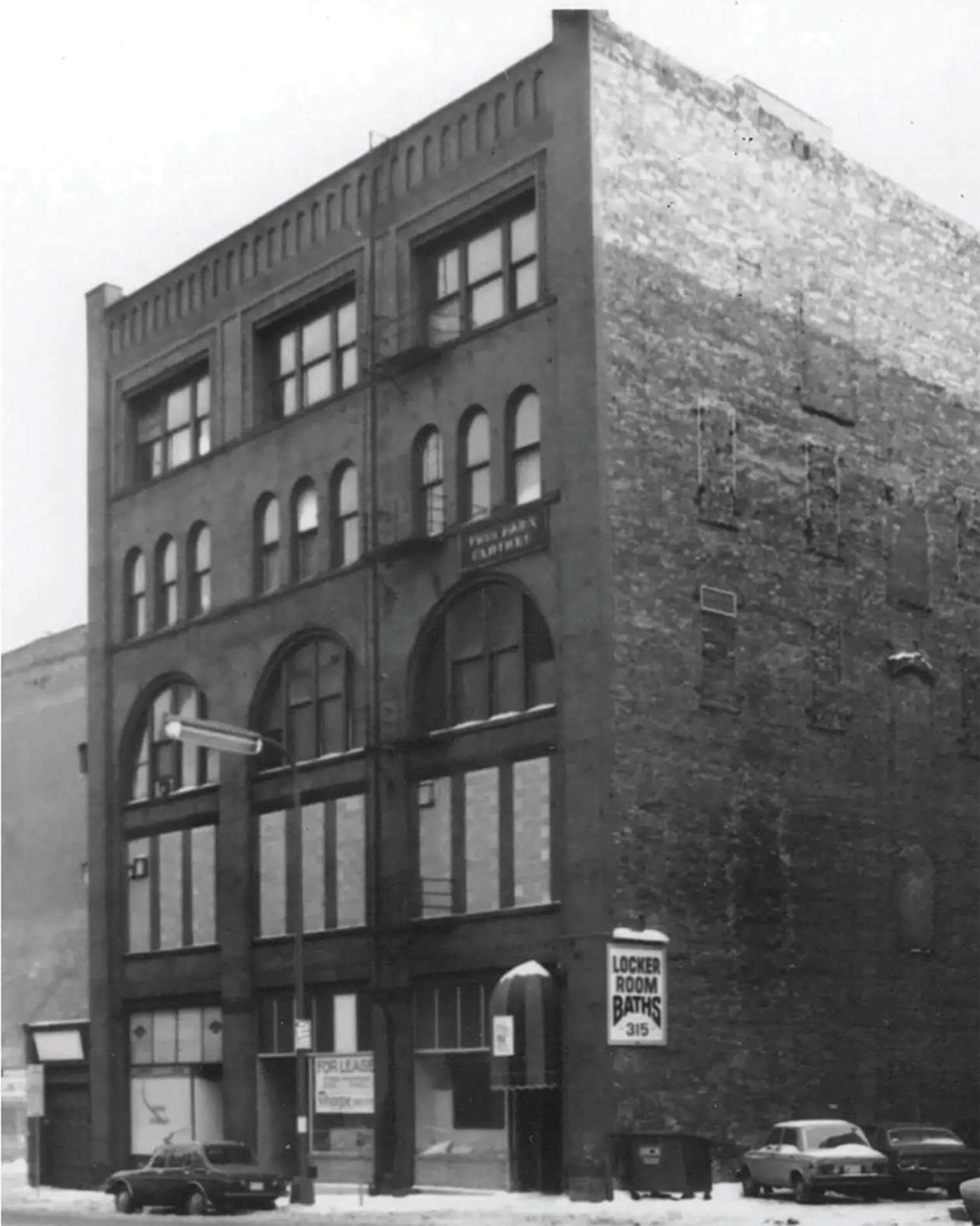
The streets were packed. Bumper-to-bumper traffic every night. A small Chinatown. Tons of theaters. Four gay bars downtown — the Happy Hour, the Cabaret in the basement of the Roaring 20s, Sutton’s at 7th and 1st Avenue and the 19 — and three bathhouses, as Hayes remembers them: one at 7th and Hennepin, one at 7th and 2nd Avenue, and one across from where the Fine Line Music Cafe stands today.
Few people in Minneapolis today can name those bathhouses. But the City Council would like the city to start talking about them again.
On April 10, the council voted 12-0, with one abstention, to refer four ordinances on “safer sex spaces” to staff for further study. The package, spearheaded by Council President Elliott Payne and co-authored by Council Members Jason Chavez and Soren Stevenson, would set up a licensing and regulatory framework for commercial establishments that facilitate consensual sexual activity.
The ordinances would update the zoning code, rework health and sanitation rules, and carve exceptions into existing indecency laws. They borrow from San Francisco’s approach, which emphasizes condom access, staff training, lighting, hygiene facilities and waste disposal.
“Some of these activities are happening now in the shadows,” Payne said, “but are completely unregulated without proper hygiene and public health intervention.”
The proposal is the culmination of years of advocacy from the Safer Sex Space Coalition, formed in 2023 by the Aliveness Project, OutFront Minnesota and other community partners.
Their pitch is that the 1988 ordinance that padlocked the derground, blocking outreach, condom distribution and HIV testing. Regulated venues, advocates argue, are safer than unregulated ones.
What Went Away
What went away, in Hayes’s telling, is worth describing. The bathhouse he visited as a high schooler at 7th and 2nd Avenue was “just rooms with beds in them, single beds for cruising.”
The one across from the Fine Line was multi-level, with a disco, food service and an orgy room, open until 3 or 4 a.m.
“People were living in there,” he says. A mix of men in street clothes and men in towels moved between the dance floor and the private rooms. After his bartending shifts at Sutton’s, Hayes would sometimes drift over just to keep the night going.
This was a Minneapolis where, by Hayes’s account, the cops were the most dangerous people a gay man could encounter.
“The people I was most afraid of were the cops,” he says. “Cops hated gay people. Officers would walk into gay bars with hookers and expect the bartenders to pour drinks for them all night for free. If you had trouble, you didn’t call the cops.”
Then came AIDS. Hayes was 25 in 1980. Health insurance companies were redlining ZIP codes. He lived in 55403. He was a hairdresser. He could not get covered.
“It was very scary,” he says. “People were dying. They were dying.”
And, he adds, “the government was doing actually the opposite of helping us.”
The Ordinance and the Man Behind It
The 1988 Minneapolis ordinance targeted commercial venues where specific sexual acts took place. It passed the City Council unanimously.
Its most visible champion was also the council’s first openly gay member, Brian Coyle, elected in 1983. The 315 Health Club on First Avenue North closed one day before the ordinance took effect, with picketers outside holding signs that read “AIDS kills / Avoid gay bath houses.”
Coyle had been diagnosed with HIV in 1986. He kept it private until April 1991, when he announced his status publicly. He died later that year at 47.
Hayes does not remember Coyle’s role in the ordinance. But he remembers the bathhouses already fading by the late ’80s.
“They seemed like a dinosaur,” he says. “It was a dying business. The people who went there were dying. AIDS just completely put the nail in the coffin on those. They closed immediately.”
Who’s Going to Go There?
Hayes has a shrug-sized response to the idea of Minneapolis licensing sex spaces again.
“I’m surprised,” he says. “But no, I don’t have an opinion about it. I think people should be able to do whatever they want. I mean, as long as they’re not hurting anybody else, why not?”
The question he keeps circling back to is practical: “I’m curious, who’s going to go there?” Minneapolis now is not the Minneapolis of 1974. Acceptance is wider. Bars are not the only option. “There’s Grindr,” Hayes says.
“‘I’m curious, who’s going to go there?’ Minneapolis now is not the Minneapolis of 1974. Acceptance is wider. Bars are not the only option. ‘There’s Grindr,’ Hayes says.”
He is also skeptical that the council should be prioritizing this over what he sees as more pressing neighborhood concerns. Chief among those is his own council member. Ward 10 Council Member Aisha Chughtai, whose district includes the neighborhood Hayes has lived in for nearly 40 years, is, in his words, “absentee.”
“She could not do less,” Hayes says. “Nothing from her. And a couple of things she does do are just not helping.”
He reserves similar feeling for Uptown, which he blames on the council’s redesign of Hennepin Avenue, the project advanced under former Council President Lisa Bender. “What they did to Uptown is the travesty,” Hayes says.
“I blame it totally on the City Council.” Hayes does not own a car. He bikes everywhere. He still thinks the new bike lanes went too far. “I bike everywhere, and the bike lanes are out of control,” he says.
But the bathhouse question seems to interest Hayes more as memory than as policy. What replaced it is not necessarily worse, in his telling. Just different and evolving.
“Gay bars are actually coming back,” he says. “I think people want to socialize more.” But not, he suspects, to cruise. “People do that on apps these days.”
“At the end of the day, if they want to go out, they just want to be around their own. It’s a safer environment today to go and do stuff if you’re gay.”
“Still, it’s not a perfect world for queer people by far,” he says.
Craig Wilson is the editor of the Hill & Lake Press. He lives in Lowry Hill.