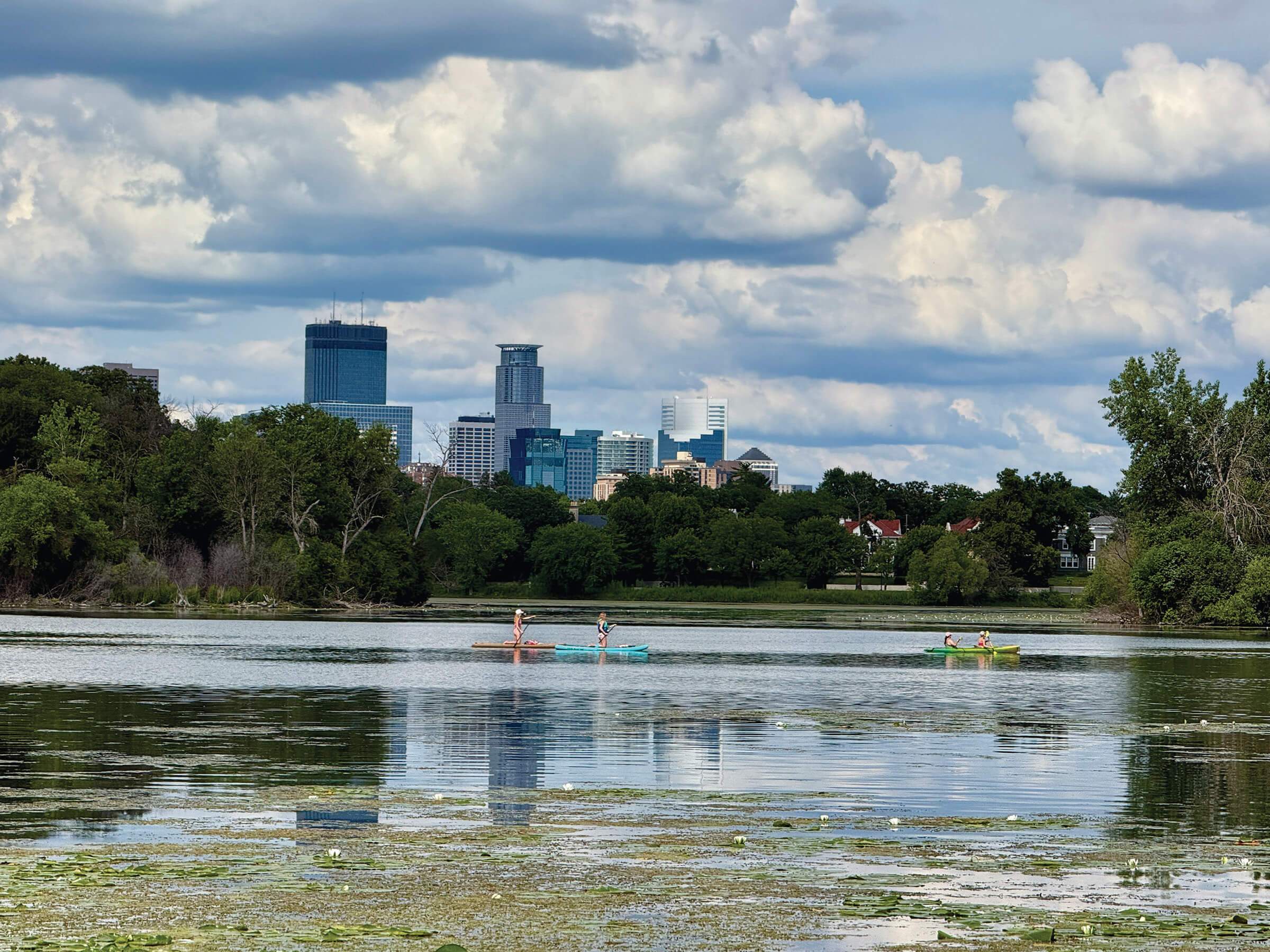

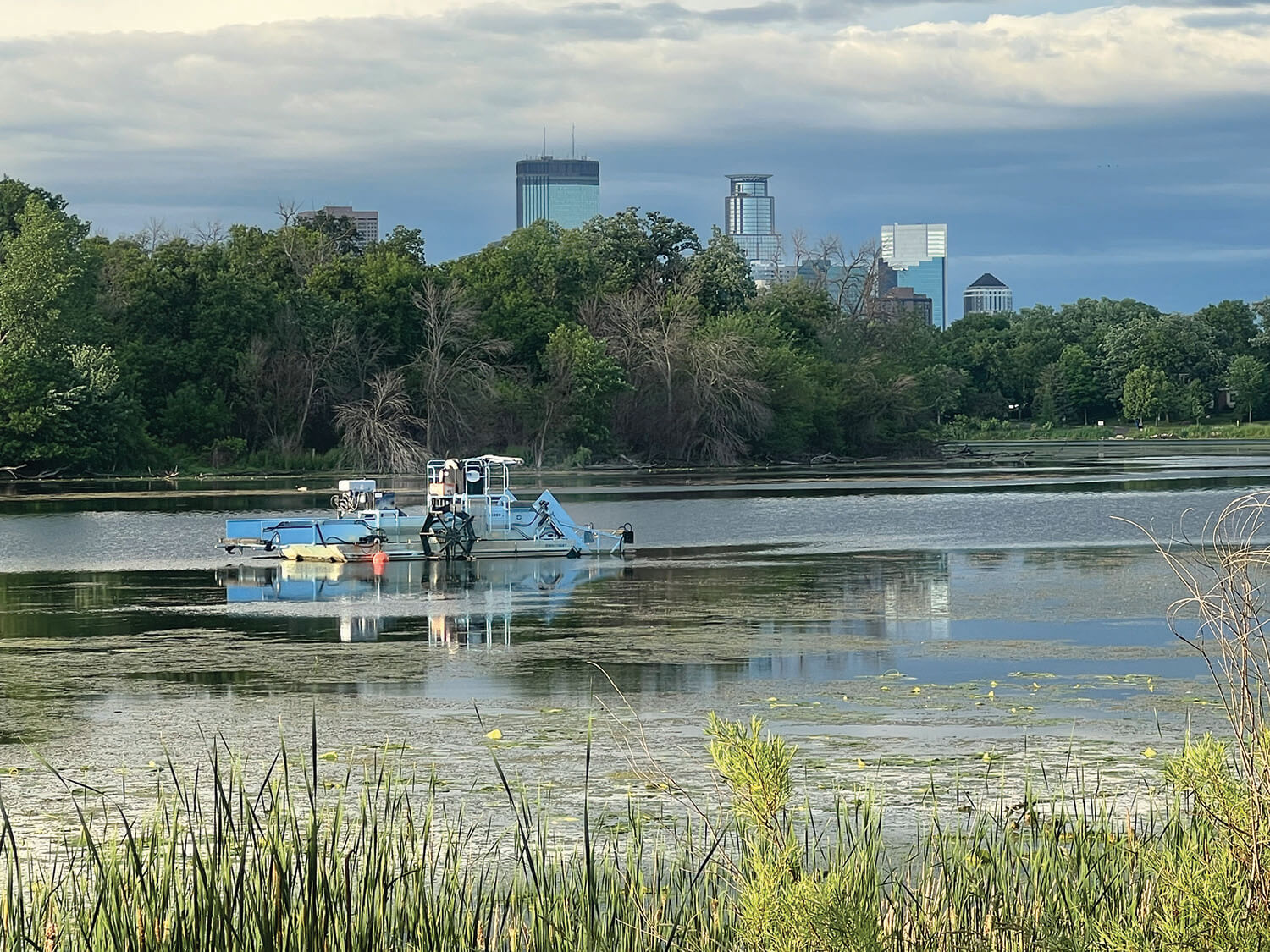
Lake of the Isles keeps growing milfoil and algae. Every summer, the complaints return. Yet perhaps the question is not why milfoil and algae come back each year, but why so many environmental problems seem to follow the same pattern.
Lake of the Isles provides a useful example. The ecological impacts of invasive aquatic species and excessive algae are well documented. Recreational opportunities can be diminished when waterways become difficult to navigate. Just as importantly, the appearance of our lakes influences how residents and visitors experience one of Minneapolis’ defining assets. Whether viewed through an ecological, recreational or aesthetic lens, few people would argue that these conditions represent the desired future for our Chain of Lakes.
“Lake of the Isles keeps growing milfoil and algae.”
Through extensive planning, studies, inventories and assessments, we know the problem exists. We understand many of the impacts. We know at least some of the available treatments. Efforts are made. Resources are spent. Yet year after year, the conversation returns.
The challenge is that the visible symptoms are often easier to discuss than the underlying causes.
In correspondence with residents, Josh Poole, the Park Board’s aquatic invasive species program coordinator, acknowledged concerns about algae and nuisance vegetation while also pointing out that harvesting plants and skimming algae primarily address access and appearance rather than the nutrient dynamics, watershed conditions and historical alterations that contribute to the problem. In other words, some actions may improve some conditions without solving the underlying causes.
The same pattern appears elsewhere in our park system.
Buckthorn invades our woodlands. Biodiversity declines. Natural areas become degraded. Erosion persists. Water quality concerns continue. The symptoms differ, but the questions often sound remarkably similar.
In preparing this article, I submitted a series of questions to both Park Board staff and commissioners. The questions were less about milfoil itself and more about the systems that shape outcomes. How are ecological priorities established? What role do adopted plans play in budgets and staffing decisions? What ecological metrics are regularly reviewed? How does ecological expertise influence decision-making? How can the public determine whether adopted plans are actually shaping actions on the ground?
The responses, if received in time, will likely be the subject of a future article. The purpose of those questions is not to assign blame, but to better understand where meaningful change can occur within a complex system involving staff, commissioners, state regulators, watershed management, funding and public expectations.
“The challenge is that the visible symptoms are often easier to discuss than the underlying causes.”
It is also important to recognize that this conversation is not occurring in the absence of citizen involvement. Across the Chain of Lakes and throughout the park system, volunteers contribute thousands of hours annually to stewardship, restoration, cleanup efforts, monitoring, board and committee service, fundraising, advocacy, and public education. Residents have not simply identified problems; many have spent years improving parks and encouraging elected officials and staff to prioritize long-term ecological health.
Those efforts matter. They demonstrate a community willing to invest its own time, expertise and energy in protecting public assets. At the same time, volunteer commitment has limits. Volunteers can identify problems, contribute labor and advocate for solutions, but they cannot establish budgets, allocate staff, secure permits or set organizational priorities. Those responsibilities rest elsewhere.
The Minneapolis Park and Recreation Board, like many public agencies, has invested substantial effort into plans, inventories, assessments, monitoring programs and management strategies. Those efforts generate valuable information. But they also raise an important question: How do those plans and assessments translate into priorities, budgets, staffing decisions and measurable outcomes?
More specifically, what responsibility do elected commissioners have to ensure that years of recommendations and adopted plans meaningfully influence future decisions? And what level of accountability should the public reasonably expect when the same concerns continue to be raised year after year?
Likewise, when citizens are already contributing thousands of hours toward stewardship, to what extent should they reasonably expect their elected and professional leaders to identify solutions, secure resources and advance implementation rather than relying on volunteers to continue carrying the issue forward year after year?
The public often sees the symptoms. What is less visible is the chain of decisions that ultimately determines whether conditions improve, remain stable or continue to deteriorate.
Perhaps that is where the conversation should focus.
Not simply on whether Lake of the Isles has too much algae or whether milfoil remains a nuisance. Those facts are already widely recognized, and the public’s continued reminders remain important.
The more important question may be whether leadership can identify the actions, resources and priorities most likely to produce meaningful improvement.
If not, we may find ourselves having the same conversation next summer, and the summer after that, discussing familiar symptoms while still searching for the changes needed to address the underlying causes.
Steve Kotvis writes for the Hill & Lake Press. He lives in Bryn Mawr.