
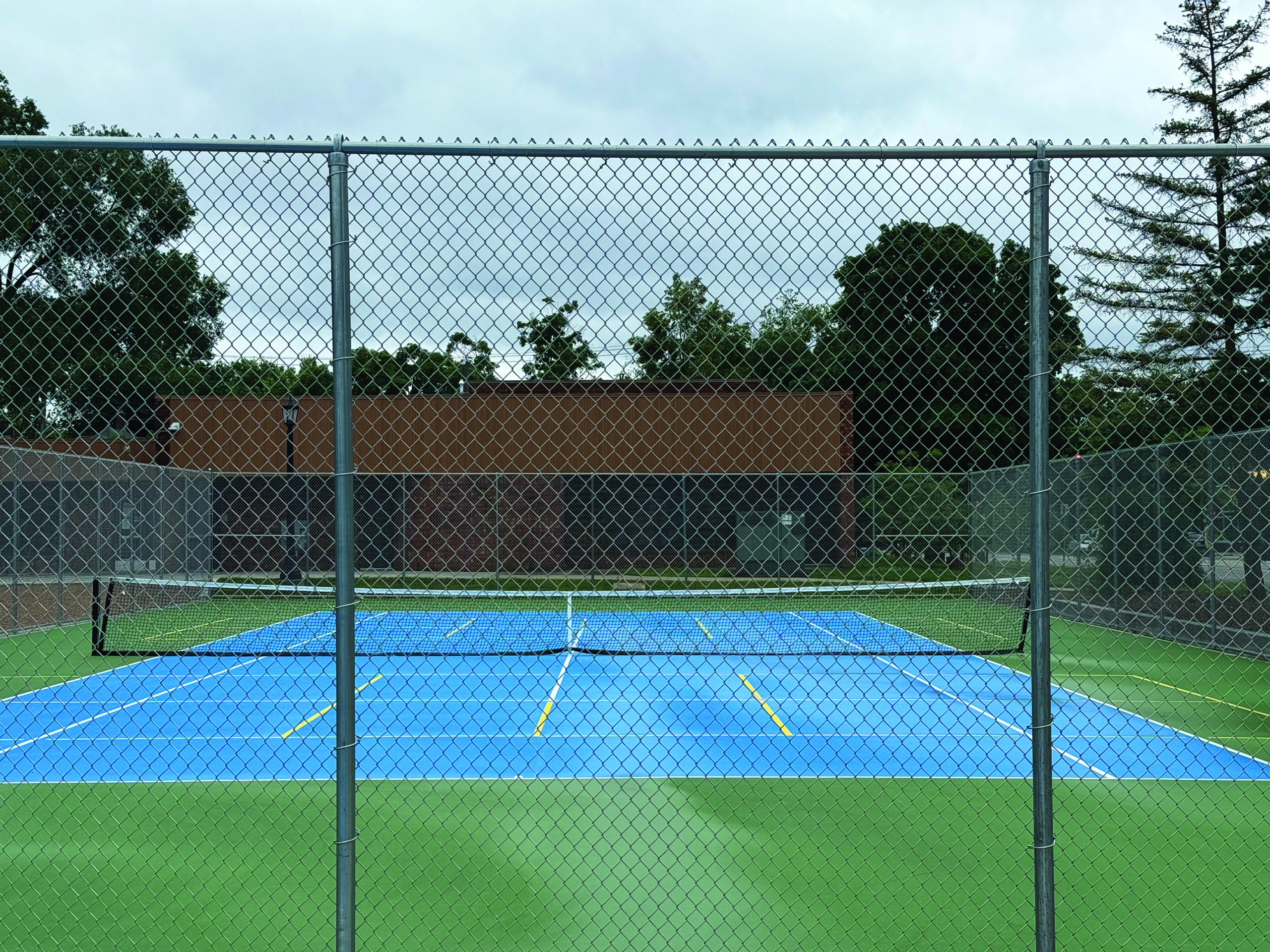
Unlike sports like soccer, lacrosse, hockey, baseball, football and basketball that are often supported by schools, community leagues and club teams, tennis is mostly left to individuals.
Team sports become lobbying forces that usually influence the distribution of limited funds for building and maintaining sports venues. This dynamic often leaves tennis courts and their individual advocates at the end of the receiving line.
The Power of the Park Board
The building and maintenance of our city tennis courts fall under the purview of the park board.
It costs approximately $150,000 to build a single tennis court and more than $2,000 per year to maintain it. In Minnesota, a new court will begin to show surface cracking within four to five years.
If these cracks are not immediately and continuously addressed, they will expand. Eventually, at the ten-year mark, the court will become unplayable. However, if regularly maintained, a tennis court could have a life expectancy of 20 to 30 years.
Once a court becomes unplayable, the cement surface will need to be torn up, removed and replaced, which can be more costly than building a new court from scratch.
The four courts in Loring Park, which were original to the park when built in 1883, have recently undergone this very process.
In 2017, the park board had a choice to make after years of neglected surface maintenance: come up with $500,000 to tear out and rebuild the four courts or eliminate them altogether and create new green space.
Those supporting more green space argued, “Nobody plays on them anyway, so why spend all of that money?” They were overlooking the obvious reason they were not being used — they were unplayable (see adjacent photo).
Supporters of “find the money and rebuild” were dispersed and unorganized, mainly individual tennis players from the Loring neighborhood and the Friends of Loring Park.
The dilemma of urban tennis courts is that there isn’t an organized lobby.
There wasn’t a neighborhood high school tennis team lobbying for courts or a local player association comprised of the Loring Park residents. The case for eliminating the courts for more green space seemed inevitable but for a few committed, persistent park board commissioners and staff who believed the Loring courts needed to be preserved. It took an additional five years and lots of cajoling and creative financing to finally return the courts to their prominence in the park.
Match Point to Minneapolis
Today, thanks to the commitment and efforts of some park board staff and commissioners, our city now offers two of the most beautiful public urban tennis venues in the country: the Loring courts and the Kenwood courts, which the park board resurfaced this year. In both cases, the courts serve as prominent jewels of the park.
Both sets of courts are nestled within the lush confines of their respective parks, amidst towering trees that provide a natural canopy, filtering dappled sunlight onto them. And once again, we have the pleasure of the sounds of the thwack of a tennis ball meeting the racket, the shuffle of players' feet, and the constant cries of triumph and frustration. These are important and wonderful aspects of both parks.
In addition to these parks, the tennis courts in North Commons Park and Painter Park (33rd and Lyndale) have recently been resurfaced.
Having playable urban tennis courts in our community takes a special commitment to maintenance. I encourage those of you who play and care to express your appreciation and views to some of the people who have made it all possible.