
Prairies are maintained by fire. Before European colonization, the vast American prairies burned periodically from lightning-strikes or were actively burned by the indigenous peoples. Fire brings renewal, releases nutrients, clears away debris, removes invasive trees and shrubs.
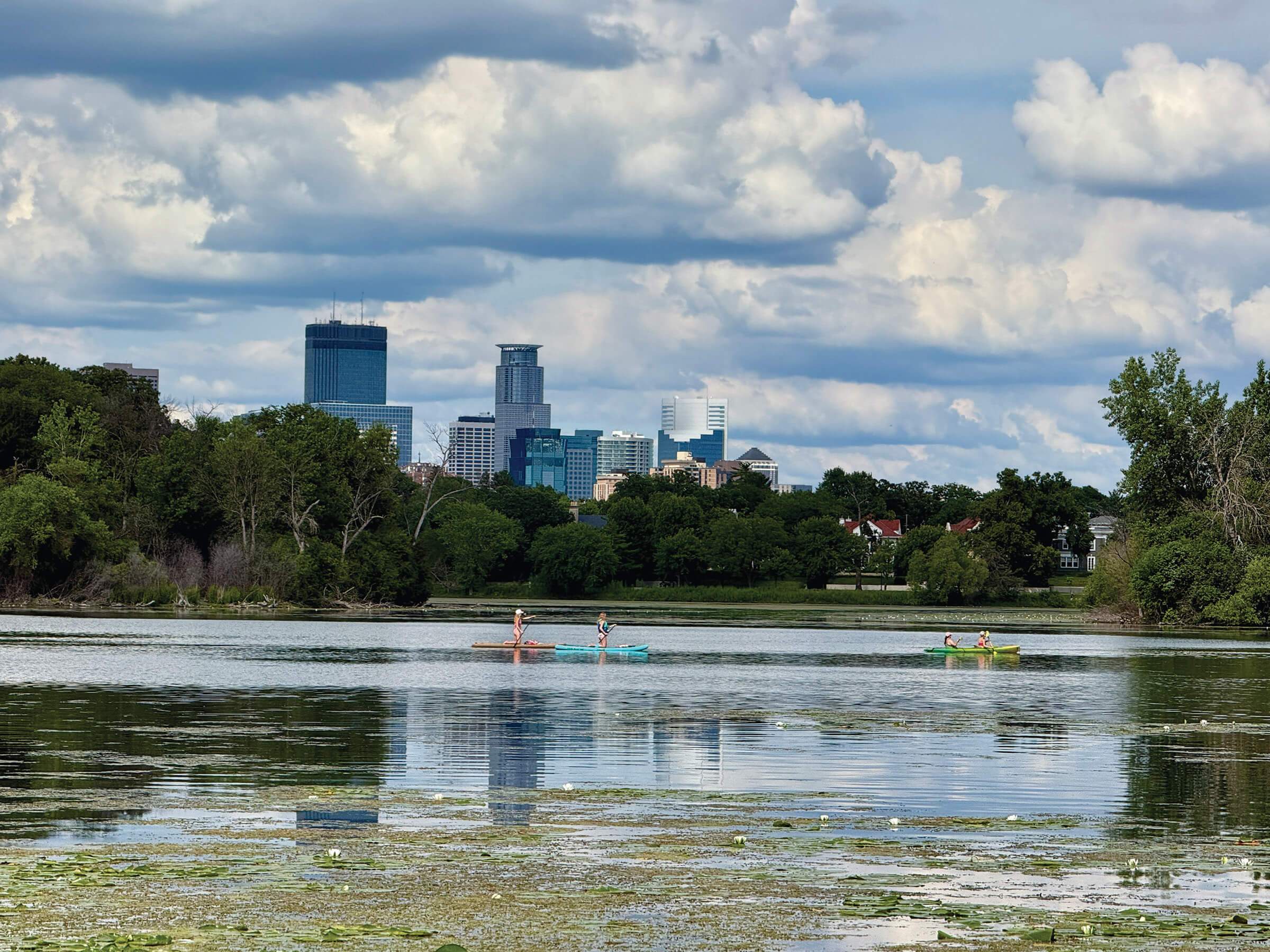
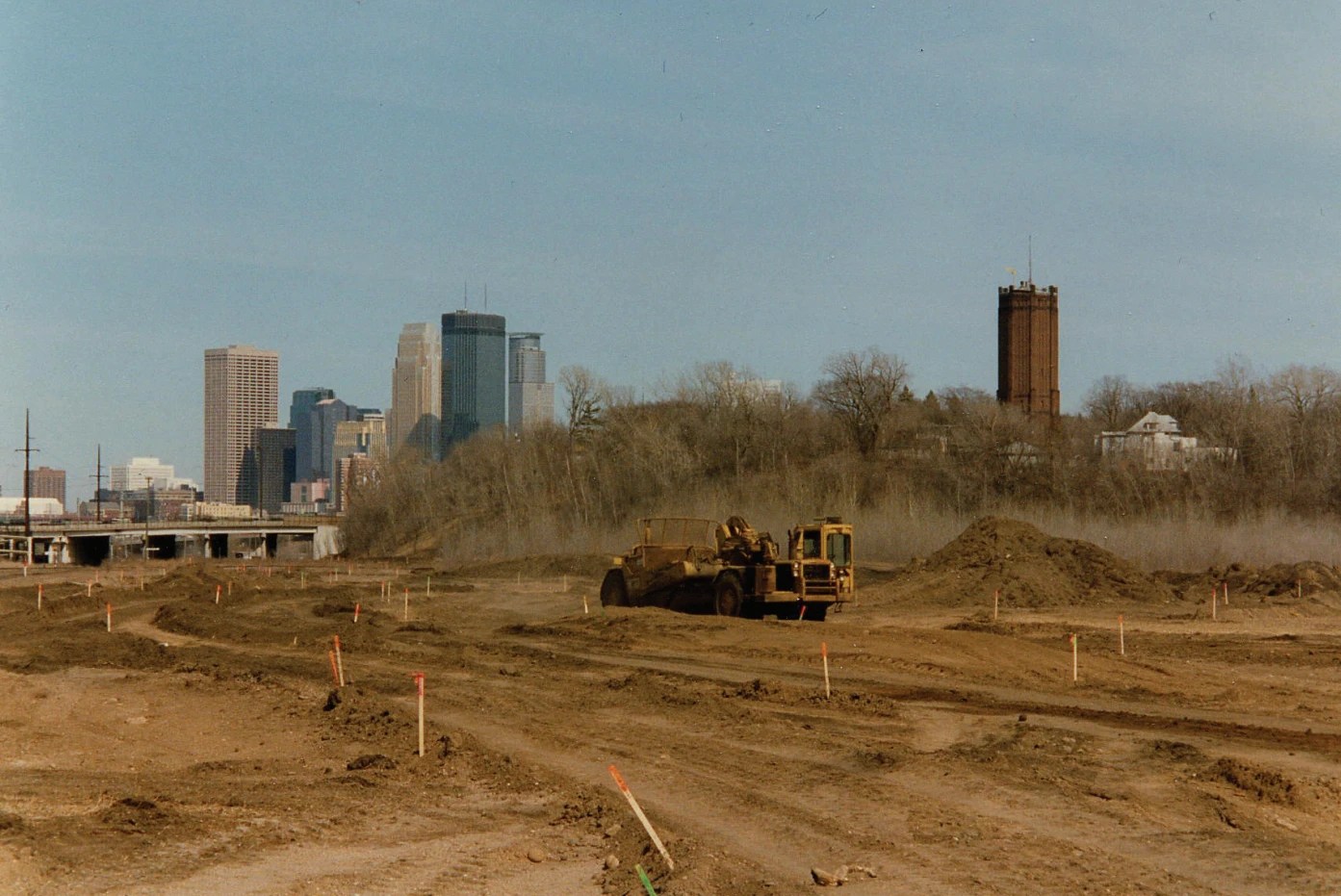
On the north side of Cedar Lake, there have been railroad operations since the 19th century. The land was mostly flat, once submerged under the lake itself or the wetlands leading north and east towards Bassett’s Creek and downtown Minneapolis. Due to the combination of a five-foot drop in water level and much industrial fill, there was enough stable ground for Burlington Northern Santa Fe Railroad (now BNSF) to conduct major operations until it removed all the rails in the mid-1980s, leaving only the present main line. At that time, the company put the land up for sale.
One proposal was to purchase the land to build condos and other high-density projects. Happily, a group of citizens had a different idea—that the land could be a nature park. A partnership was created between the Citizens of the Cedar Lake Park Association (CLPA) and the Minneapolis Park and Recreation Board (MPRB) to create a park. The citizens were clever and fund-raised the $1.8 million purchase price.
Forty-eight acres of land were purchased privately in 1991, then deeded to MPRB in one of the largest land acquisitions in Minneapolis in decades. CLPA and the MPRB dug in to work. The ensuing concept master plan resulted in the 1995 construction of the award-winning Cedar Lake Trail, along with the establishment of over 30 acres of prairie. The flat ground was shaped into hills, swales, and dips, then tilled and seeded. The remnant soil was rocky and sandy, but slowly the prairies grew, helped along by over 20 years of efforts by hundreds of volunteers planting over 25,000 native plants. Construction began in 1995.
The Cedar Lake Park prairies are lovely now, almost 30 years later.
But there is a problem.
Prairies need maintenance. They need to be burned and mowed periodically. Otherwise, invasive plants, shrubs and trees grow, and eventually crowd out the native plants. Unfortunately, that is happening out in the CLP prairies.
So, what is being done to address and manage this situation?
The Minneapolis Parks & Recreation Board’s management plan for the Cedar Lake Park Prairie recommends controlled burning of the prairie every three years. Sadly, this has not happened. The last time the prairie was burned was in 2015—seven years ago.
What concerned citizens want to know is, does the park board have a plan for burning (and mowing) the Cedar Lake Park prairies? Has the work been scheduled? If so, can the park board share that schedule with the public? And is there an ongoing maintenance schedule—based on the park board’s own management plan—for nurturing nature in the prairie?
“Just leave it the way it is” will not do. This is an urban park, and it needs to be managed.