Mark Schmidt lives in CedarIsles-Dean and volunteers with Cedar lake Park Association.
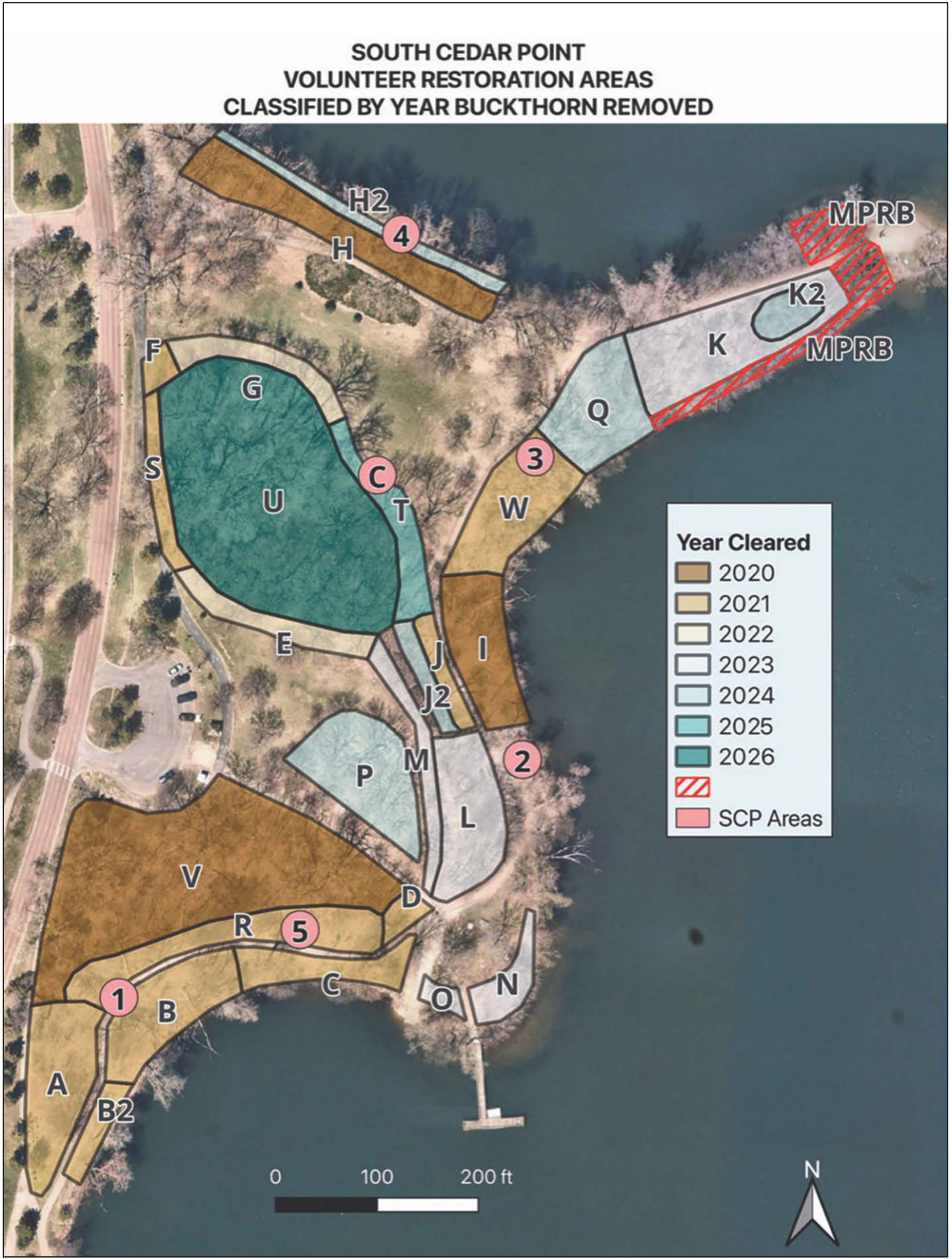
The Cedar Lake Park Association is marking its seventh year of restoration work on South Cedar Point, removing buckthorn and other invasive plants and replacing them with pollinators and other native species.
South Cedar Point is identified as a Volunteer Restoration Area in the Park Board’s recently passed Cedar Isles Master Plan, and this year the group will focus on two areas in particular. First is a natural area at the base of the point, identified as “Dry Mesic Forest Woodland,” and second is work on the point itself, which one volunteer describes as presently “beyond description” from an ecological standpoint, heavily infested with buckthorn and other invasives.
When the buckthorn is removed from this latter area, volunteers intend to convert it to a more original native grassland, along with creating a resilient buffer area along the shoreline of the lake. This will be highly labor-intensive, however, and apart from the heavy lifting associated with buckthorn removal, other existing non-native plants such as garlic mustard and motherwort will need to be removed by hand.
Once the removal is accomplished, the area will be seeded with tall and shortgrass prairie seeds donated by the Cedar Lake Park Association.
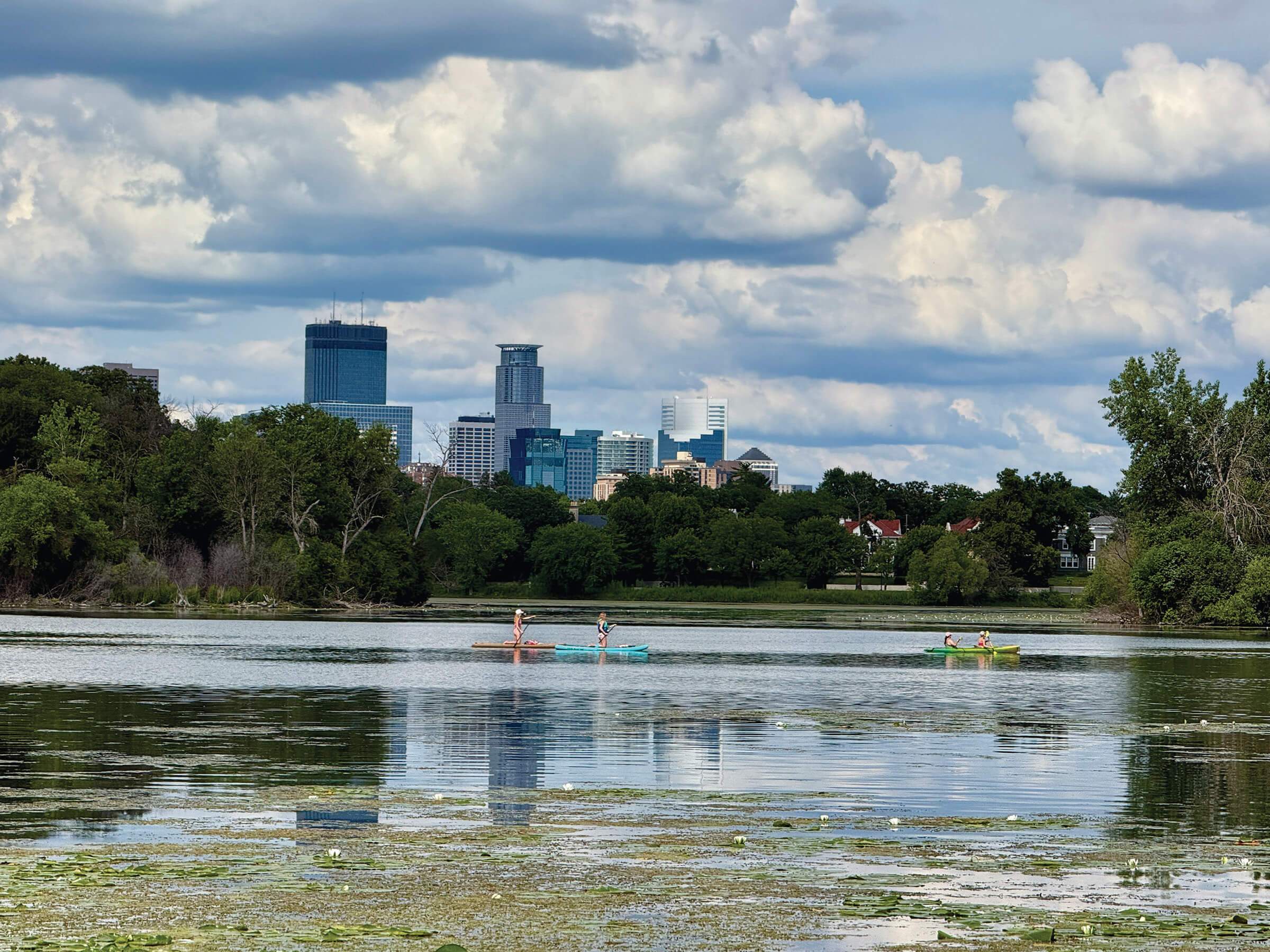
Work already accomplished by volunteers can be seen just south of the peninsula. While some buckthorn still remains, significant areas have been cleared by park board staff, and volunteers have followed to introduce native plantings. These areas will still need volunteer weeding and other attention as they become more established.
Overall, positive change is coming to the point, and the park association encourages any and all passersby to look for and enjoy the new native plantings as they sprout and bloom this spring. Anyone interested in volunteering for this important ecological improvement work can contact the Cedar Lake Park Association by visiting.