

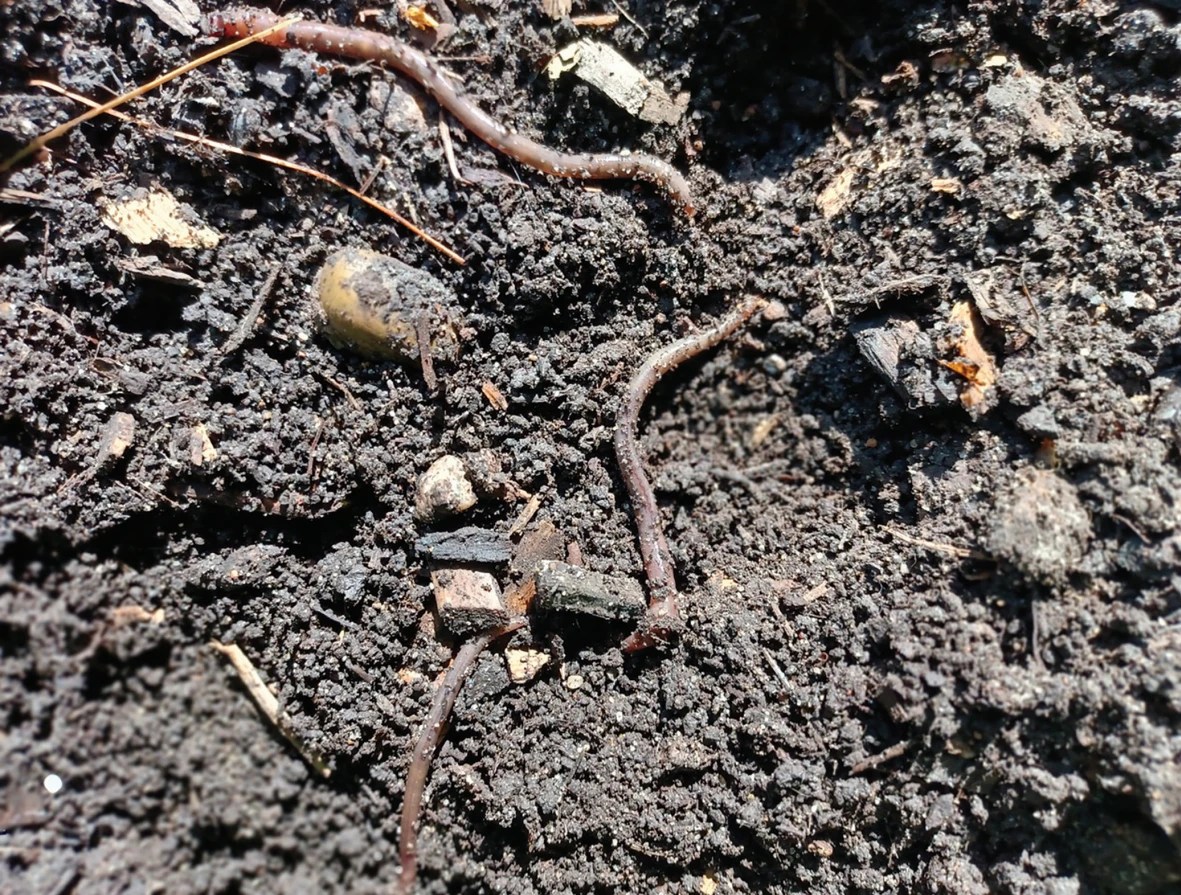
On July 7, a visitor to Cedar Lake Park reported seeing Asiatic jumping worms in mulch along a trail near Cedar Lake, possibly the first appearance of this invasive species in a natural area in the Minneapolis Park system.
A type of earthworm, jumping worms are so named because when disturbed they sometimes appear to jump. They live near the top of the soil surface and in the leaf and mulch layer. People are spreading jumping worms throughout North America by moving infested potted plants, soil, compost, mulch and fishing bait.
Jumping worms were first found in Minnesota—in Loring Park—by Dr. Lee Frelich, director of the University of Minnesota Center for Forest Ecology. Since then, foresters have worried that the worms will find their way into forests, where they can do far more damage than in gardens and yards. Frelich has been quoted as saying said he “never imagined such a horrific invasive species.”
According to the Minnesota Department of Natural Resources, jumping worms’ impact includes:
- Dramatic changes in soils, causing a unique texture similar to coffee grounds. Jumping worms feast on mulch and strip vital nutrients from topsoil, killing plants and increasing erosion.
- Environmental harm to the landscape. Studies have found that nonnative earthworms dramatically change forest soils by eating the leaf litter layer and altering soil chemistry, soil organisms and plant communities. Jumping worms have been shown to have similar effects. There are no known methods for controlling invasive worms on a large scale in natural settings. Chemical treatments that would kill earthworms would kill beneficial soil organisms as well. The DNR advises that preventing the introduction and spread of jumping worms in Minnesota is more effective than controlling established populations.
Engaged community members have requested that the Park Board remove the mulch known to be infested at Cedar Lake, in an effort to mitigate the spread of the destructive worms, which can reproduce several times during a single growing season by burrowing into the soil and laying tiny cocoons.
We will share more information when it is available.